
Forage Production
Brix scoring is important because it tells us how much sugar content is in our forages and the nutrition density in our dry matter. Plants high in brix are more resistant to drought, cool temperatures, pests, and disease. The higher the brix, the higher the quality of the forage you're feeding livestock. A refractometer is used to determine the sugar levels in pastures.
How to Use a Refractometer
A refractometer is used to measure brix, the sugar content in plants. Understanding the quality of your forages will help you adjust the forage options for your livestock. Logan Karcher, director of producer programs with Illinois Grazing Lands Coalition, demonstrates how to use a refractometer.
Featured Publications
Forages for Beef Cattle
Pasture and hayfields require nutrients to reach peak productivity. These nutrients can be supplied from several sources including residual nutrients in the soil, the breakdown of manure and soil organic matter, nitrogen (N) produced by N-fixation in legumes and commercial fertilizer. University of Kentucky.

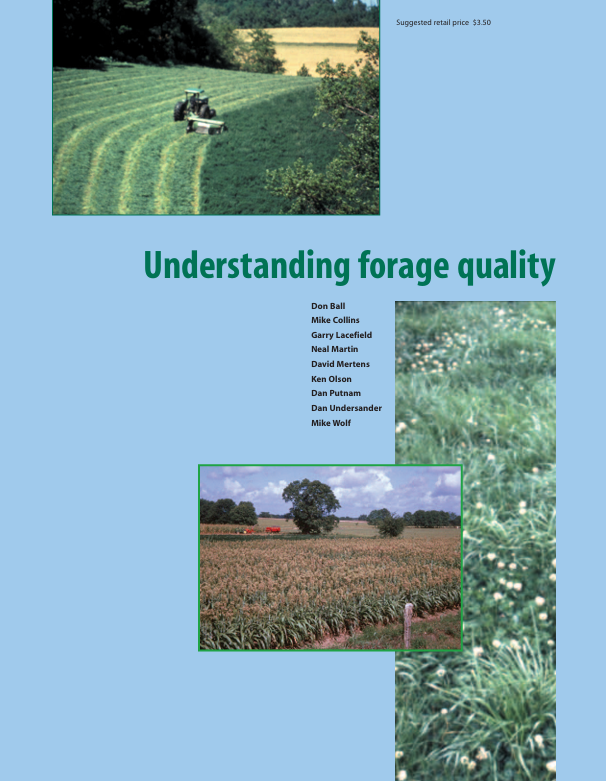
Understanding Forage Quality
From the Publication: The ultimate measure of forage quality is animal performance. Factors having the greatest impact on forage quality are forage species, stage of maturity at harvest, and (if forage is mechanically harvested) harvesting and storage techniques. Kentucky Cooperative Extension.
Additional Publications
-
From the Fact Sheet: This publication is intended to help producers meet animal forage needs in a rotational grazing system by mastering the use of a grazing stick to estimate pasture yield and pasture allocation. Download this fact sheet from the University of Kentucky.
-
From the Website: Select your specific mix for hay and pasture seeding. Access the online seeding rate calculator from the University of Wisconsin.
-
From the Fact Sheet: Kernza® can be managed for both grain and forage, providing hay or grazing opportunities. With deep roots that stay in the ground for three years or more, it has lower requirements for fertilizer and tillage, and reduces nutrient leaching that contaminates drinking water sources. Download the fact sheet from the University of Minnesota.
-
Pasture and hayfields require nutrients to reach peak productivity. These nutrients can be supplied from several sources including residual nutrients in the soil, the breakdown of manure and soilorganic matter, nitrogen (N) produced by N-fixation in legumes and commercial fertilizer. Download the chapter from the University of Kentucky.
-
From the Fact Sheet: The ultimate measure of forage quality is animal performance. Factors having the greatest impact on forage quality are forage species, stage of maturity at harvest, and (if forage is mechanically harvested) harvesting and storage techniques. Download the Understanding Forage Quality fact sheet from the Kentucky Cooperative Extension.
Videos
Annual Rye Grass
Dr. Chris Teutsch, University of Kentucky, talks about utilizing annual ryegrass in the forage system.
University of Minnesota Forever Green Agronomist Matt Leavitt hosts a training on Dual-use of Kernza®. Presenters include farmers Stan Vander Kooi (Buffalo, MN), Wendy Johnson (Joia Food Farm, Charles City, IA), and Al Kraus (Clean River Partners) presented on a study of dual-use Kernza in southeast Minnesota.
Kernza as a Forage
Understanding Forage Quality
This virtual seminar sought to bring forage specialists together to help better understand current practices and the latest science behind forages.