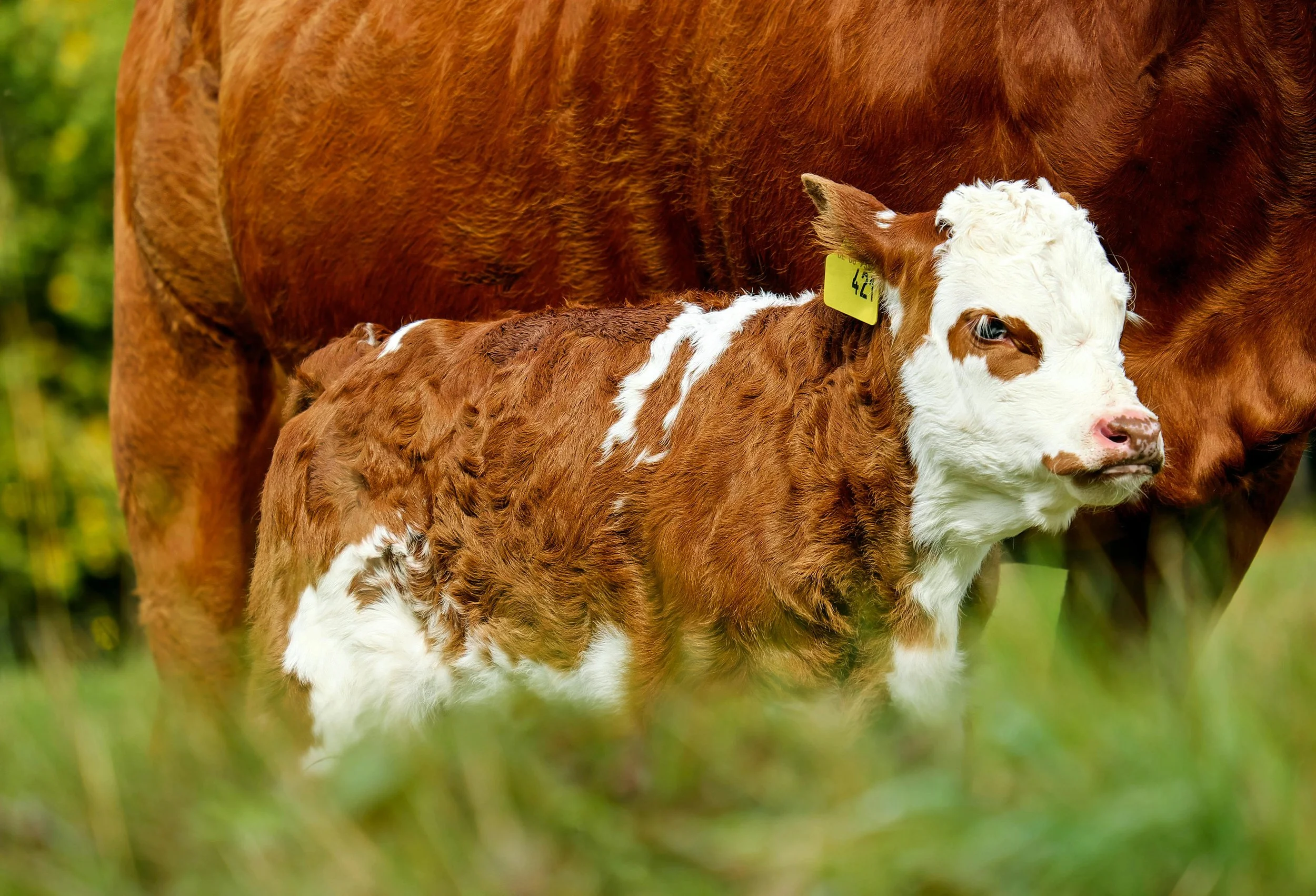
Grazing Livestock
Before the Move: Check Cattle Body Condition and Temperament
Choosing the right time to move your cattle to a new grazing paddock will improve your herd's average daily gain performance. Calculating your stock density and paddock size is important, but you'll also want to look for these visual cues.
After you move cattle to a new paddock, check the consistency of the manure and the plant residuals to determine if cattle are getting the proper nutrition while leaving adequate forage behind for regrowth.
Calculating Paddock Size and Stock Density Rate
A grazing stick helps producers know how much forage the herd needs and how large to make your paddocks. Logan Karcher, director of producer programs with Illinois Grazing Lands Coalition, walks through each calculation to help you determine the size of your paddocks and the stocking rate.
How to Set Up Temporary Paddocks with Polywire
Fencing is often an obstacle when producers transition to adaptive grazing for their livestock. With polywire fencing, you can easily create temporary paddocks that can be moved easily and frequently.
Featured Publications
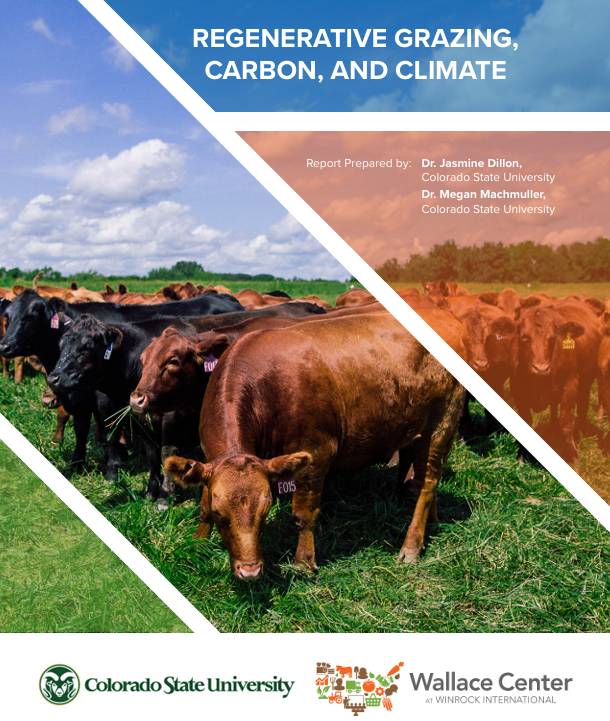
Regenerative Grazing, Carbon, and Climate
From the Publication: Can regenerative agriculture mitigate climate change? Does regenerative grazing sequester more carbon? Arguments abound as to the role of regenerative agriculture—and grazing specifically—as a natural climate solution, each with their own supporting and dissenting evidence. Understanding the way that carbon is introduced to the atmosphere, captured by soils, and stored by soils is critical to defining a position on this topic. Download Regenerative Grazing, Carbon, and Climate from the Pasture Project website.
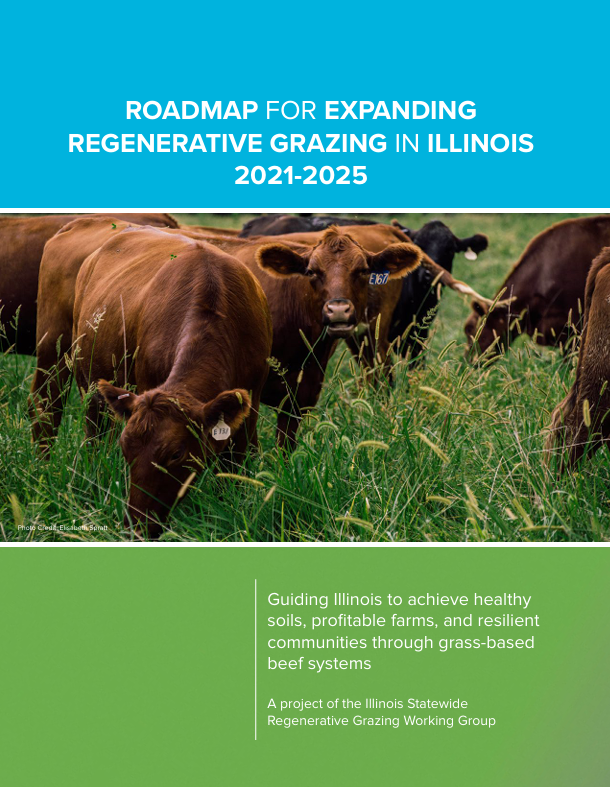
Roadmap for Expanding Regenerative Grazing in Illinois: 2021 -2025
From the Publication: Guiding Illinois to achieve healthy soils, profitable farms, and resilient communities through grass-based beef systems. Download this publication from the Pasture Project website.
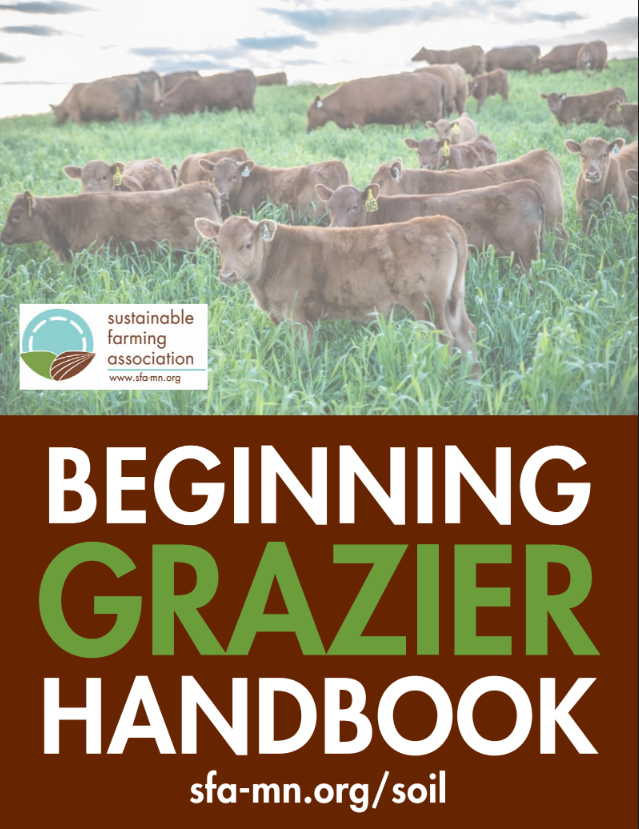
Beginning Grazier Handbook
From the Publication: Designed to assist the beginning grazier in designing and implementing a grazing system, this handbook is a starting place for you to quickly and easily find pertinent information. Most of the resources listed include website links – explore these links to find additional grazing information that is specific to your interests. Download this publication from the Sustainable Farming Association.
Featured Website
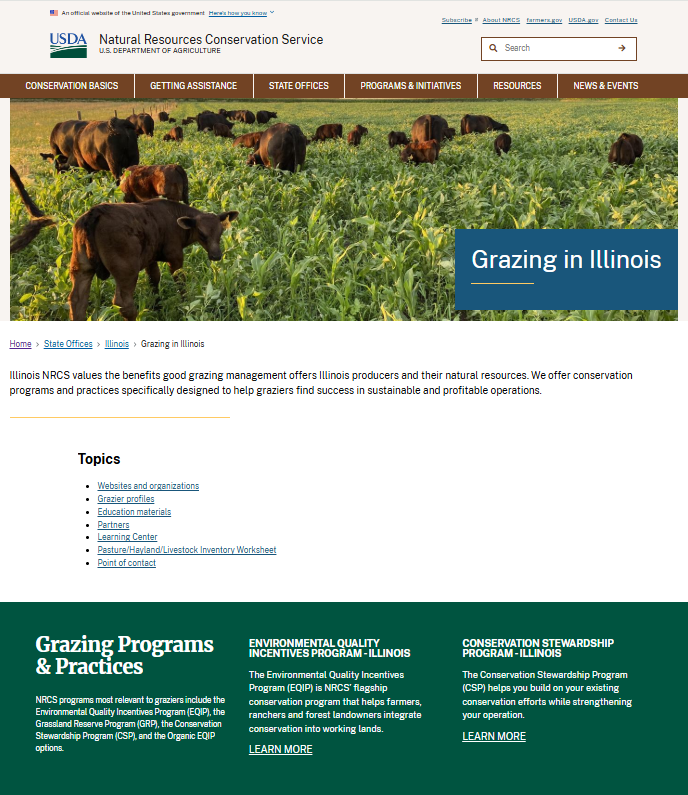
NRCS Grazing in Illinois
From the Website: Illinois NRCS values the benefits good grazing management offers Illinois producers and their natural resources. We offer conservation programs and practices specifically designed to help graziers find success in sustainable and profitable operations.
-
From the Publication: Pastures represent a largely untapped resource for farmers. More than one quarter of the Midwest’s agricultural land is in some form of pasture. Yet, 80% of these pastures suffer from poor, uneven fertility coupled with serious weed and erosion problems. Most pastures are continuously grazed throughout the season. However, continuous grazing results in the lowest possible pasture yields since the forage is not allowed to recuperate between grazing. Download the publication from Wisconsin Extension.
-
From the Publication: Studies and field trials have shown that combining cattle grazing with cover crops, especially multi-species cover crops, accelerate the increase in soil organic matter, which improves the soil’s water holding capacity. Each one-percent increase in SOM results in approximately 27,000 more gallons of water holding capacity per acre (NRCS, 2013). A USDA-ARS field study showed cow/calf pairs grazed for 48 days +/- on cover crops of pearl millet, rye, rye-ryegrass and rye-crimson clover. This trial included plantings of full season cover crops following winter wheat. Grazing also has economic benefits by providing forage for cattle and other ruminants. In addition, grazing cover crops with livestock provides fertility for the next cash crop. Download the publication from the Pasture Project.
-
From the Website: In the GrassWorks Grazing Guide you will find 270 pages of practical information and great tips from experienced graziers. If you are new to managed grazing, this book will be especially helpful. If you’ve been grazing awhile, you’ll discover new ideas. Buy the publication from GrassWorks Inc.
-
From the Publication: Nitrates, when consumed more rapidly than they can be converted in the rumen to protein, enter the bloodstream as nitrite. The absorbed nitrites oxidize the hemoglobin of red blood cells, converting it to methemoglobin. Methemoglobin is incapable of transporting oxygen, and, as methemoglobin concentrations approach 80%, death occurs due to asphyxiation. Download the fact sheet from the University of Kentucky Department of Animal & Food Sciences.
-
The color publication covers practices to increase production and returns by improving management of grassland. Order from Iowa State University Extension and Outreach.
-
Drs. Michael Flythe and Brittany Harlow, Forage-Animal Production Research Unit provide a research update on the benefits of red clover. Watch the video from University of Kentucky
-
From the Publication: Guiding Illinois to achieve healthy soils, profitable farms, and resilient communities through grass-based beef systems. Download this publication from the Pasture Project website.
-
From the Publication: Can regenerative agriculture mitigate climate change? Does regenerative grazing sequester more carbon? Arguments abound as to the role of regenerative agriculture—and grazing specifically—as a natural climate solution, each with their own supporting and dissenting evidence. Understanding the way that carbon is introduced to the atmosphere, captured by soils, and stored by soils is critical to defining a position on this topic. Download Regenerative Grazing, Carbon, and Climate from the Pasture Project website.
-
From the Publication: Designed to assist the beginning grazier in designing and implementing a grazing system, this handbook is a starting place for you to quickly and easily find pertinent information. Most of the resources listed include website links – explore these links to find additional grazing information that is specific to your interests. Download this publication from the Sustainable Farming Association.
-
Practical Farmers of Iowa offers a collection of resources for grazing cover crops, including a weekly newsletter. Sign up for the newsletter.
-
From the Fact Sheet: For many livestock producers, cover crops and winter grazing go hand-inhand; however, perhaps the most valuable time for grazing cover crops is in the spring. Winter annual cereal grains such as rye, wheat, and triticale grow fastest and provide the most tonnage in the early spring, before cool-season grasses start to grow. Download the fact sheet from Midwest Cover Crops.
-
From the Fact Sheet: Grazing is one way you can cover the immediate costs of adding cover crops while ramping up soil health. Even though you don’t raise cattle, you might be able to contract with a farmer or rancher who does graze cattle to bring animals onto your fields in late fall or early spring to graze green cover crops. Download the Managed Grazing of Cover Crops for Crop Farmers Without Livestock fact sheet from the Land Stewardship Project.
Additional Grazing Publications
FREE ONLINE COURSE
REGENERATIVE AG IDEA NETWORK
Grazing Planning
From the Website: Adaptive grazing is a flexible system, but a good grazing plan can help farmers reach their goals. This module provides an overview of the grazing planning process. Farmers, graziers, and landowners will learn about setting goals, inventorying resources, and developing maps—the foundations for a solid grazing plan.
Featured Videos
From the Video: The benefits of high-density grazing improves the efficiency of the harvest of the forage and the redistribution of the nutrients (urine and manure) throughout the field. This management also increases organic matter in the soil, as well as improved weed control. University of Kentucky.
From the Video: Join Troy Bishopp, a farmer with over 40 years of experience who serves as the Northeast Region Resource Manager with National Grazing Lands Coalition, as he shares his insights into the logistics and benefits of grazing fall cover crops. This webinar was presented by the Farmers for Soil Health Education Team, composed of staff from the Soil Health Institute and The Center for Regenerative Agriculture at the University of Missouri. Soil Health Institute.
From the Video: In Part 3 of Pasture Project’s video series on grazing cover crops, we focus on the overall economic and soil health benefits of integrating cash crops, cover crops and livestock grazing. Wallace Center
This 35-part video tutorial series is intended to serve as an introduction to adaptive grazing. Featuring internationally recognized grazing and livestock expert Dr. Allen Williams, the series covers a range of topics related to adaptive grazing. Watch the full series.