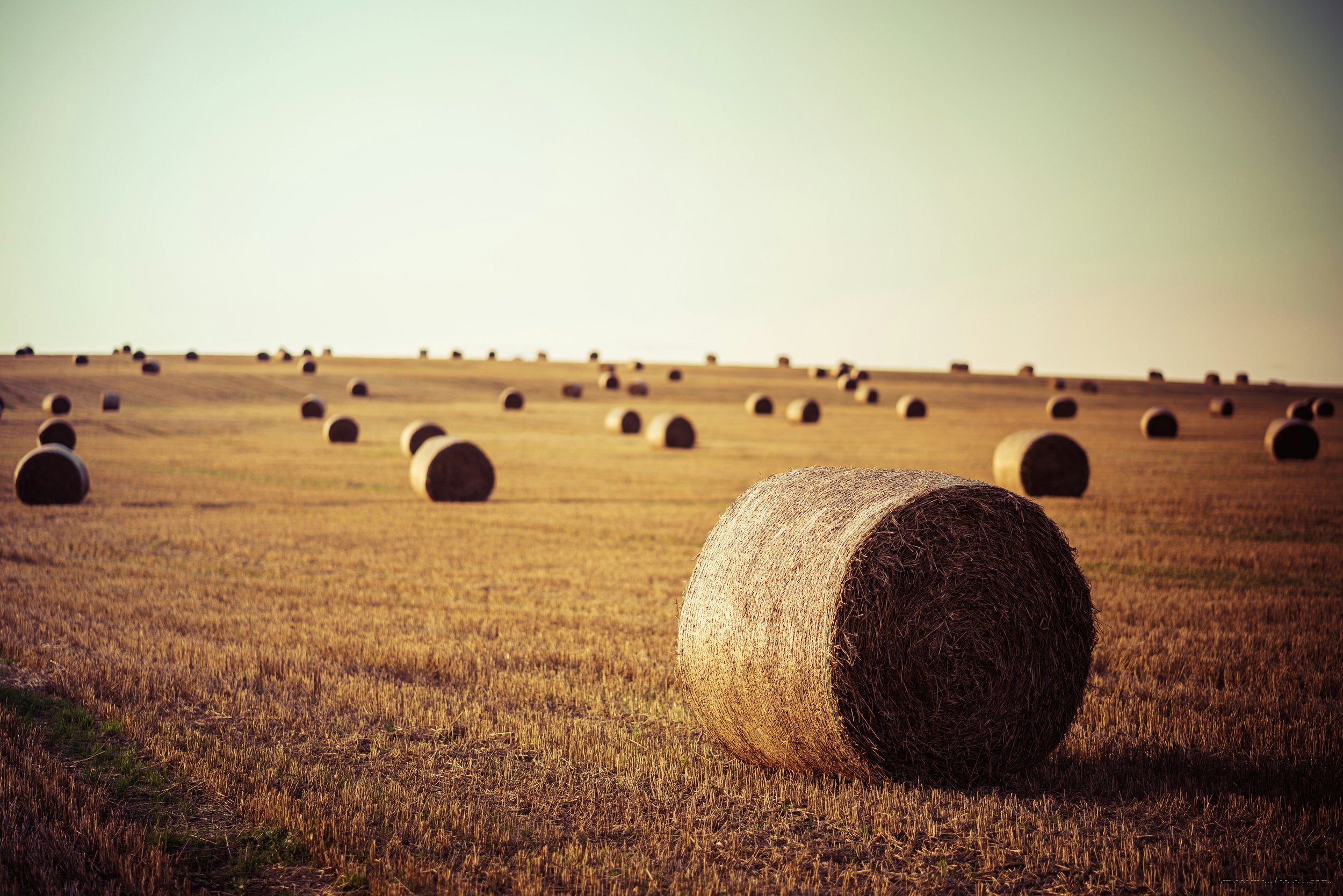
Stored Forage
What To Do With Your Forage Test Result
The forage test is only one step in ensuring your forage meets the needs of livestock throughout their life and reproductive cycle. Dr. Jeff Lehmkuhler provides a 4-step strategy for reviewing your forage production and cattle nutrient needs.
Featured Publications
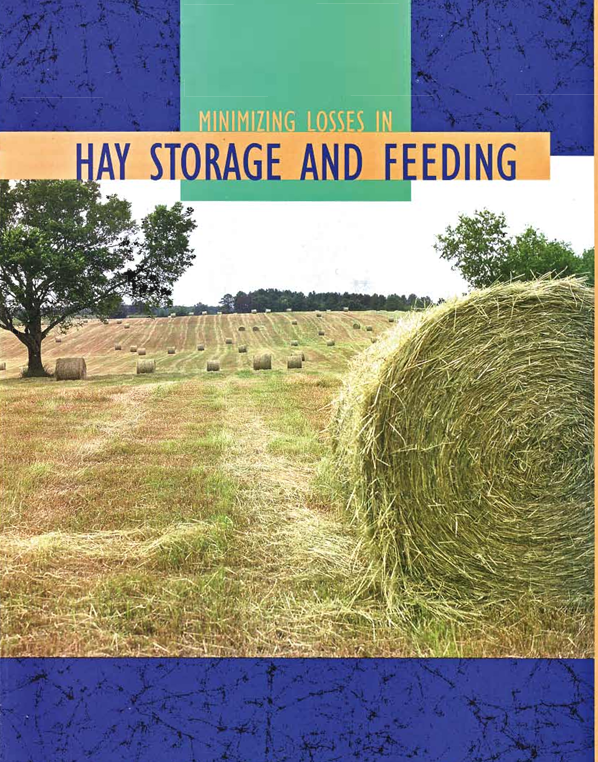
Minimizing Losses in Hay Storage and Feeding
From the Fact Sheet: Hay storage losses vary greatly depending upon several factors, but storage technique is of utmost importance. Download the fact sheet from the Kentucky Cooperative Extension Service
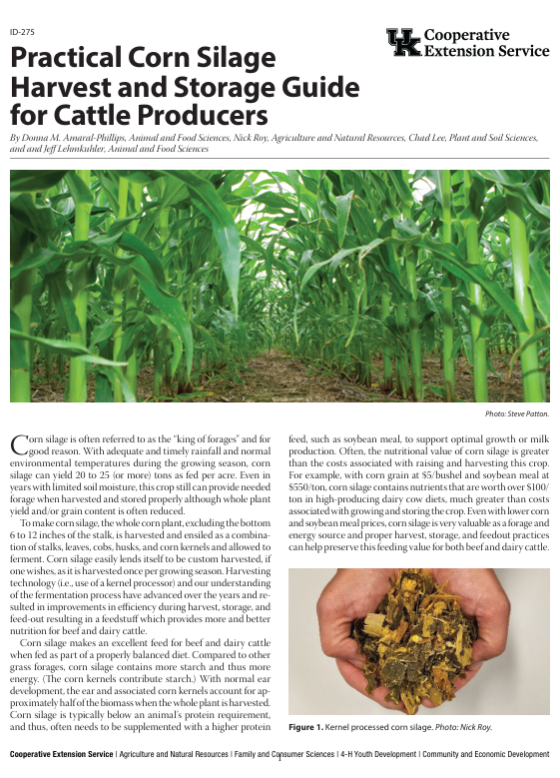
Practical Corn Silage Harvest and Storage Guide for Cattle Producers
From the Fact Sheet: Harvest and storage practices for corn silage impact the quality of feed at feedout, cattle performance, and profitability of cattle operations. Corn silage needs to be harvested at the correct moisture (62 to 65% moisture, 35 to 38% dry matter) content, stored in a properly sized and sealed storage structure, harvested rapidly, packed adequately to occlude oxygen, and allowed a minimum of three weeks to ferment. Download the fact sheet from the Kentucky Cooperative Extension Service.
Additional Publications
-
From the Fact Sheet: The benefits of making baled silage come from more timely harvest, lower dry matter losses during curing and storage, less chance for rain damage, and better retention of leaves in high quality forage crops like red clover and alfalfa. Disadvantages include handling heavy bales, keeping bales airtight, adapting baling equipment to handle wet forage, and plastic disposal. Download the fact sheet from the Kentucky Cooperative Extension Service
-
From the Fact Sheet: Knowing the nutritional quality of forage and hay is an integral part of a profitable and efficient livestock operation. Accurate estimation of forage quality starts with obtaining a representative sample of the forage to be fed. Proper sampling technique is critical. Download the fact sheet from the Kentucky Cooperative Extension Service
-
From the Fact Sheet: Baled silage allows forage to be harvested at higher whole plant moisture levels than required for dry hay. Baleage is ideal for spring cuttings of annual and perennial forages when seasonally frequent rainfall events provide little opportunity for properly drying hay for baling. Many producers have found that they can harvest winter annual forages as baleage in spring to supply all their winter stored feed needs. Download the fact sheet from the Kentucky Cooperative Extension Service
-
From the Fact Sheet: Hay storage losses vary greatly depending upon several factors, but storage technique is of utmost importance. Download the fact sheet from the Kentucky Cooperative Extension Service
-
From the Fact Sheet: Harvest and storage practices for corn silage impact the quality of feed at feedout, cattle performance, and profitability of cattle operations. Corn silage needs to be harvested at the correct moisture (62 to 65% moisture, 35 to 38% dry matter) content, stored in a properly sized and sealed storage structure, harvested rapidly, packed adequately to occlude oxygen, and allowed a minimum of three weeks to ferment. Download the fact sheet from the Kentucky Cooperative Extension Service.
-
Mary Drewnoski, Extension beef specialist with the University of Nebraska, recently developed a comprehensive list of hay probe suppliers. For more extensive information on sampling hay, visit the National Forage Testing website or download the UK publication AGR-257 “Hay Sampling Strategies for Getting a Good Sample” from the UK Forage Website under Hay and Storage.
Winter Bale Grazing Damage in Pastures from High Rain
Aerial footage of cattle bale damage following extreme rain events.