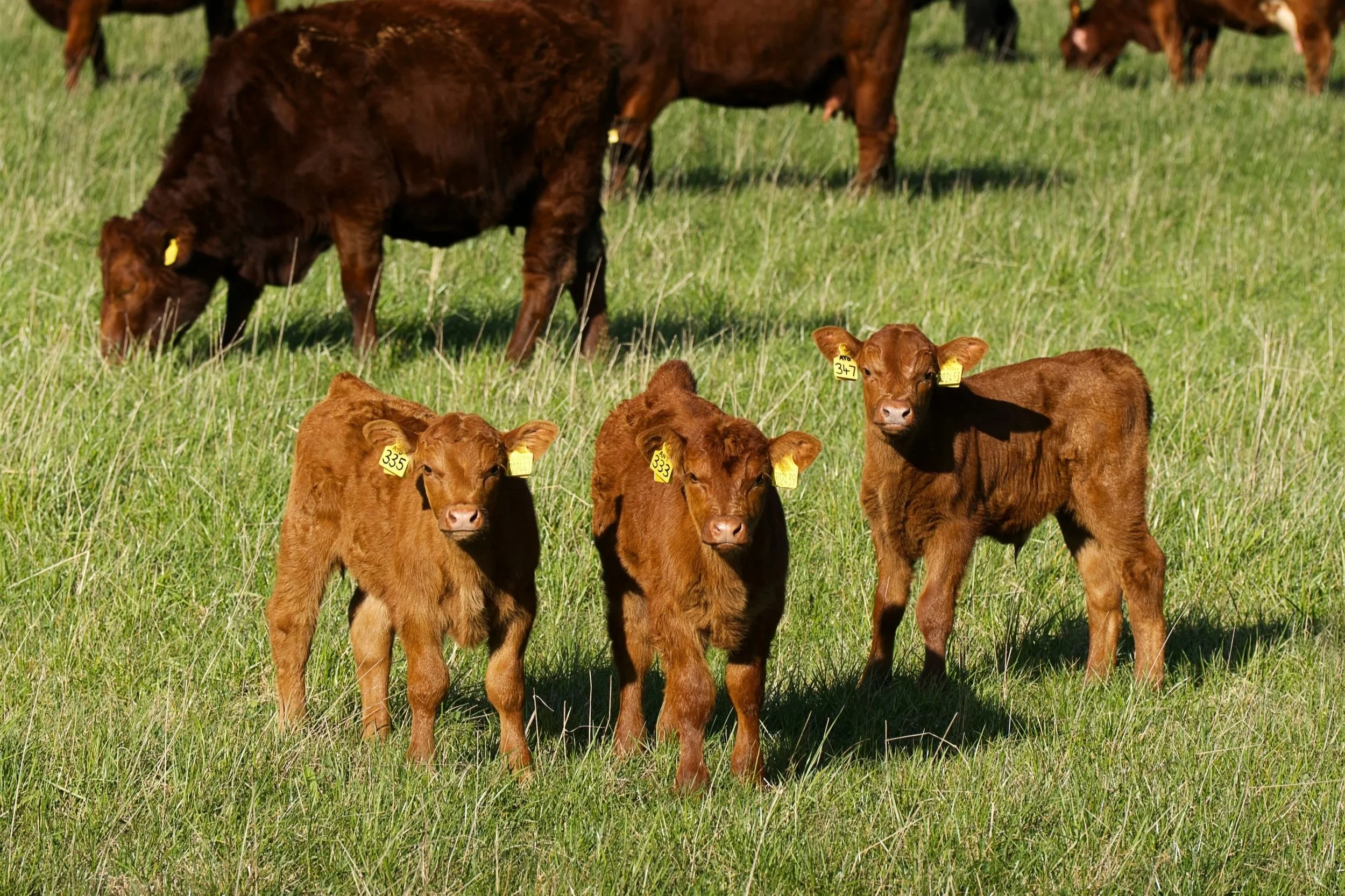
Grazing Management: Important to Large and Small Family Farms
An all-star lineup explores the benefits of regenerative grazing practices for producers and soil, including forage development, bale grazing, livestock nutritional needs, and pasture management.
Pre-Registration Fee: $40 per person. Must Be Postmarked by Feb 28
Registration Fee: $55 per person. Must Be Postmarked by March 8
Late Registration after March 8 and Walk-in Fee: $60 per person
No Refunds after Feb 28.
Want to write a check? Download the registration form.
Includes refreshments, lunch, and registration
Agenda
All times are Eastern Time Zone
7:30 AM: Registration and Refreshments, Rolls, juice, coffee, and milk
8:25 AM
Welcome & Introductions, Jason Tower8:35 – 9:35 AM
Keynote: Peter Byck: Roots So Deep: Stories of Forage, Fertility, and Farmer Ingenuity9:35 AM: Break & Networking
9:55 to 10:40 AM
Greg Halich: Bale Grazing Done Right: Soil Gains with Less Mud Pains10:40 to 11:30 AM
Dr. Peter Ballerstedt: Where’s the Meat? The Global Diet Is Falling Short11:30 AM: Lunch & Networking
12:30 to 1:15 PM
Dr. Peter Ballerstedt: The Other Side of the Plate: Why Animal-Source Foods Matter1:15 to 2 PM
Greg Halich: Outgrowing Fertilizer: Strategies for Improving Soil Health and Profit2 PM: Break
2:30 to 3:15 PM
Barry Fisher: Grazing with the Soil in Mind: From Pastures to Cover Crops3:15 to 4:15 PM
Panel Discussion & Q&A
Meet & Greet Opportunity
Available the evening before the Conference (additional fee required). The Meet & Greet includes a homestyle Amish meal and an opportunity to talk with our SIGC speakers. The Meet & Greet will be held at the Gasthof Amish Restaurant in Montgomery, IN on March 12, 2026, 6 to 8 p.m. (EST). You must have a paid conference registration to attend. Seats are limited!
About the Presenters
Peter Byck
Peter Byck has over three decades’ experience as a director, producer and editor.
His first documentary, “Garbage,” won the South by Southwest Film Festival, screened in scores of festivals and played at the Museum of Modern Art and Lincoln Center.
He is the director, producer and writer of “Carbon Nation,” his second documentary, which won the IVCA Clarion Award, the GreenMe Global Festival, and was runner-up for the EMA Award.
In 2020, Byck completed Carbon Cowboys, a 10-part documentary short film series, focused on regenerative grazing. The shorts screened in numerous festivals. “One Hundred Thousand Beating Hearts” in the series, won Best Short Documentary at a string of festivals, including at the Cleveland International Film Festival, and Phoenix Film Festival amongst others.
His current production is an episodic documentary series in four parts, “Roots So Deep (You Can See the Devil Down There).” The series follows Byck as he works with a group of farmers and scientists participating in a large research project to examine whether cattle grazing can be a benefit to the environment, if done differently from the modern-day, harmful, conventional agriculture practices. The science team compares conventional grazing and adaptive multi-paddock (AMP) grazing to see if the latter turns farming into a benefit for the land, the animals, and the farmers, and a carbon mitigation tool for climate change.
Peter Ballerstedt
Peter Ballerstedt, often known as “Don Pedro, the Sodfather of the Ruminati, ”is a forage agronomist and internationally recognized advocate for ruminant animal agriculture. He received degrees from the University of Georgia and a doctorate from the University of Kentucky. His career includes serving as the forage extension specialist at Oregon State University and over a decade in the forage seed industry.
A past-president of the American Forage and Grassland Council, Peter works at the intersection of grassland agriculture, ruminant nutrition, and human metabolic health. His personal experience reshaped his understanding of diet, chronic disease, and sustainable food systems, leading him to challenge long-standing dietary assumptions and highlight the essential role of animal-source foods.
Peter speaks widely across the U.S. and internationally, helping audiences understand how ruminant agriculture contributes to ecological, social, and economic sustainability. Many of his presentations can be found on YouTube. He lives in western Oregon with his wife, Nancy, and their dogs Conor, Noni, Iris, and Vincent.
Barry Fisher
Barry Fisher retired after 39 years with the USDA-Natural Recourses Conservation Service. Most recently he was the Soil Health Division Central Region Leader where he and his team provided leadership, training and technical exchange on Soil Health Management Systems for NRCS, farmers, stakeholders and partners throughout the Corn Belt and Northern Plains. Barry served on the National Soil Health Training Cadre for NRCS and represented NRCS on the NC SARE Administrative Council. Former positions with USDA- NRCS in Indiana include State Soil Health Specialist, State Agronomist, State Conservation Tillage Coordinator, Area Agronomist and District Conservationist.
Since retirement, Barry has launched Fisher Soil Health LLC as the next step on this soil health and regenerative farming journey. He remains active with state and national training and initiatives which advance technologies for improving soil health and adoption of regenerative farming.
“I have been blessed to work with some of the best and brightest minds in conservation agriculture throughout my career. Never has there been a more timely and critical need for sharing cumulative knowledge toward broad adoption of regenerative agriculture.”
Barry and his wife Michael practice soil health on their cash grain and livestock farm in West-Central Indiana. He has a bachelors of science in agriculture from Western Kentucky University and is a native of French Lick, Indiana. He serves on the Board of Directors of the Midwest Cover Crops Council and is a 40-year member of the Hoosier Chapter of SWCS.
Barry was acknowledged as one of the 25 Living Legends of No-till at the National No-till Conference.
He received the Hugh Hammond Bennett Conservation Legacy Award from NRCS for his contributions for the “Unlock the Secrets in the Soil” campaign aimed at improving soil health.
In 2022, Barry was awarded Certified Crop Advisor-Conservationist of the Year by the American Society of Agronomy, where he has maintained his certification since 1992, accumulating over 600 CEUs.
Other recognitions include the Spirit of Extension Award from Purdue University Cooperative Extension Service, Indiana Certified Crop Advisor of the Year, Indiana Association of Soil and Water Conservation Districts Presidents Award and selected to deliver the 2021 S.H. Phillips Distinguished Lecture in No-Till Agriculture at the University of Kentucky.
Greg Halich
Greg Halich is a forage systems economist at the Univ of Kentucky where he works with livestock farmers to improve profitability. Production focus areas are biological farming techniques that reduce or eliminate the need for commercial fertilizer inputs, grass-finished beef production, bale grazing, and extended season grazing systems. He lives and farms outside of Lexington Kentucky where he produces grass-finished beef.