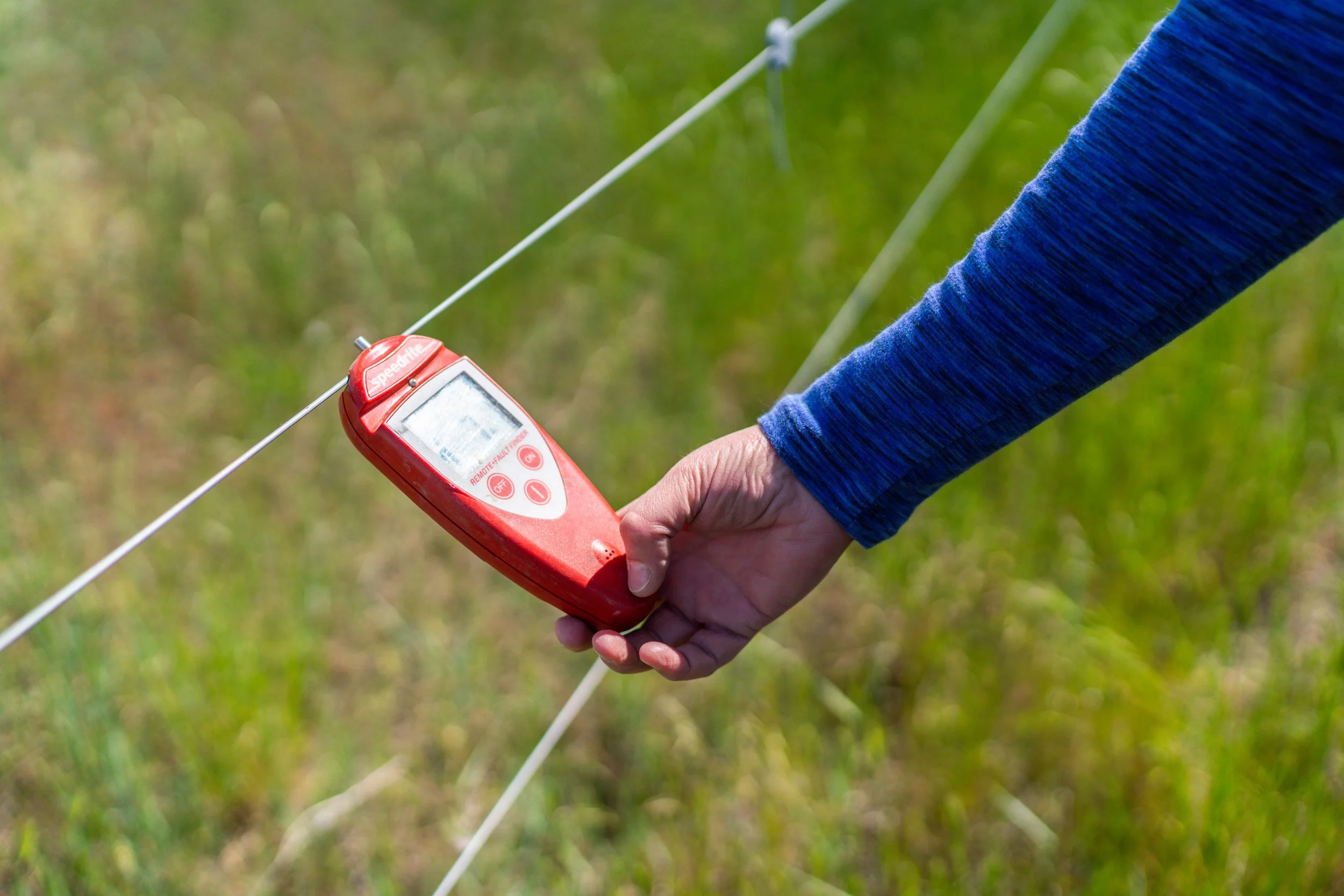
Pasture Design
Fencing is often an obstacle when producers transition to adaptive grazing for their livestock. With polywire fencing, you can easily create temporary paddocks that can be moved easily and frequently. Logan Karcher, director of producer programs with Illinois Grazing Lands Coalition, demonstrates how to easily run polywire and attach to your existing permanent fencing.
Featured Publications
Paddock Design, Fencing, Water Systems, and Livestock Movement Strategies for Multi-Paddock Grazing
From the Publication: This publication covers both the practical aspects and theory of adaptive multi-paddock grazing. It discusses shape and size considerations for paddocks and introduces a range of equipment options for fencing and water systems. Sources of technical and financial assistance and further resources are provided. A detailed appendix presents numerous approaches for moving livestock between paddocks. Download Paddock Design, Fencing, Water Systems, and Livestock Movement Srategies for Multi-Paddock Grazing from the ATTRA Sustainable Agriculture website.
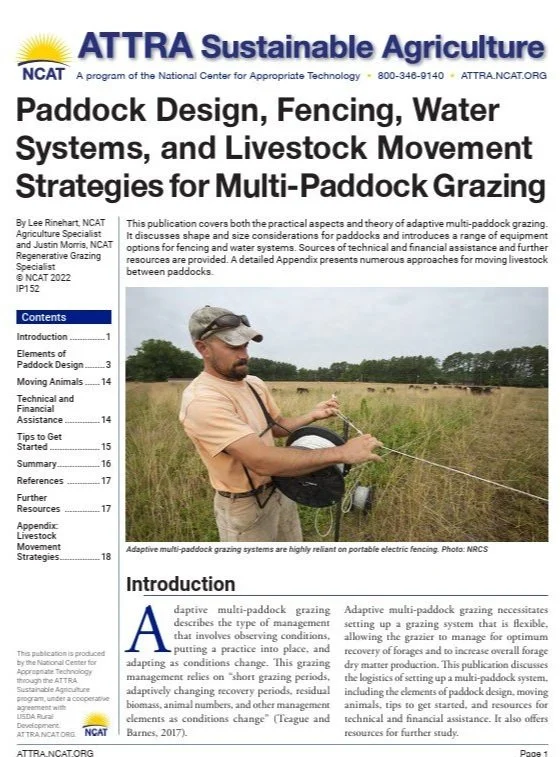
Solar-Powered Livestock Watering Systems
From the Publication: Guiding Illinois to achieve healthy soils, profitable farms, and resilient communities through grass-based beef systems. Download Solar-Powered Livestock Watering Systems from the ATTRA Sustainable Agriculture website.
-
From the Publication: This publication discusses the principles and practices of grazing multiple species of livestock on pastures. Here, you’ll find a discourse on the benefits of multispecies grazing on productivity and profitability, including its positive impacts on pasture diversity and health. Also covered are grazing dynamics (how diverse animal species use grazing resources), the types and kinds of fencing and working facilities needed by various animals, and how to deal with predators, mineral supplementation, and parasites. Finally, it covers vegetation management and how to make stocking-rate decisions. Download Multispecies Grazing: A Primer on Diversity.
-
From the Website: In the GrassWorks Grazing Guide you will find 270 pages of practical information and great tips from experienced graziers. If you are new to managed grazing, this book will be especially helpful. If you’ve been grazing awhile, you’ll discover new ideas. Buy the publication from GrassWorks Inc.
-
This manual provides all the resources you need to write your own grazing plan, monitor its efficacy, and adjust your management throughout the grazing season. Download the Grazing Planning Manual and Workbook.
-
From the Publication: Pastures represent a largely untapped resource for farmers. More than one quarter of the Midwest’s agricultural land is in some form of pasture. Yet, 80% of these pastures suffer from poor, uneven fertility coupled with serious weed and erosion problems. Most pastures are continuously grazed throughout the season. However, continuous grazing results in the lowest possible pasture yields since the forage is not allowed to recuperate between grazing. Download the publication from Wisconsin Extension.
Additional Grazing Publications
FREE VIDEO SERIES FROM THE WALLACE CENTER
Fencing 101
From the Video: In this video series, fencing expert Kent Solberg, with help from organic dairy farmer Kevin Jahnke, describes the principles and pitfalls of energized fencing in a series of practical how-to videos. If you’ve ever wondered how to tie a New Zealand fence knot or what you need to outfit your fencing rig, look no further!
Featured Publication
Beginning Grazier Handbook
From the Publication: Designed to assist the beginning grazier in designing and implementing a grazing system, this handbook is a starting place for you to quickly and easily find pertinent information. Most of the resources listed include website links – explore these links to find additional grazing information that is specific to your interests. Download this publication from the Sustainable Farming Association.
Featured Videos
From the Video: How do you determine the size of your paddocks? It depends on many factors, including forage height, total weight of grazing cattle, and the amount of forage the farmer wants to leave behind.
From the Video: Outfit your ATV fencing rig with custom attachments that enable youto carry calves, build fences, fix water lines, and more. Wallace Center
From the Video: Fencing failure is often caused by grounding issues, so it is important to carefully consider ground rod placement. Wallace Center
From the Video: In this video tutorial series, fencing and watering experts provide a comprehensive overview of watering systems for grazing livestock – from sourcing water, watering infrastructure, to creating water systems for winter grazing. Wallace Center
From the Video: Fencing plays crucial role in grazing cover crops with livestock. Years ago, we yanked out all the fencing on our fields. Dr. Allen Williams, Pasture Project & Grass Fed Insights, LLC, and Kent Solberg, Sustainable Farming Association, demonstrate new options for fencing, including practical advice for wire spacing, line post spacing, and cost. Wallace Center