Team approach provides solution to life’s challenges for Becherers
In 1992, Terry Becherer drove down a Clinton County road and noticed a for sale sign on a 40-acre dairy farm. As the auctioneer’s gavel fell, Terry began imagining what his future there would become.
He finished college and moved away for a time for his job requirements, then returned in 1995 and began to get serious about raising sheep with his father and soon-to-be bride, Angela.
He stopped by the local Extension office to get information on growing different grasses for pastures. As luck would have it, he connected with Ed Ballard, acclaimed animal systems educator for Illinois Extension whose work on farm profitability and sustainability focused on forages and grazing management.
“That’s all it took,” Terry laughed.
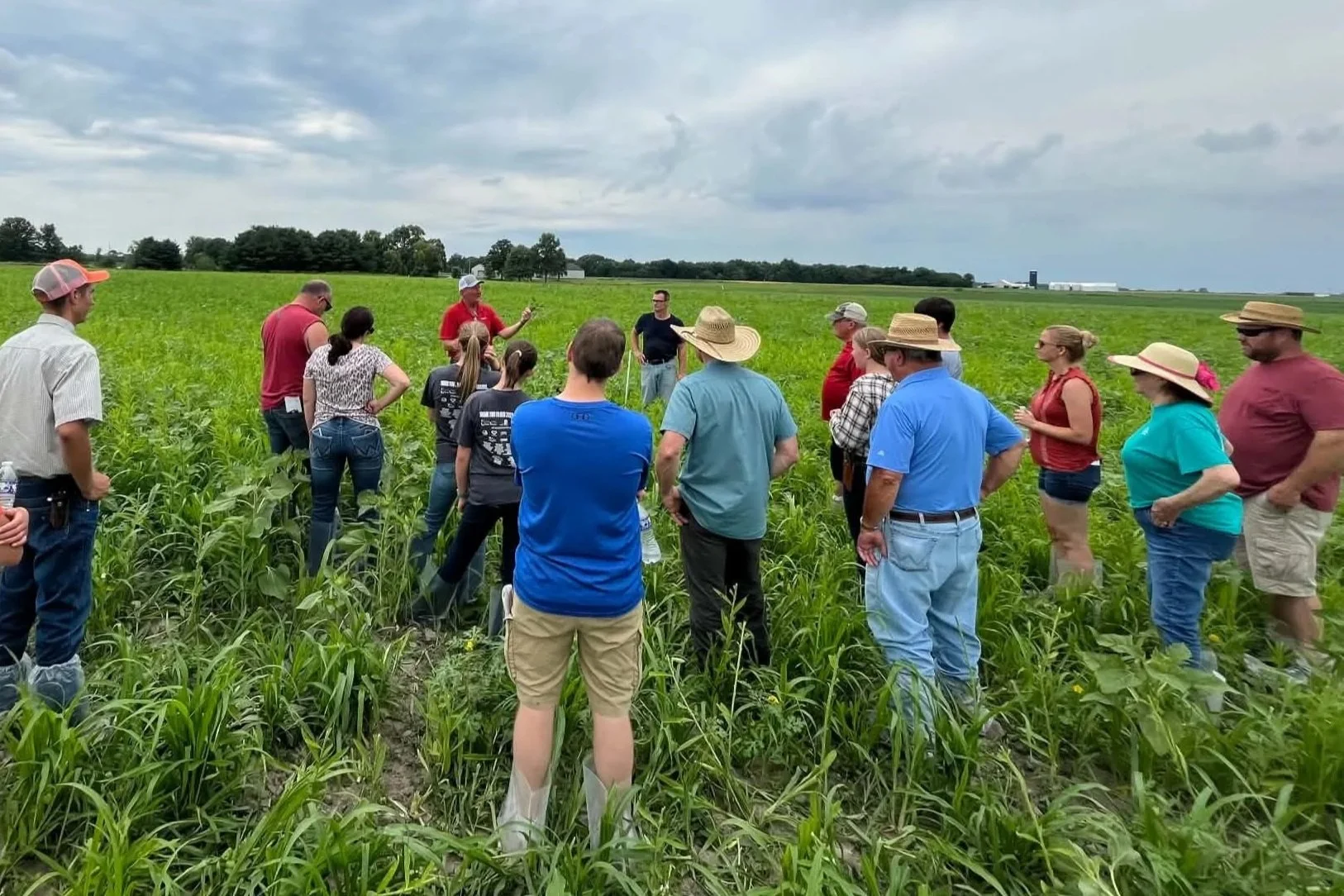
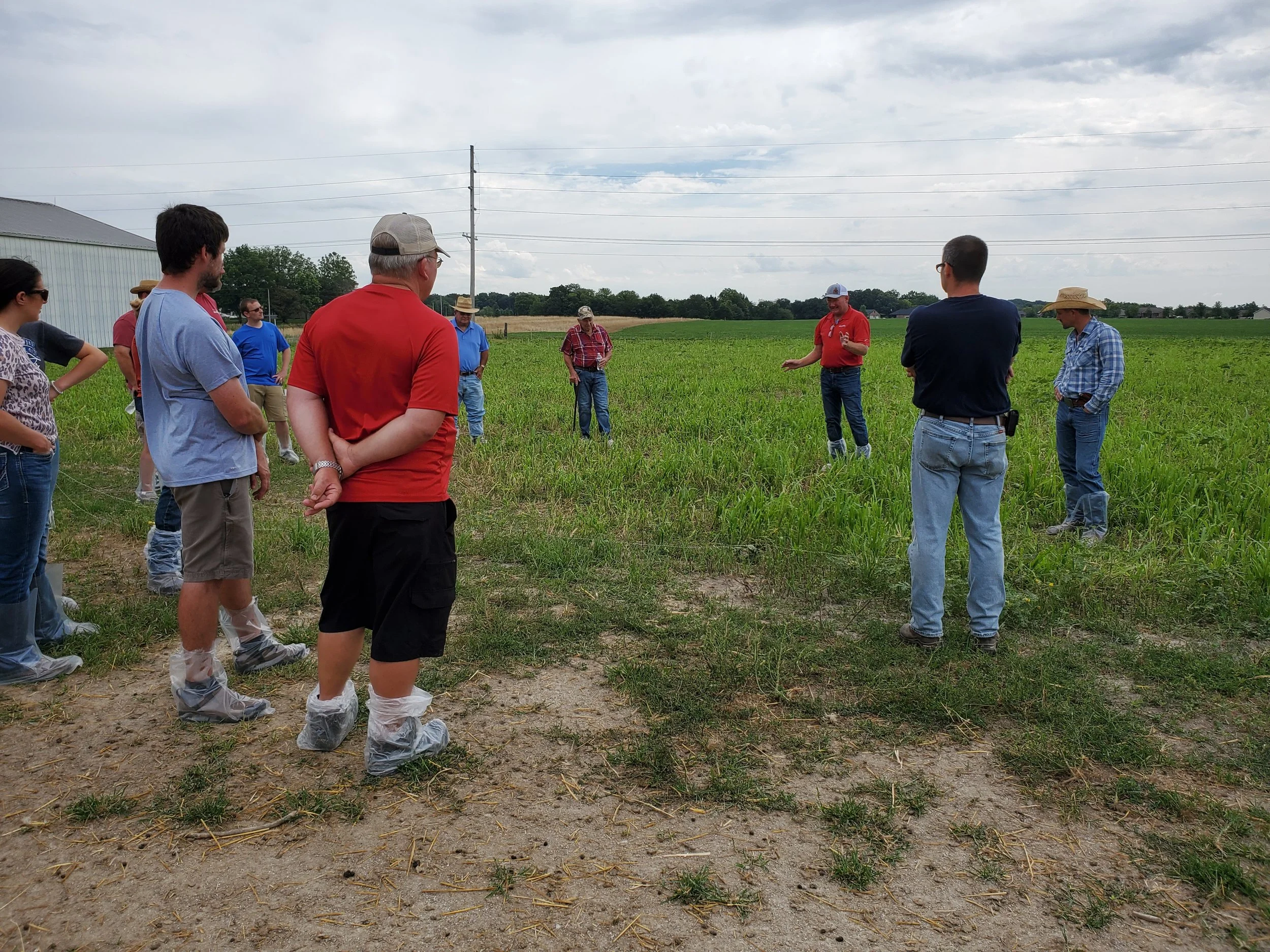
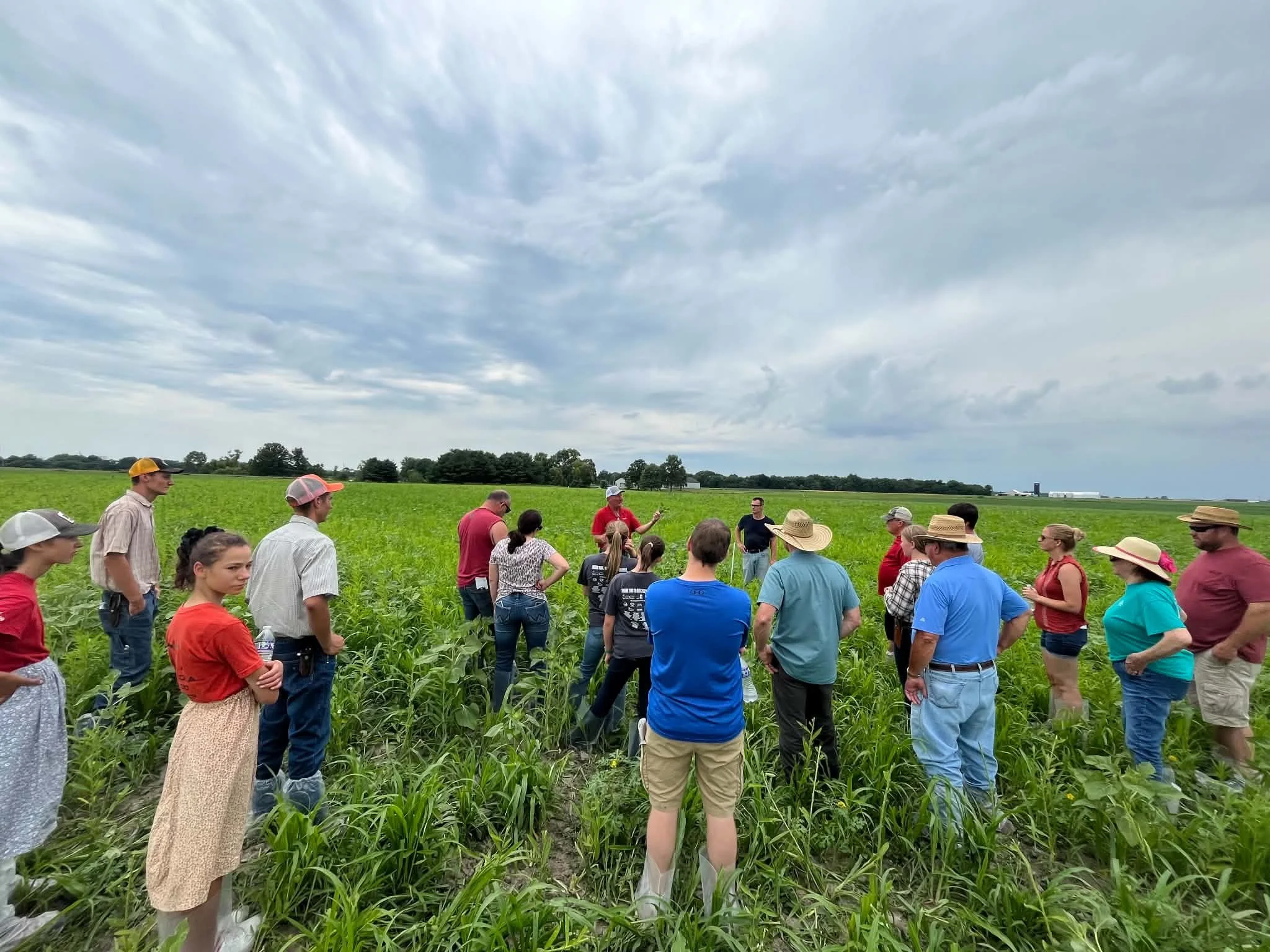
Terry and Angela Becherer hosted graziers to his Tremont farm for a Illinois Grazing Lands Coalition event. Cliff Schuette of Schuette Seeds was demonstrating.
Evaluating forage systems
Ed needed farms to study forage production systems; Terry needed advice on how to transition cropland into pastures for grazing sheep.
“We had row crops first, but sheep were more profitable than row crops,” Terry says.
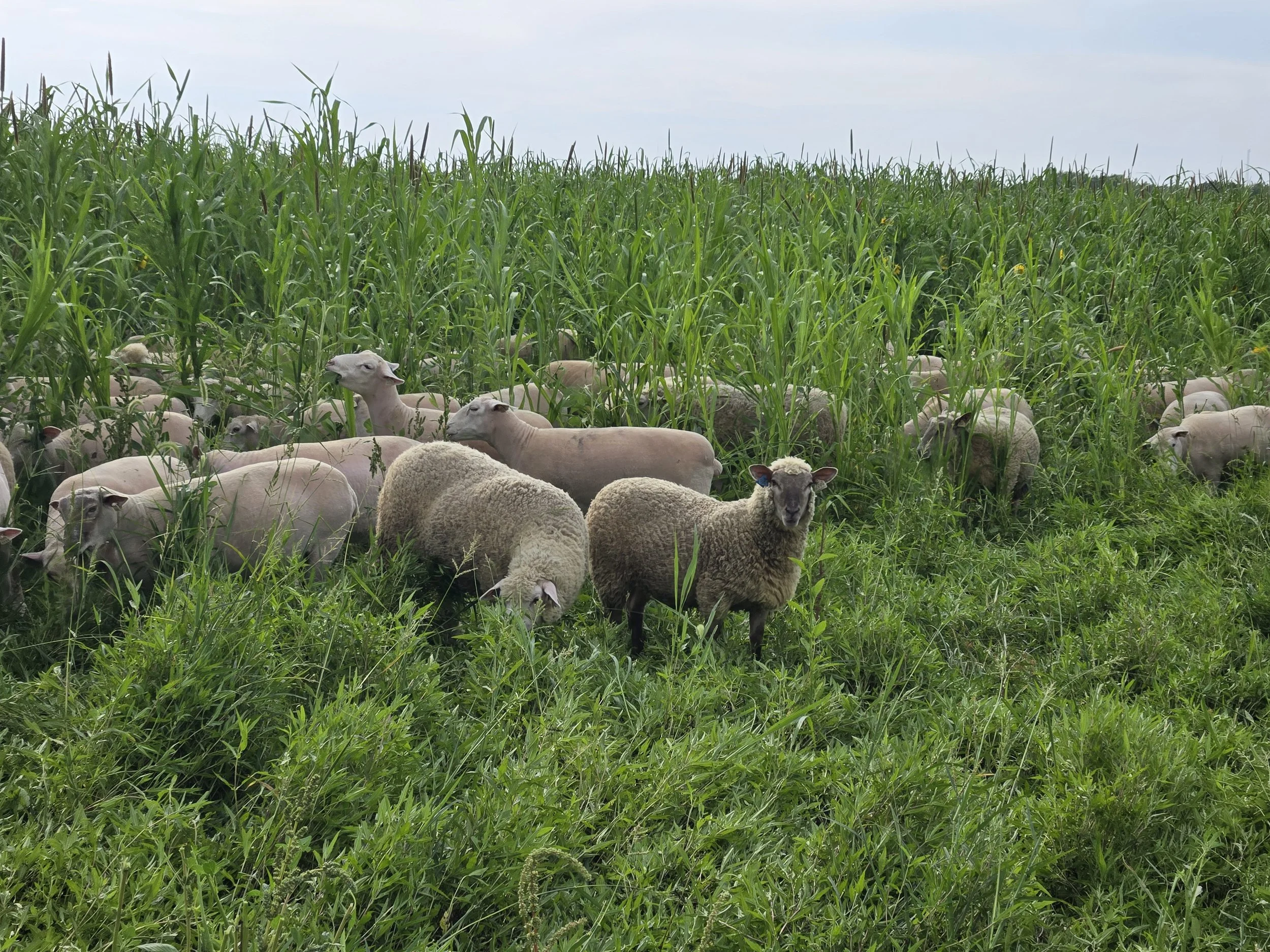
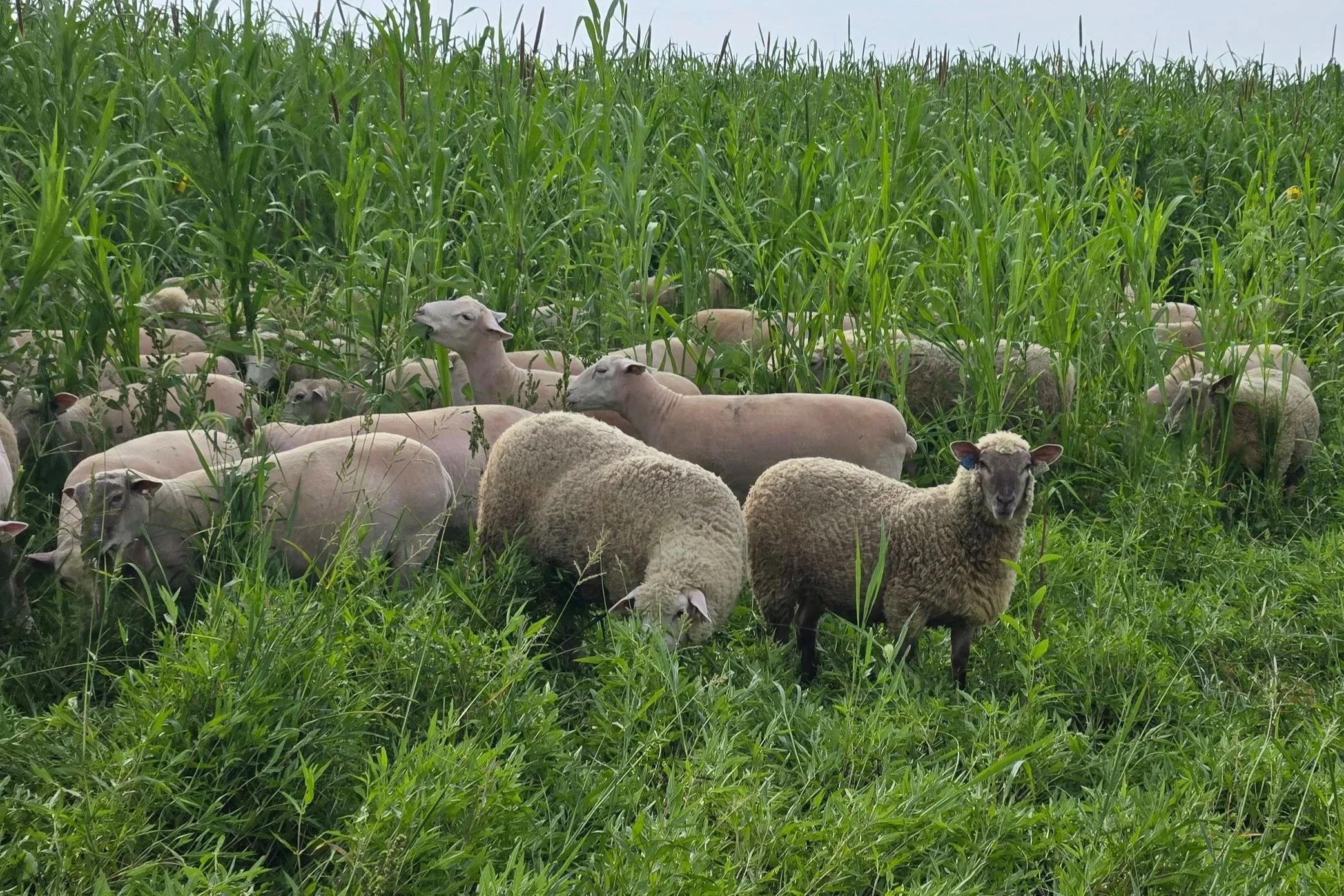
At its peak, the farm had 400 ewes and was using Cornell’s STAR lambing system, scheduling lambing every 73 days. They timed lambing to align with peak forage growth. Under the accelerated lambing schedule, the farm was selling 800 to 1,000 lambs a year to one dedicated buyer.
Terry needed a forage system that could keep up with demands of lambing. For four years, Ed took forage samples to evaluate the quality of feed Terry’s sheep were grazing.
“The results changed how I was feeding my sheep and showed me how much cheaper it was to leave them on pasture.”
The pastures are still outperforming what the sheep need, so Terry sells to local dairies who value the nutrient-rich feed. He uses no synthetic fertilizer; sheep manure provides all the nutrients the grasses need.
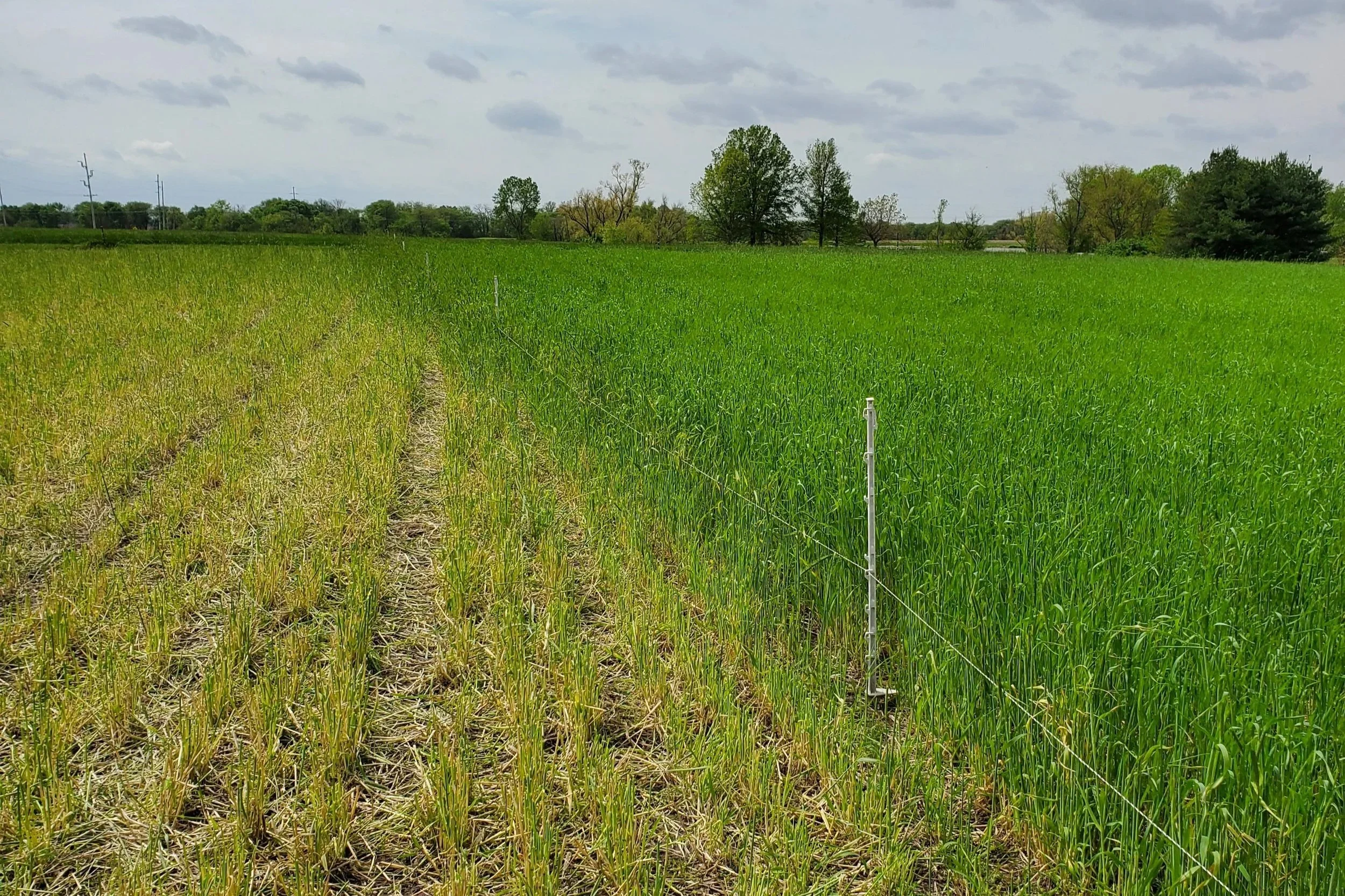
Early on, Terry established his perennial pasture with Smooth Brome, orchard grass, and white clover. He experimented with some “newer” fescues, like MaxQ. Each had their benefits and drawbacks.
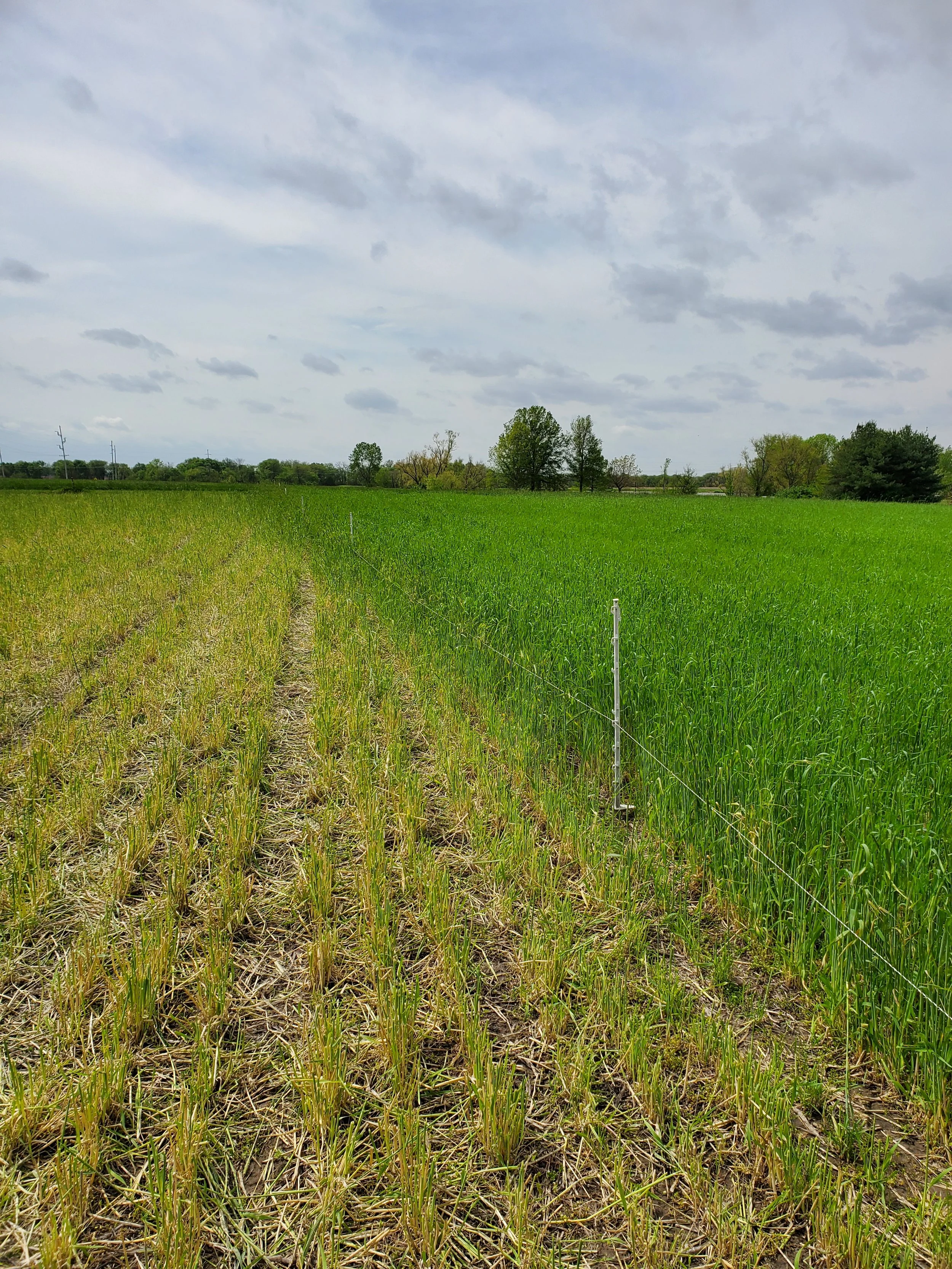
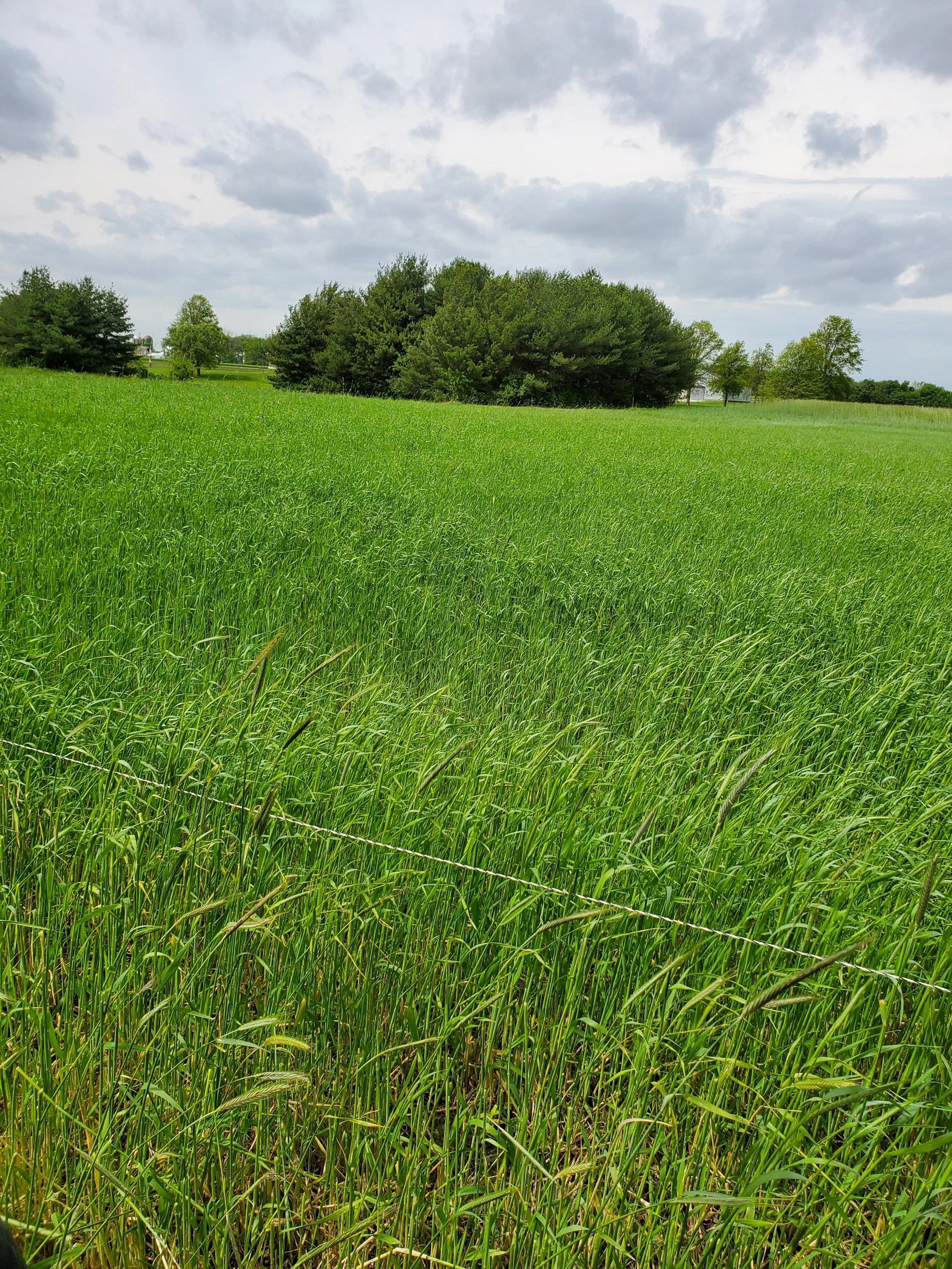
He filled in the gaps with annual cover crops, such as cereal rye, oats, pearl millet, and rye grass. Pearl millet is favored by his sheep. He varies the planting times to allow for rotational grazing throughout the growing season.
It is not uncommon for ewes to graze 320 days a year on pasture without supplementation.
He took out all the permanent paddocks and now uses polywire with step-in posts for daily moves from paddock to paddock.
Adapting to life’s challenges
Life changed in 2020 when Terry lost his eyesight. Now, legally blind, he continues with the ever-present help of his wife of 30 years, Angela.
“Without her support over the years, none of this would take place,” Terry says. “Now it’s ‘us’ doing it.”
The first step was to scale back the number of ewes to just under 250. He counts steps as he unrolls polywire and places posts; she gives him a gentle nudge to straighten the rows.
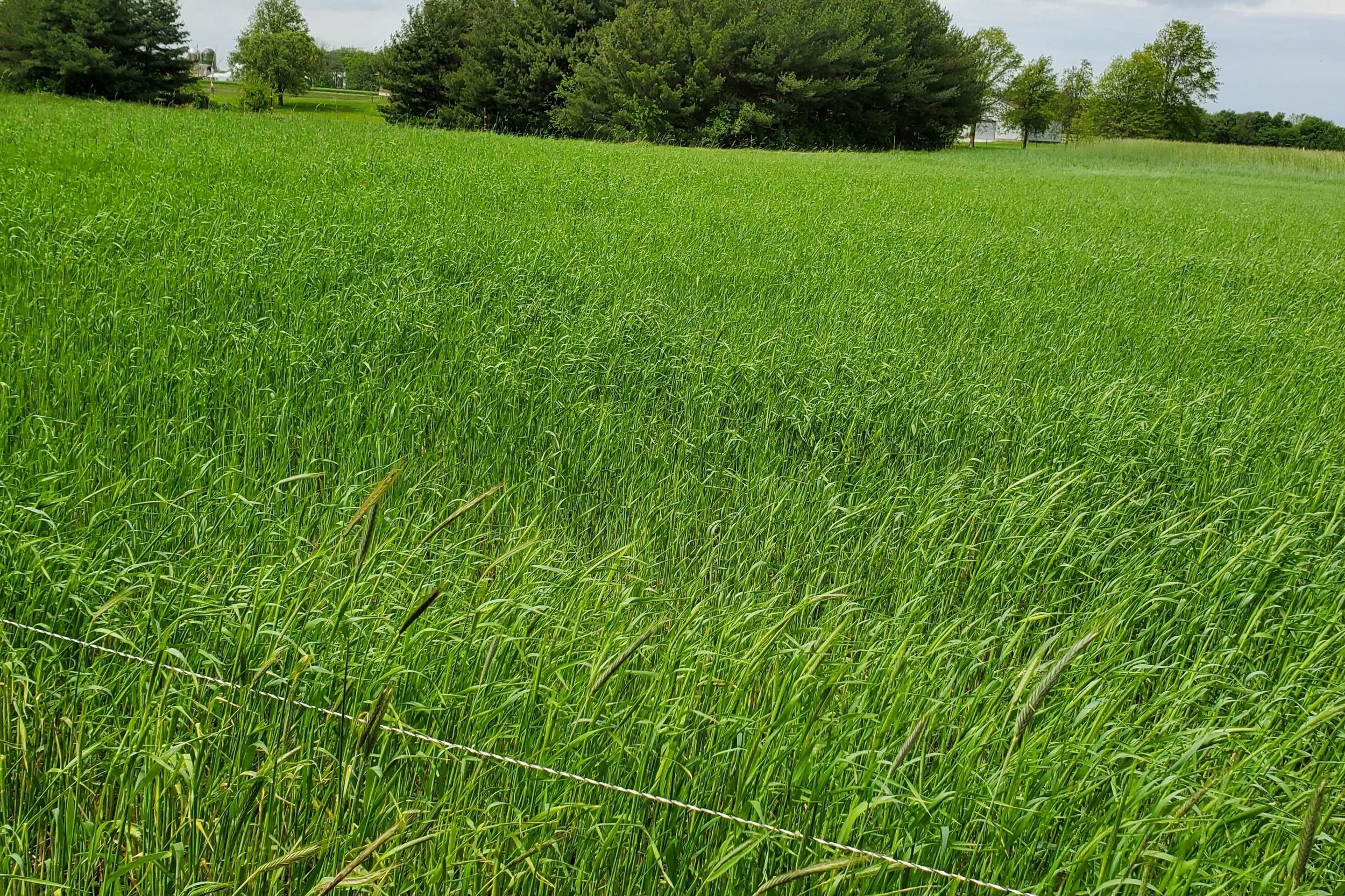
They’ve transitioned away from perennial grass and rely now on annuals when he was no longer able to manage and cut the perennial pastures.
They till the field, first because it helps manage parasites, and second because it’s easier for Terry to see the upturned ground when he plants. While Terry drives the tractor, Angela sits on the fender, pointing him right or left as needed.
They’ve adjusted the feeding schedules to accommodate the best sunlight. The lambs stay on dry lot.
“I can hear them, but I can’t always see them,” Terry says.
While others might have given up, Terry and Angela have modified their approach to doing the things they love. As they adjust to the new reality, Terry has dreams of increasing numbers.
“The opportunity in this field is enormous,” Terry says. “This type of agriculture is limitless.”
His enthusiasm hasn’t dimmed one bit since those early years, though his eyesight reminds him daily of the challenges it now presents. Now, it’s a team dream from the dream team.
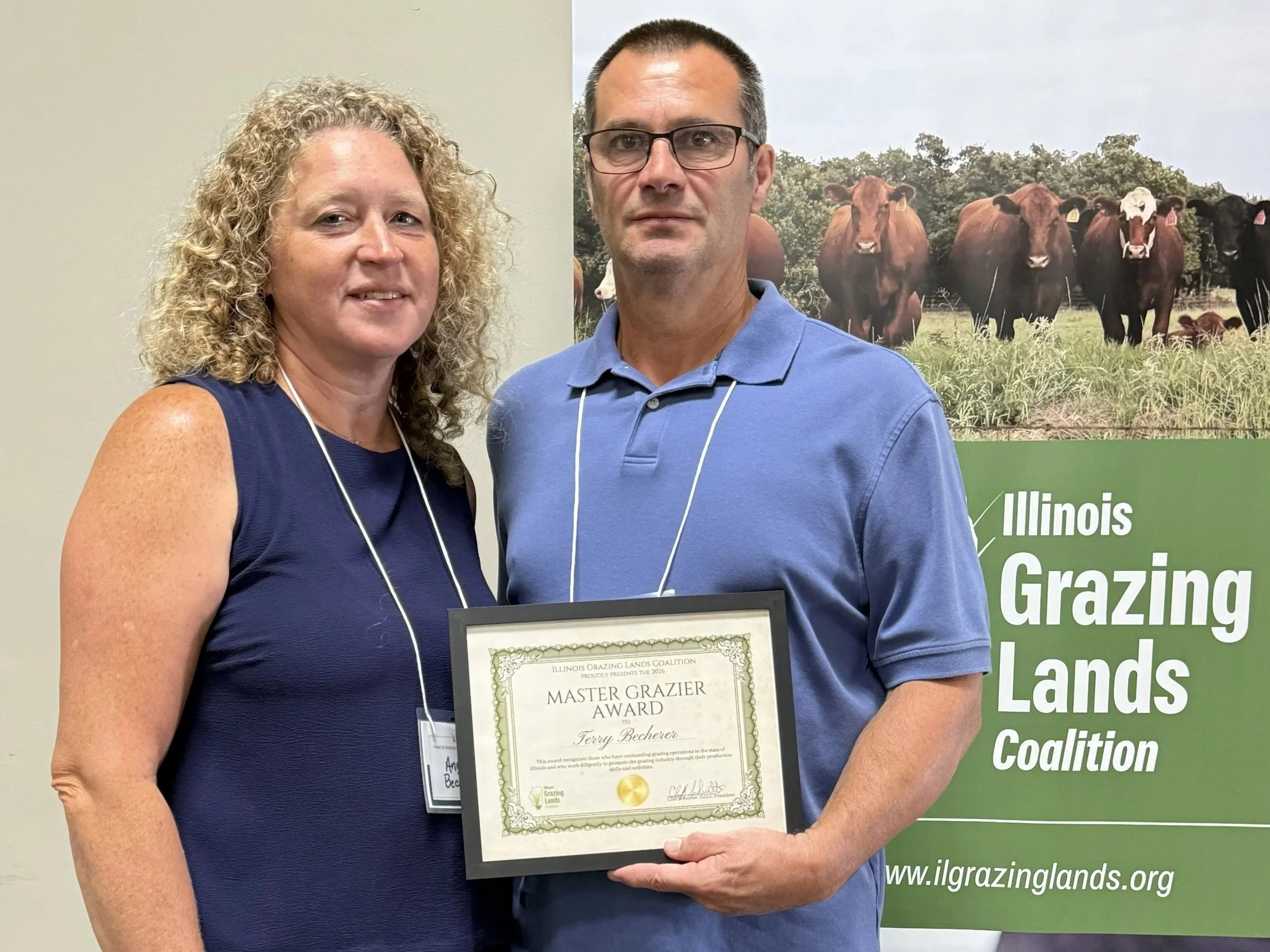
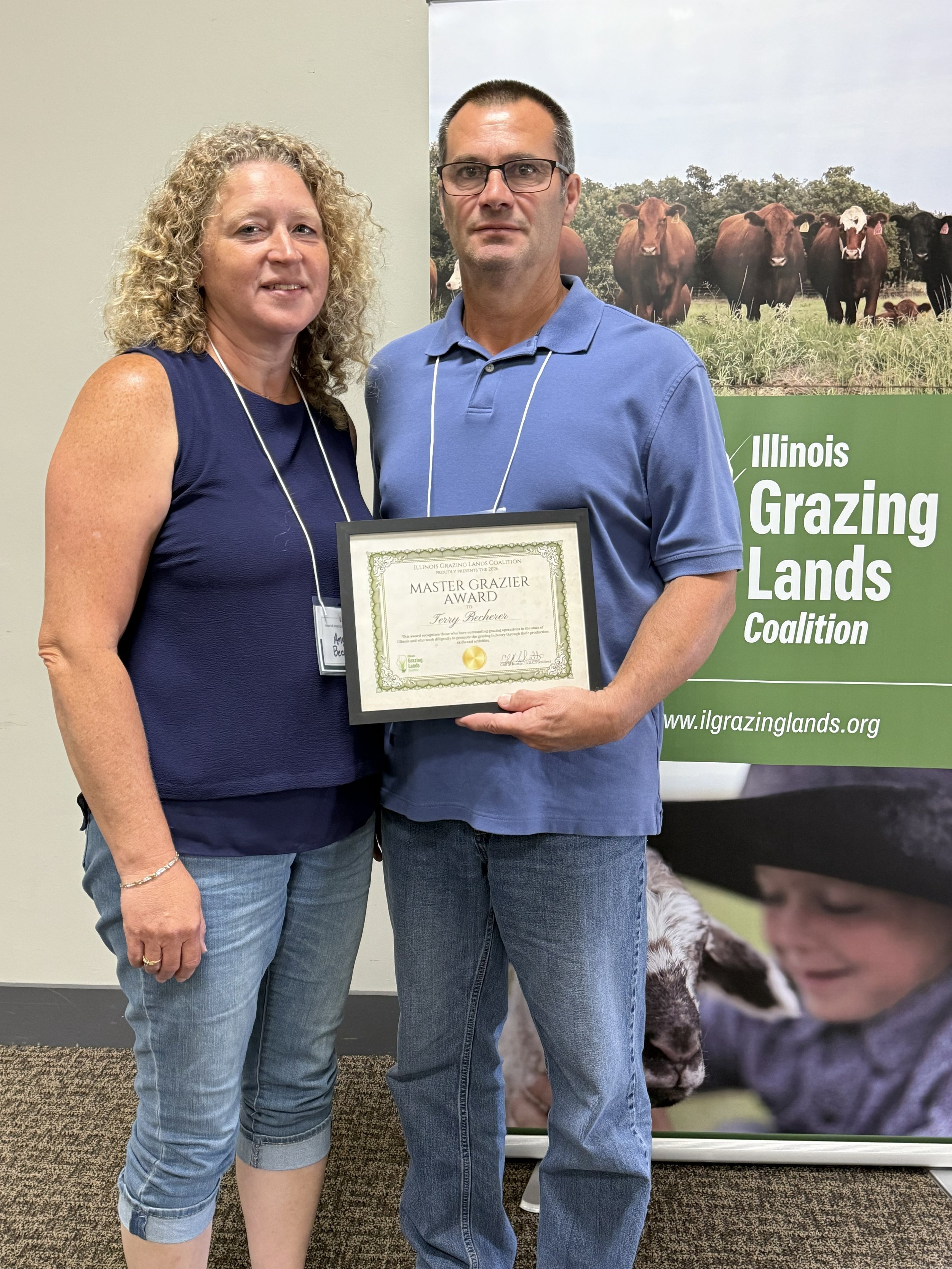
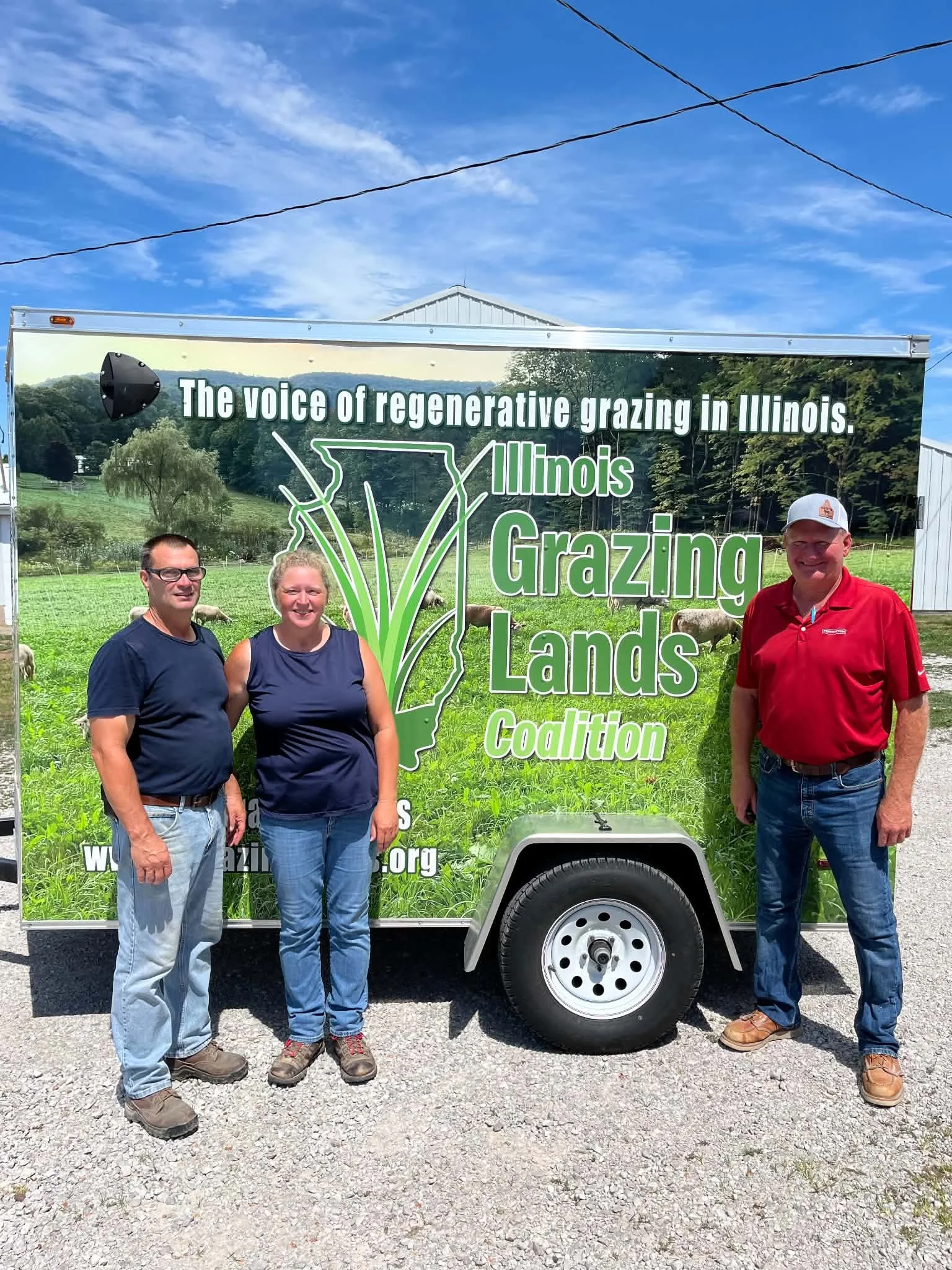
Terry and Angela Becherer were named a 2026 Master Grazier Award winner by the Illinois Grazing Lands Coalition.