When opportunity knocks, open the gate and let the sheep in
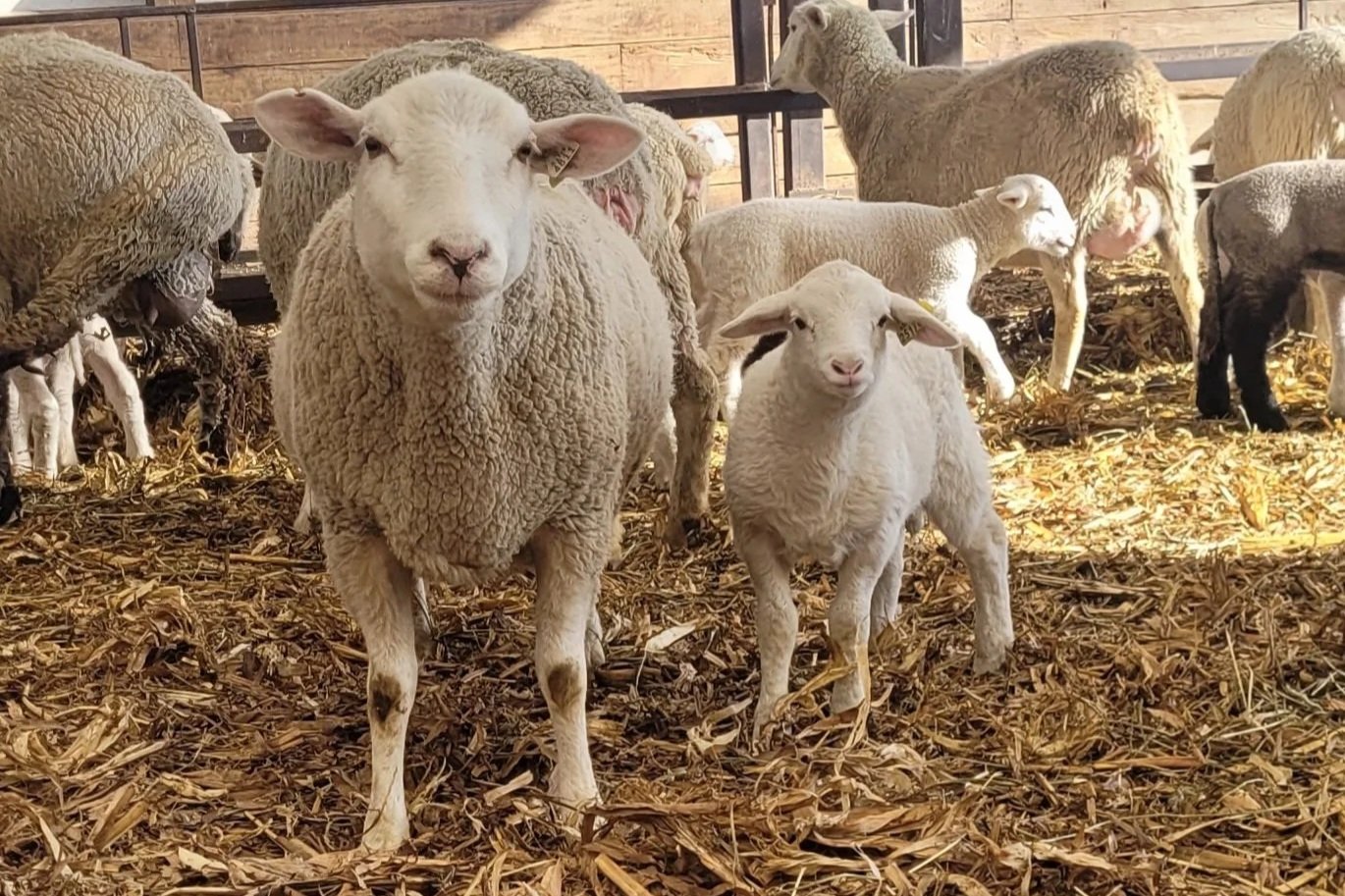
Rick and Brenda Adams have raised sheep for decades on their Kankakee County farm. Rick’s father raised Horned Dorset sheep. Rick showed Hampshire sheep in 4-H and is well known in the club-lamb circle for producing Hampshire and Shropshire champions.
Rick isn’t afraid of change and is a pioneer in challenging “what is” for the potential of “what could be.”
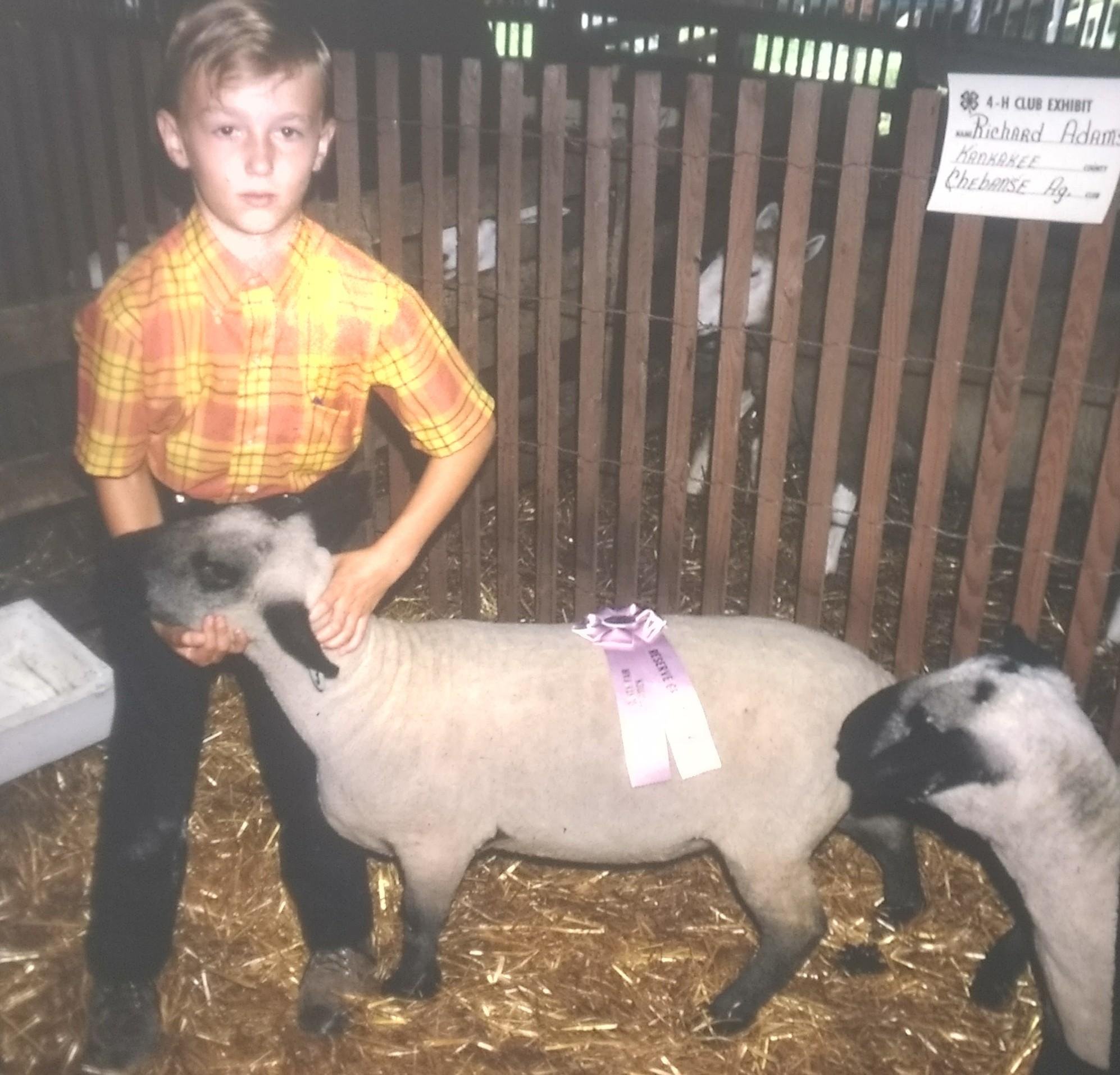
A young Rick Davis
Rick showed Hampshire sheep in 4-H and is well known in the club-lamb circle for producing Hampshire and Shropshire champions.
“I was a black-face producer for several years,” Rick says. When the farm ended its hog operation in 2003, he expanded the commercial sheep enterprise. They fenced 50 acres with EQIP assistance and expanded to 250 ewes which are rotationally grazed.
The battle of the breeds
He added Ile-de-France sheep for their rugged ability to be productive in all types of environments, Rick says. The retirement of their sheep shearer prompted Rick to consider adding hair sheep genetics to the herd.
Hair sheep naturally shed their coats in spring or summer, eliminating the time and expense of shearing, as well as parasite challenges. With the diminished value of wool, hair sheep have gained popularity.
In Illinois, Katahdin and White Dorper are two leading hair breeds, and Rick incorporated both genetics into the herd. Then, in 2020, he added a relatively new breed in the U.S. — Australian White, known for its superior eating quality. He used an Australian White ram on the half Dorper, quarter Katahdin, quarter Ile-de-France ewes to push for the traits which are profitable and manageable.
“The goal was to be shedders, not shearers,” Rick said during an interview with Tim Ventrello of Linessa Farms, though the herd does include Border Leicesters whose wool is used in Brenda’s fiber arts and spinning projects.
Rick has developed a reliable market, including one which provides lambs to restaurants in the Chicagoland area and another in northwest Indiana that caters to backyard grillers. He also fosters relationships with clients who purchase one or two 80-pound lambs at a time.
Knowing each client’s needs ensures satisfied, repeat customers, which is critical in the sheep business.
Solar grazing as the next ‘what could be’
Rick was looking for a way into the solar grazing industry. That opening came this year when Chauncey and Brooke Watson decided to release their Kankakee County solar grazing lease with United Agrivoltaics in order to expand their solar operation closer to their home.
“The entry into solar grazing gives us a chance to grow without the expense of buying or leasing land,” Rick says. The 75 additional solar acres has allowed Rick’s son, Damian, to join the operation. There are plans for additional expansion in 2027 with additional solar acreage.
Rick knows that putting solar panels on cropland isn’t always popular, but to him, it just makes sense.
Solar grazing keeps agriculture on the land.
“Utilizing sheep under panels is a good way to keep agriculture on that land. ”
The ultimate goal of solar grazing is that the forage stays small enough to not interfere with the panels. Mature ewes rotate between solar fields, then pulled in the fall when forage stops growing. The panels provide shade. Trail cams allow Rick to monitor how much water they’re consuming.
“This opportunity came about because I was already a decent grazier,” Rick says. Sheep must graze the forage that’s there, so good management is important.
Solar companies embrace sheep grazing as affordable vegetation maintenance on solar sites, reducing operational and maintenance costs and also increasing the overall productivity of the land
By solar grazing sheep, chickens, turkeys, rabbits, and pigs to control the pastures vegetation beneath the panels, we look to not only save O&M costs over traditional mechanical mowing but increase the overall productivity of the land.
This first year had unique challenges, Rick says. The spring 2026 hail storm destroyed many of the panels, so fields had to be mowed before repairs could be made. No grazing was allowed while the repairs were made, so the fields required more mowing than expected.
What has he learned?
“Don’t undersell yourself,” Rick says. “They pay as much as they do for a reason.” It’s work; still, he knows the unique challenges they faced this year won’t be annual challenges.
Mentorship roles
Rick was honored by the Illinois Grazing Lands Coalition in 2026 as a Master Grazier. He shares his expertise as a small ruminant grazier at conferences and is a guest on the Linessa Farms Live! podcast.
He served on the American Shropshire Registry Association Board of Directors for 12 years and was president of the association for two years. He currently serves on the Australian White USA Board of Directors.
“As a member of the AWUSA Board, Rick offers seasoned perspective, steady leadership, and a deep understanding of both commercial and seedstock production,” a spokesperson says. “His long-term industry experience strengthens board policy discussions and supports AWUSA’s continued growth and credibility.”