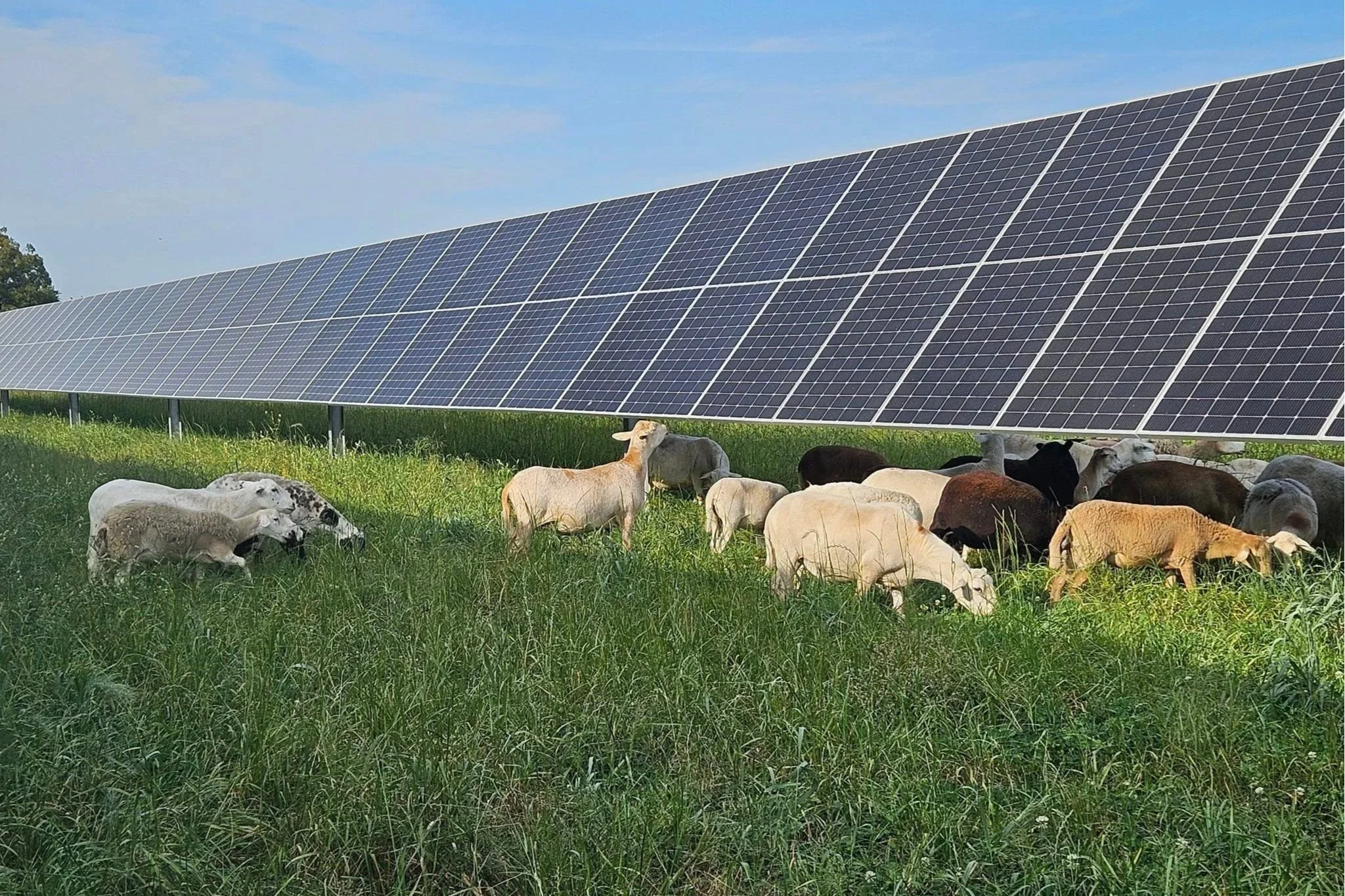
Sheep from Illinois Solar Grazing and Mowing at a solar site in Cook County, Illinois. Photo credit Brooke Watson.
It all started with a 4-H lamb.
For six generations, the Watson lineage has worked the land of DeKalb County. In the years since 1856, some land has been sold off, other land rented, to provide for the next generation of caretakers.
Today, Chauncey Watson IV carries the family name and operates the farm with his wife, Brooke, and his parents. The young couple welcomed Chauncey V in 2025.
4-H project expands enterprise
More than 30 years ago, Chauncey IV decided to raise a lamb for his 4-H project. That sparked the family’s curiosity: Could diversifying the farm’s livestock reduce risk?
They began expanding their commercial dry lot livestock system. Readily available corn silage made the venture more profitable as they expanded their direct-to-consumer lamb market.
“I think our location outside Chicagoland helps with that,” Brooke says. “Our bread-and-butter is working with the Muslim market, as well as first- and second-generation immigrants who grew up raising and eating lamb in their home country.”
The couple, who met in college at University of Illinois, sells hundreds of live lambs every year to fill that need in their local communities.
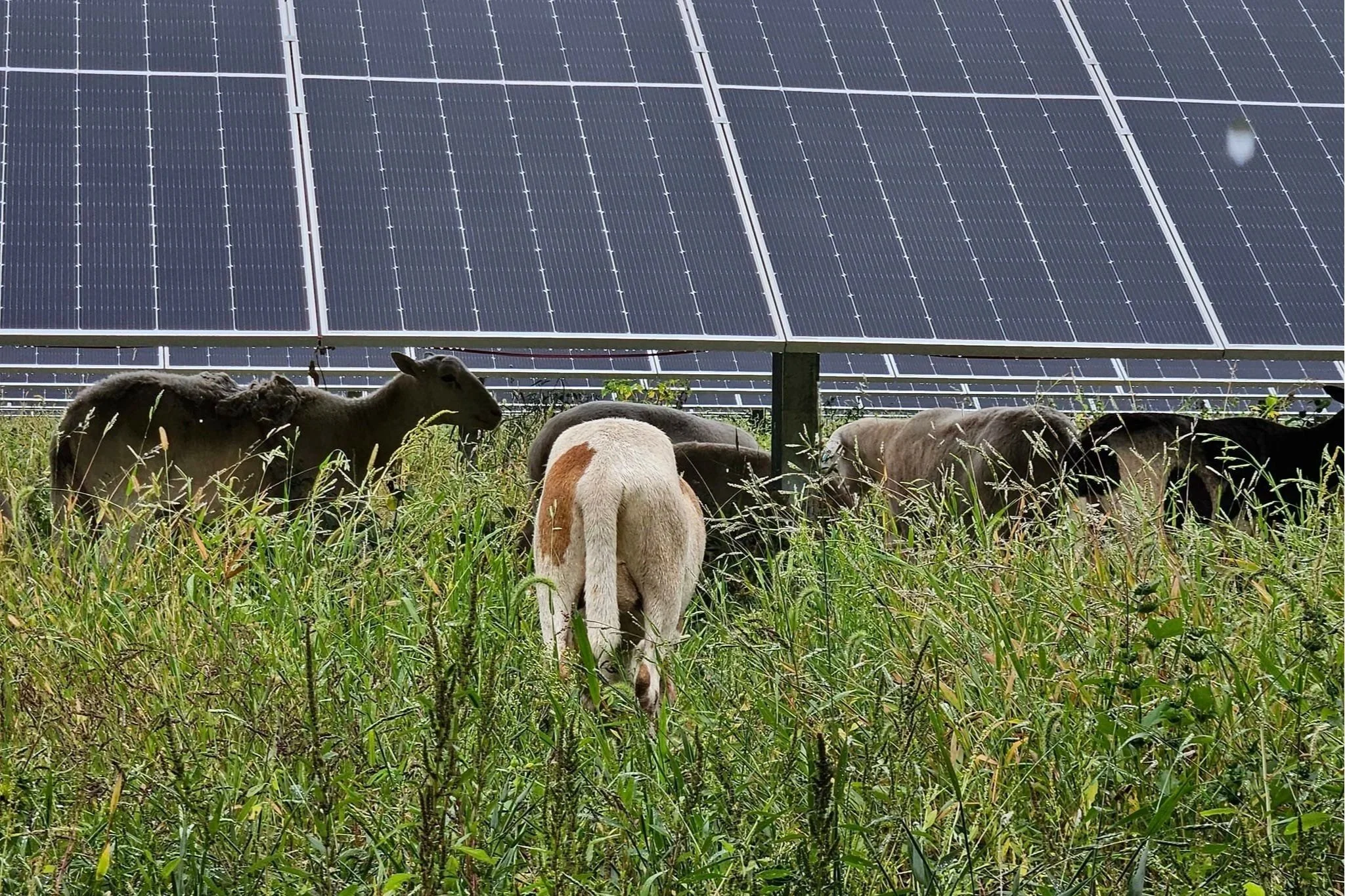
Sheep from Illinois Solar Grazing and Mowing at a solar site in Kankakee County, Illinois. Photo credit Brooke Watson.
“Like most farmers, if you don’t own a lot of land, you have to diversify,” Brooke says. “In addition to a little bit of traditional row cropping, a little bit of hay, a little bit of cattle, a little bit of sheep, my father-in-law and husband also have a commercial mowing business that specialized in rough mowing,” mainly for developments.
“It’s doing what you can to make ends meet and keep the farm going,” Brooke says.
Then came the knock on the door.
Commercial mowing leads to solar sheep grazing
About five years ago, a solar developer drove by the farm and saw the sheep. He asked the Watsons if they had ever considered solar grazing.
“That was the first time we had ever heard about it, but at the time, we weren’t in the right position to really act on it,” Brooke says. That spark would catch fire in 2022 after the Solar Farm Summit in Chicago. They began working with the American Solar Grazing Association which provides technical expertise and encouragement to the next generation of farmers.
The Watsons got to work, creating an inventory of their flock and mowing equipment and building their business, Illinois Solar Grazing & Mowing.
“We wanted to make sure that when the opportunity comes up to bid on those projects that we were the best candidate,” Brooke says. “We were probably better positioned than most because we already had a lot of the big capital resources you would need to start fulfilling contracts.”
Brooke and Chauncey added 200 head of Katahdin sheep to their original Polypay herd. Katahdin, a hair sheep breed, don’t need to be sheared, which saves on costs, and are more resistant to parasites in their hooves, Brooke says. In addition, their smaller stature allows them to more easily maneuver the sites with panels affixed lower to the ground.
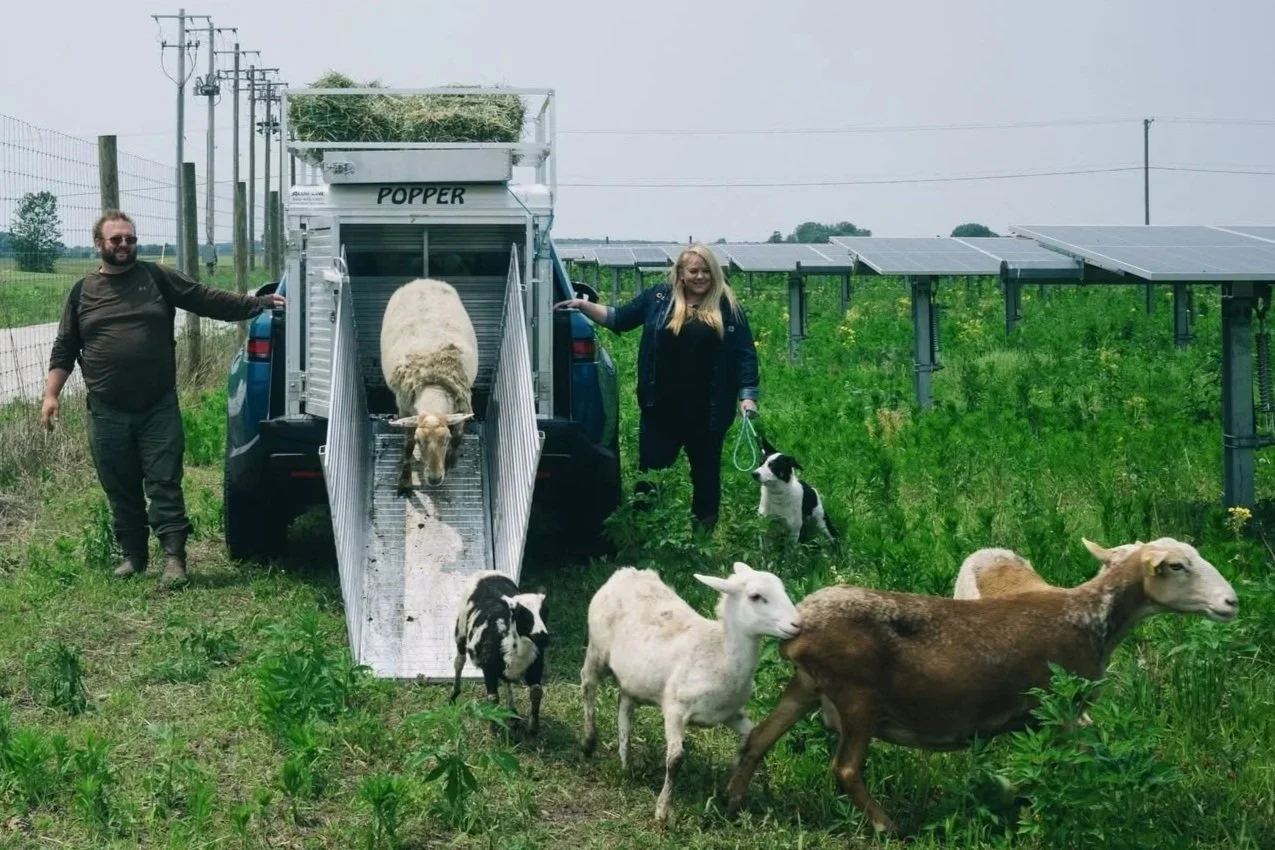
Farmers and solar graziers Brooke and Chauncey Watson unload sheep to graze at a solar site in Kankakee County, Illinois. Photo credit Rivian.
In 2023, they began building relationships with the solar industry and identified potential projects with grazing dates starting in 2024. They had “hooves on the ground” late in the year on three community-size solar sites in Kankakee and Cook counties, nearly 80 miles from home.
As sites closer to home have become available, they’ve transitioned some of the distant sites to other graziers. Over three grazing seasons, the Watsons have grazed 600 acres across 22 solar sites in 11 counties, including several urban counties.
You’re a vegetation management service provider first
It’s important to remember what your role is, Brooke says.
“You’re being paid to provide vegetation management services.”
Once the landowner leases the ground to the solar company, the landowner’s involvement is done, unless they win the bid to also manage the vegetation.
Tall vegetation can block the panels which reduces energy production. It may also wrap around and break equipment or become a fire hazard. The vegetation can be mechanically managed through mowing or agriculturally managed through grazing livestock.
Often, it takes both. If livestock can’t keep pace with growth or if there is significant annual weed pressure, Brooke says, mechanical mowing is required. Most contracts obligate the farmer to maintain exterior site maintenance, as well, including maintenance of trees and bushes.
The move to solar grazing is not without its challenges.
Many sites weren’t originally built with grazing in mind so they lack the infrastructure needed for successful grazing, such as appropriate perimeter fencing, water infrastructure, road access, and panel spacing and height.
Adjusting sheep management
Watsons have substantially adjusted their lambing schedule from three or four times a year to predominantly mid-February, though some lambing is still done in the fall to meet market demand, Chauncey says.
Ewes lamb at the farm in mid-February, then go to solar pastures between April and June and remain until they are out of forage or it gets cold, often until mid-November. Ewes are bred on solar pastures, then moved to dry lots for winter. Once they lamb in February and wean, the cycle starts again, and they are moved back on solar pastures.
Lambs are grain-finished on dry lots, and ram lambs are on permanent dry lots.
The move to solar has reduced his lamb production, Chauncey says. Previously, under an intensive management system, he would have expected three lambings over two years; he’s now getting one lambing a year.
“I think when we first got into this, we thought that we were just going to be worrying about the sheep. We quickly learned there’s a huge land stewardship part to this. We’ve been given responsibility to take care of this land. As farmers, I think that’s something we’re always really proud of — how well we’re taking care of the land.”
Public opinion on solar
Less than 1% of cropland conversion is required to meet the country’s renewable energy goals by 2050, says Michael Ricketts, assistant terrestrial ecologist environmental science division with Argonne National Laboratory.
Still, not all farmers or landowners support the use of farmland for solar energy production.
“I do think it’s very important we produce food on this land,” Chauncey says. “It really needs to have some sort of agricultural production on it still for me to really think it’s a good idea.”
To help farmers understand the challenges and rewards of solar grazing, Brooke founded the Illinois Agrivoltaics Network to facilitate conversations about the benefits of agriculture and solar collaborations.
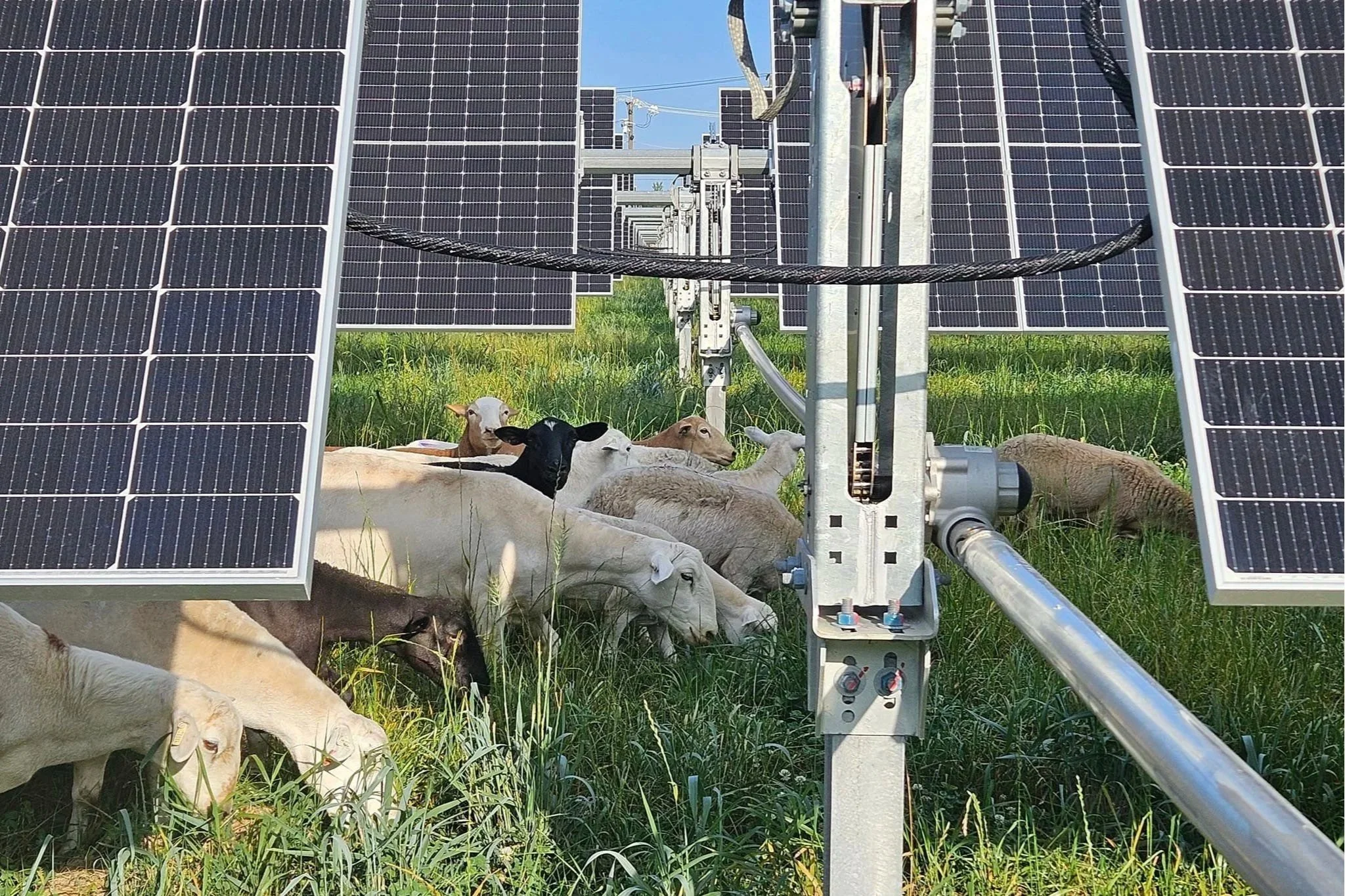
Sheep from Illinois Solar Grazing and Mowing at a solar site in Cook County, Illinois. Photo credit Brooke Watson.
Know your costs are before bidding
Though there is wide variation between leases, Illinois graziers can expect between $300 to $500 per acre for solar vegetation management, depending on the scope of work required. That’s added to the income from the lambs they sell.
Most of Watsons’ contracts now operate within a “low-density graze” — one or two sheep per acre for one rate for the duration of the grazing season. At that density, some mowing will be required, Chauncey says.
Though it may seem like a lot at first glance, Brooke cautions farmers to consider the cost of machinery, fuel, transportation, labor, and infrastructure needs before establishing their bid. Because each site is different, you can’t have a uniform cost structure.
“You have to develop a site-specific grazing plan and management approach,” and set your contract to address each unique challenge.
“It’s not easy money,” Chauncey admits, noting the vegetation may clog radiators or break equipment. “If you want to do it, it takes a lot of time and a lot of effort, but it can be worth doing.”
Working to provide for the next generation
The Watsons made sure they were in the right place, with the right knowledge, at the right time to be successful in their solar grazing operation. And, they’re still looking to grow, expanding their herd to 600 ewes and selling rams to retain as many replacement ewes as possible.
“I will say we feel more confident that we’re gonna be able to keep doing what we’re doing and pass the farming operation on to the seventh generation. Before solar grazing, I don’t know that we could have confidently said that.”
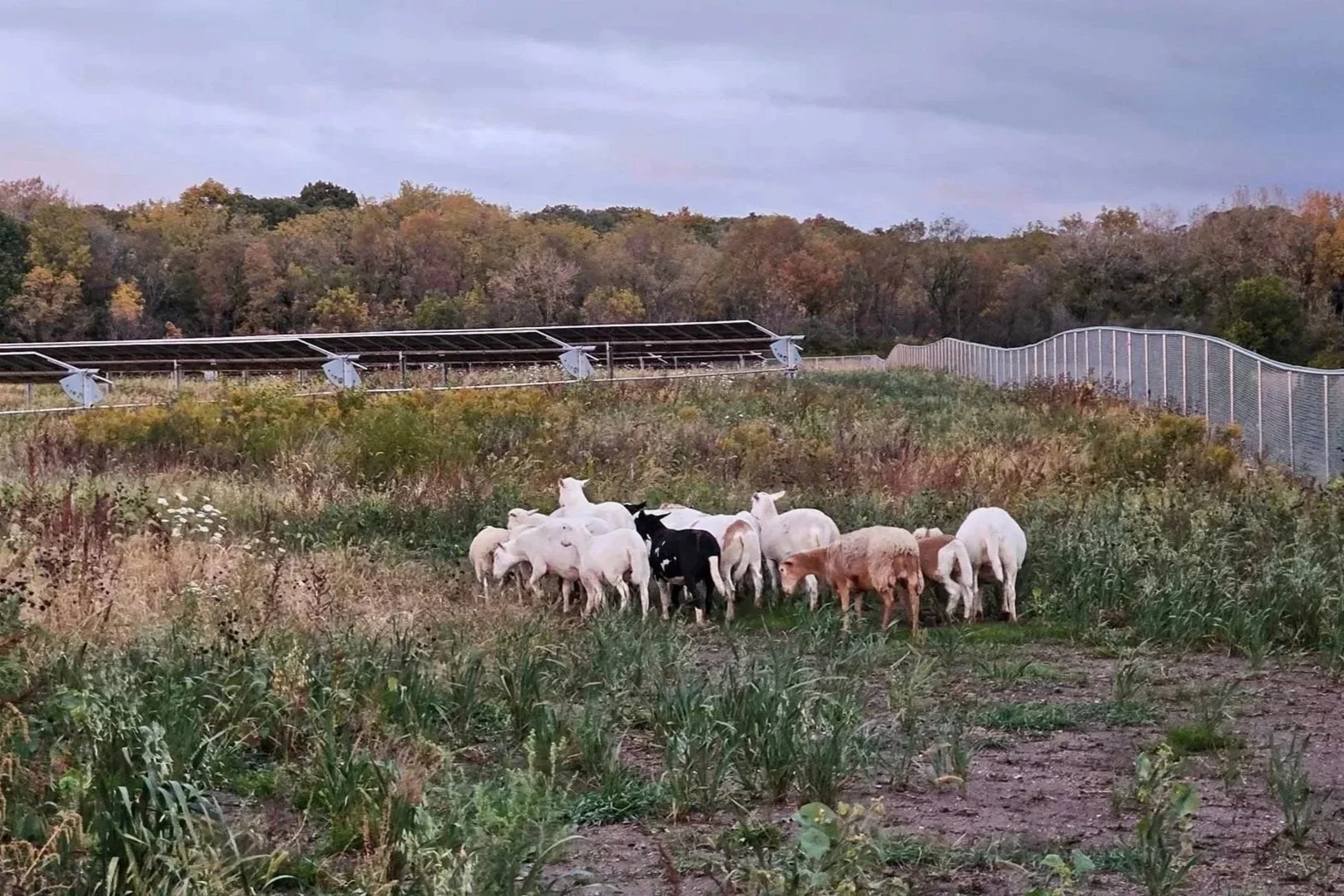
Sheep from Illinois Solar Grazing and Mowing at a solar site in Will County, Illinois. Photo credit Brooke Watson.