“It’s not always the big things that can drastically change conditions and problems you experience on a livestock farm. I’ve found that small changes have a huge impact.”

For 20 years, Perry Hottes has been making those “small changes” as he pushes the productivity of his land and the profitability of his cattle.
He’s built his Waltonville farm piece by piece, taking advantage of incremental funding opportunities from the Natural Resources Conservation Service to build fence and water systems, purchase equipment for manure management, establish forage and biomass pastures, and build a winter feeding station and access road. Over the years, he’s added patches of acreage to the farm that now stands at 145 acres.
Soil tests revealed gaps, even though the land had stood in CRP grassland for 20 years. Perry’s recipe: add livestock and manage it very carefully.
Livestock Management Plan
“It takes land and a lot of capital to create a grass-fed beef operation,” Perry says. “But with the right information, you can create something that works well for everyone involved.”
Perry found a wealth of information and funding support through NRCS’s Environmental Quality Incentives Program (EQIP). Still, with a full-time off-farm job, Perry had to work smarter, not just harder. He says more than $160,000 worth of improvements have been made to the farm through the assistance of USDA programs.
“I enjoy the challenge of continually monitoring and adjusting all the different aspects of a grass-based livestock operation,” Perry says. “There’s a lot to manage. And because you’re dealing with land, Mother Nature, weather, science, and biology. Well, you’ve got to be ready for anything.”
Perry uses a solid rotational grazing system which has improved soil health and the soil’s ability to absorb heavy rains and retain moisture during times of drought. He established two ponds which supply his herd’s water needs.
“Healthy pastures and healthy cows can handle anything nature throws at us,” Perry adds.
In recent years, he’s intentionally cut back to about 30 cow-calf pairs, allowing him to manage grazing resources carefully and invest in long-term land health.
Perry made the change after attending an Illinois Grazing Lands Coalition grazing school which emphasized herd quality over quantity, attention to soil health, and the benefits of stockpile grazing.
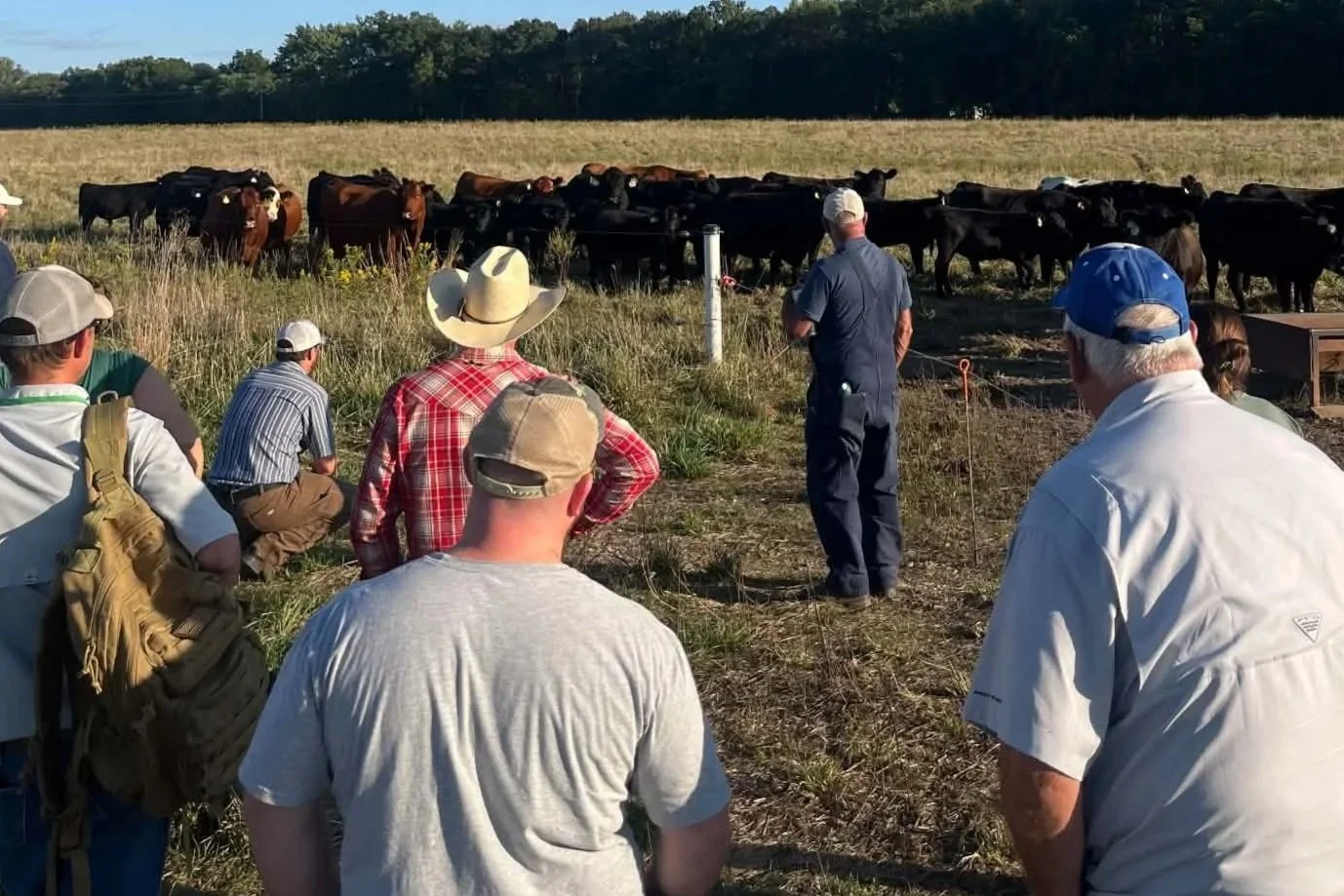
Now, it’s Perry who is hosting and teaching at these types of grazing workshops. In 2026, he was awarded the ILGLC Master Grazier Award.
Piece by piece he’s created a grass-fed operation that works for both the livestock and the land.
“Little things can make a big difference for my cows and my day-to-day workload,” Perry says.
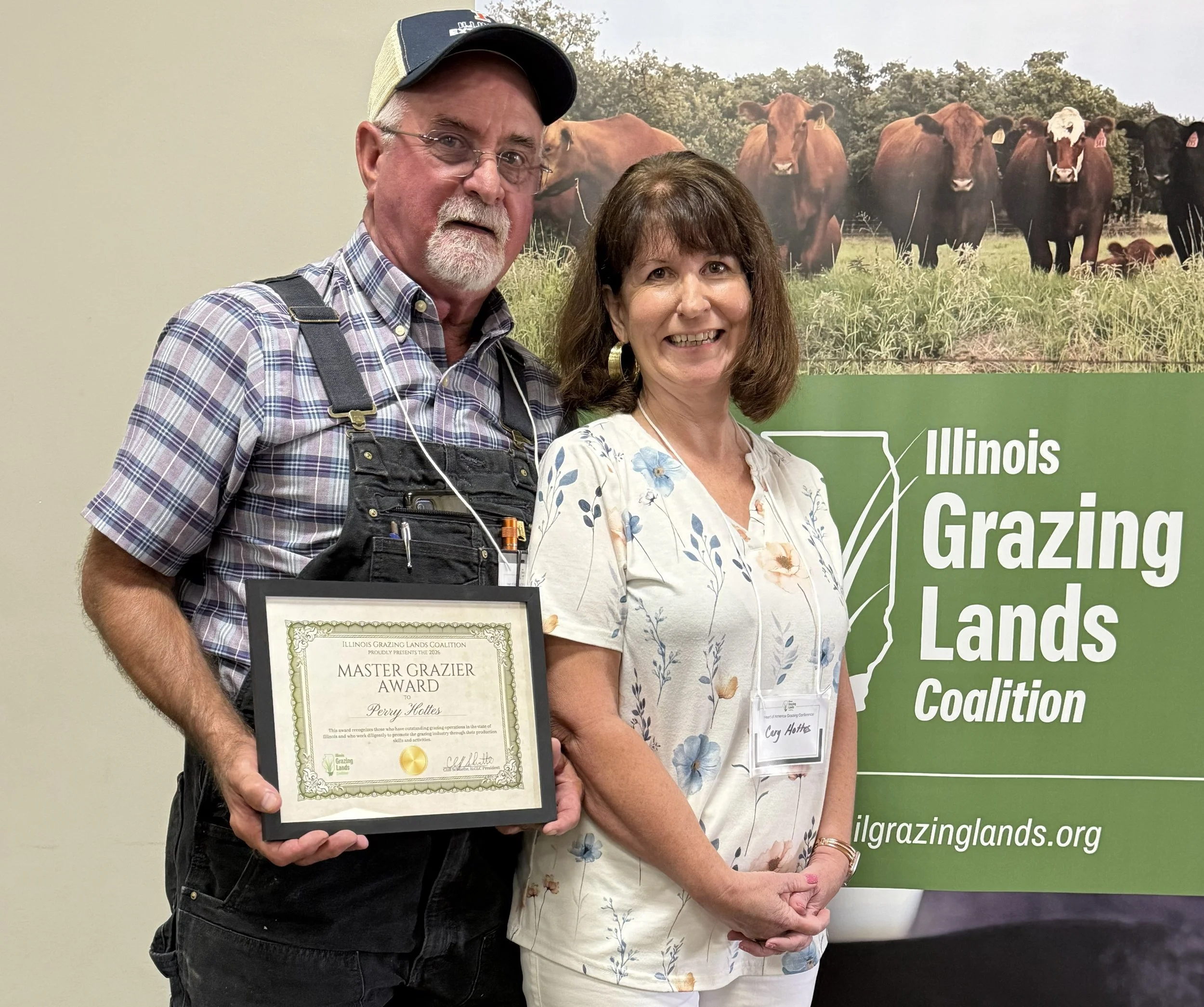
2026 ILGLC Master Grazier Award
Perry and Cary Hottes
This story was supplemented from information included in the USDA grazing profile, Two Careers; One Passion and an article by The Sentinel, His Dream Came True After 56 Years of Hard Work and Perseverance.
You might also enjoy these recent blogs from Illinois graziers


Perry Hottes Farm Philosophy: It’s not always the big things that can drastically change conditions and problems you experience on a livestock farm. I’ve found that small changes have a huge impact.