Let livestock work for you
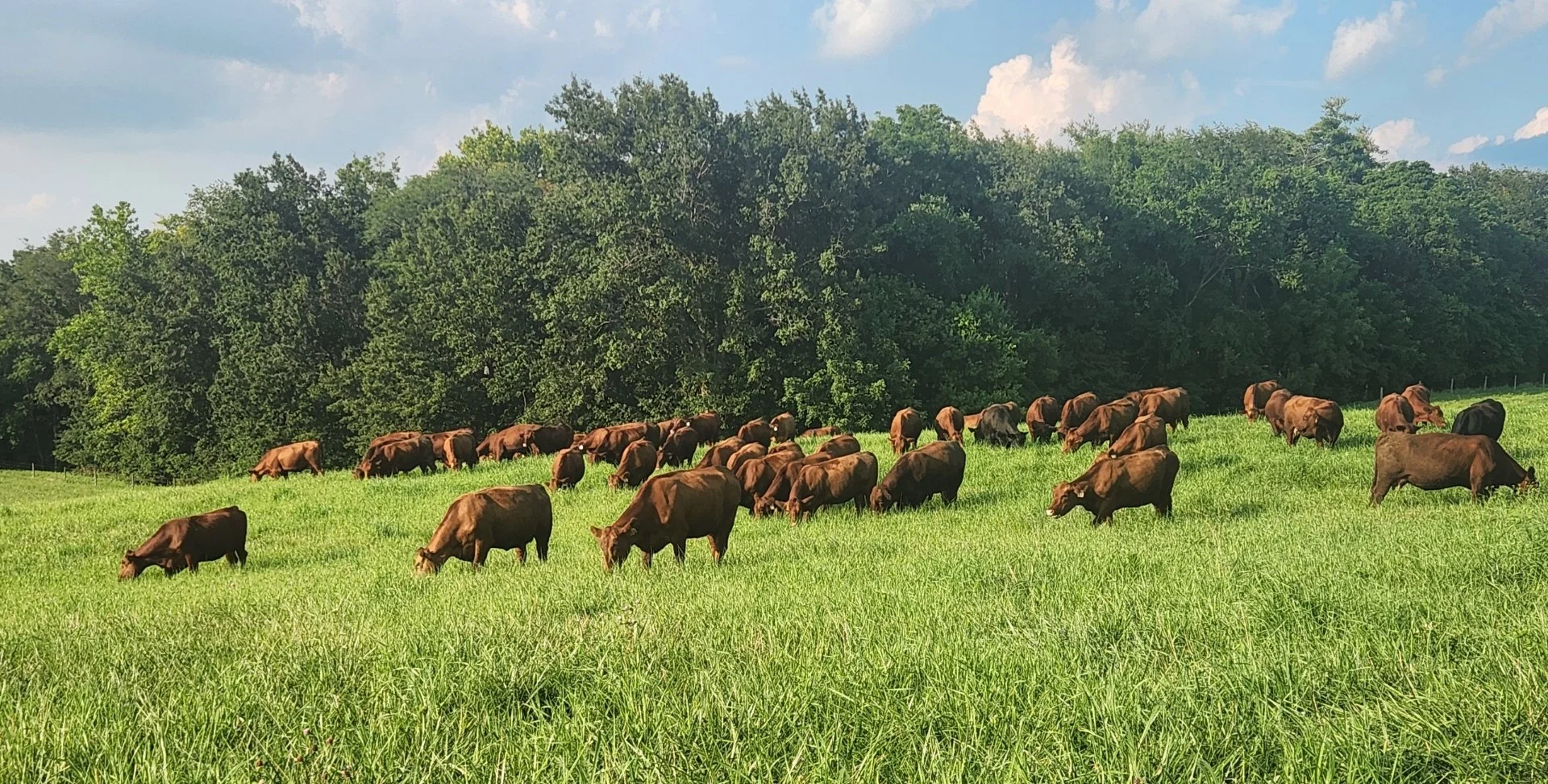
Cattle enjoying the new section of pasture on Ted Krauskopf’s farm near Highland in Madison County, Illinois.
Ted Krauskopf leaves forage management to his livestock. Using a strategic rotational grazing system, forage stays at peak production while the livestock directly benefit from getting the nutrient-rich feed.
His perennial forage fields include some volunteer summer annuals, mostly giant foxtail, which is pretty good feed when consumed before the seed heads develop, Ted says.
“I’m moving them faster to cover more acres to get to that foxtail before it heads out. They’re eating the foxtail and clovers first, along with a bite of fescue. In summer, the foxtail tastes better than the fescue until the foxtail gets mature.”
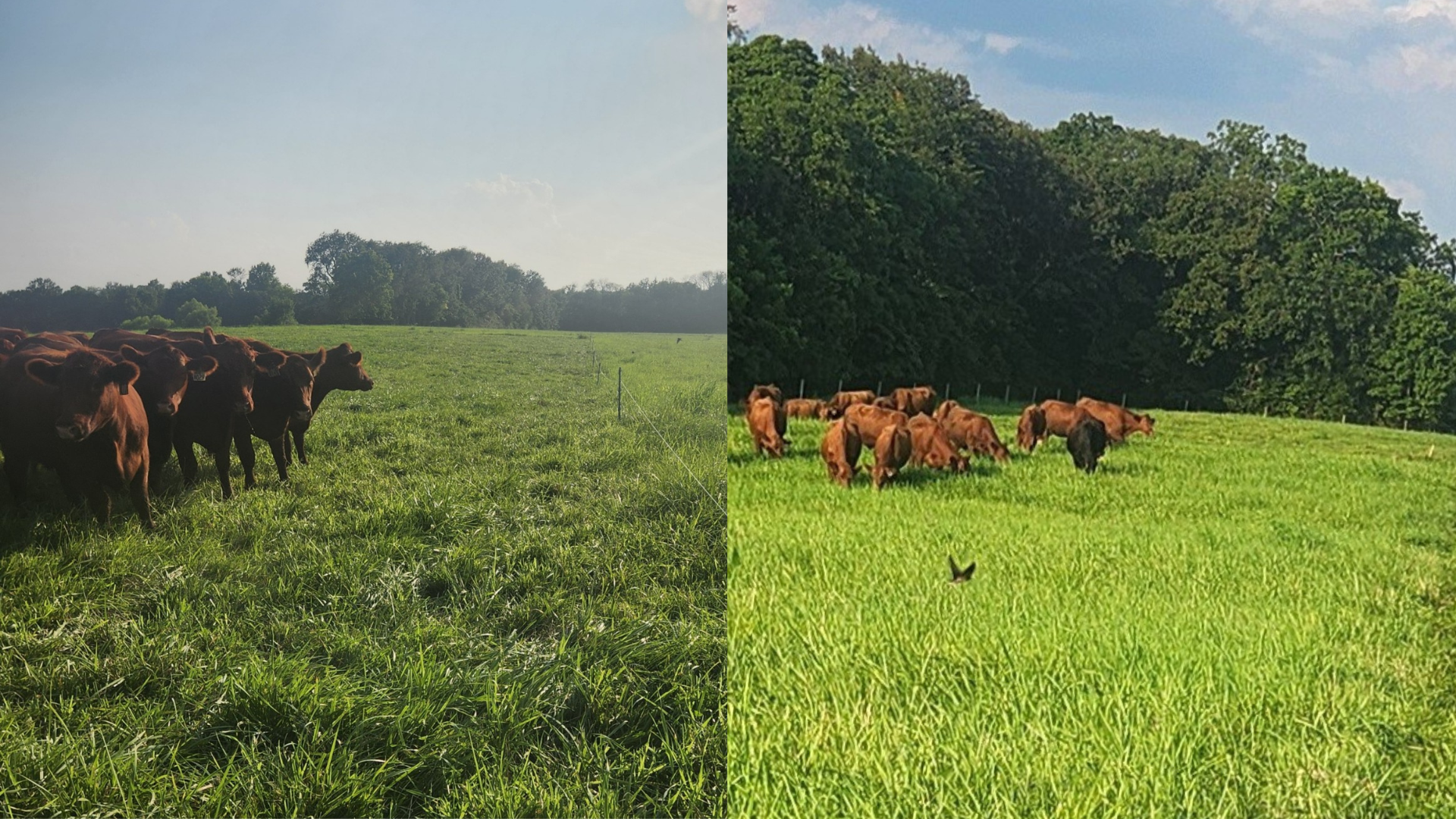
Left: Cattle on Ted Krauskopf’s farm waiting to be moved. Right: Cattle following the move
The herd’s 64 bred females are grazing 2 acres per day in July. On observation, you don’t see a lot of difference between where they already grazed and what they will graze next, Ted says.
“Leaving this much residual forage is so beneficial. The plant's root system continues functioning at full strength.”
Grazing plants too close to the ground causes the root system to shrink when there isn’t enough leaf area to support it and can lead to bare ground and higher soil temperatures. Hotter soil gives up more moisture to evaporation.
“Covered ground helps soil temperatures stay cooler which is important for healthy soil biology,” Ted adds. “Cooler soil means more soil moisture is available for plant growth, too. “
Feature video from the Wallace Center.
Ted’s Journey
Ted used to grow row crops — corn, soybeans, and wheat — but in 2007, Ted decided he was done growing commodity crops on the home farm. He took all his sloping ground and planted it to a grass/legume mixture and annual forage crops for grazing livestock. Ted uses minimum tillage when planting annuals and cover crops, and no-tills whenever he can. He even sold his hay equipment to reduce the frequency of baling hay from the pasture. Not owning the equipment forces him to make a more deliberate decision to bale hay.
— From Grazing Research in Progress, NRCS Publication, January 2017