Choose the right fence for your grazing system
High tensile, barbed wire, or electric offset? Learn which fencing types work best for managed grazing — and why quality materials make or break your system.
Jeremia Markway of Markway Ranch (Truxton, MO) and Logan Karcher of the Illinois Grazing Lands Coalition break down perimeter fencing priorities, fence type tradeoffs, and why investing in quality materials from the start can make or break a managed grazing system.
Choosing the right fencing for a managed grazing system shapes what your operation can do for years to come. In a recent Grow & Graze webinar, Jeremia Markway of Markway Ranch in Truxton, Missouri broke down the fencing types, configurations, and materials that have held up across 40-plus years of grazing.
Here's the advice he’d tell a producer starting from scratch — or rebuilding what isn't working.
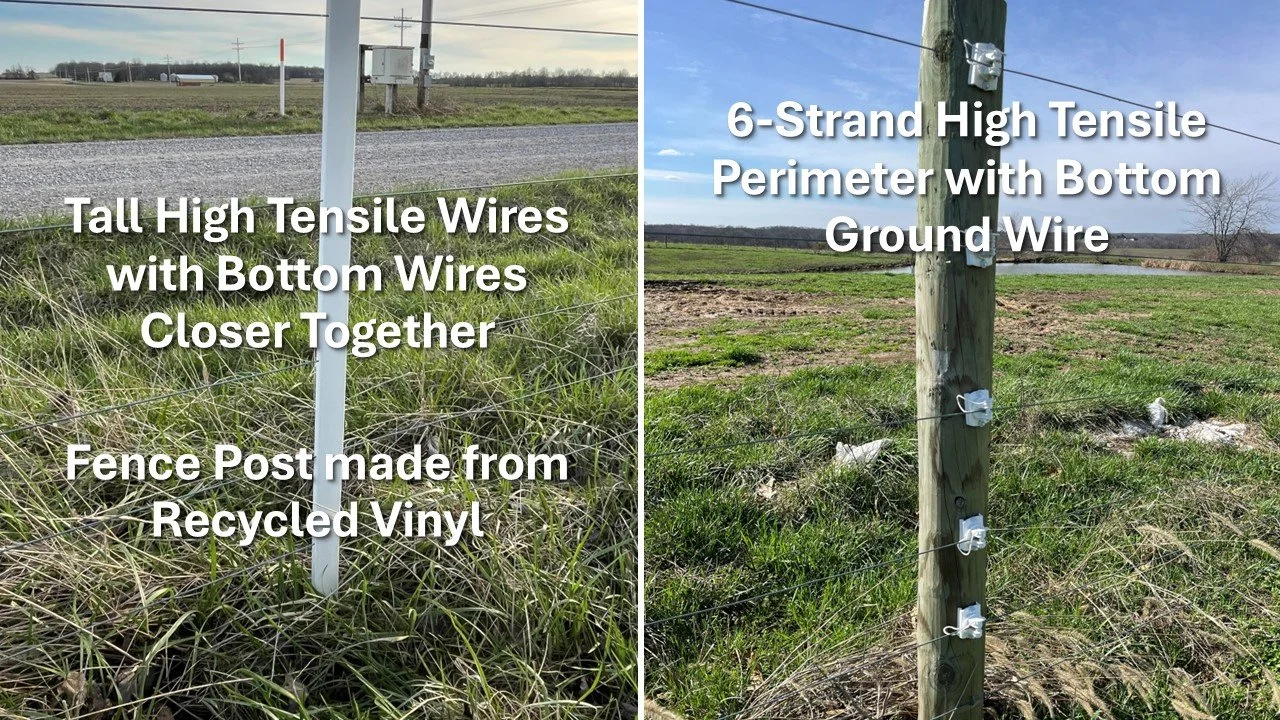
Start with a strong perimeter fence
All experienced graziers agree: your perimeter fence has to be solid. A weak perimeter creates neighbor conflicts, sleepless nights, and operational headaches that ripple through the whole system.
"The older I get, the more I want to invest in even better fencing on the perimeter," Markway said. "It's really important to have good infrastructure, particularly perimeter fencing."
His recommendation for producers building new perimeter fences: go with six to seven strands of high tensile wire, up to 60 inches tall, with bottom wires spaced close together. That spacing gives you the flexibility to run cattle, sheep, or both without having to retrofit later.
Matching fence type to the situation
Not every operation needs the same perimeter setup. Markway’s operation has run the full range over the years — three-strand high tensile, five-strand barbed wire, woven wire, and electric offset — often determined by what's already on the ground vs. what he'd build from scratch.
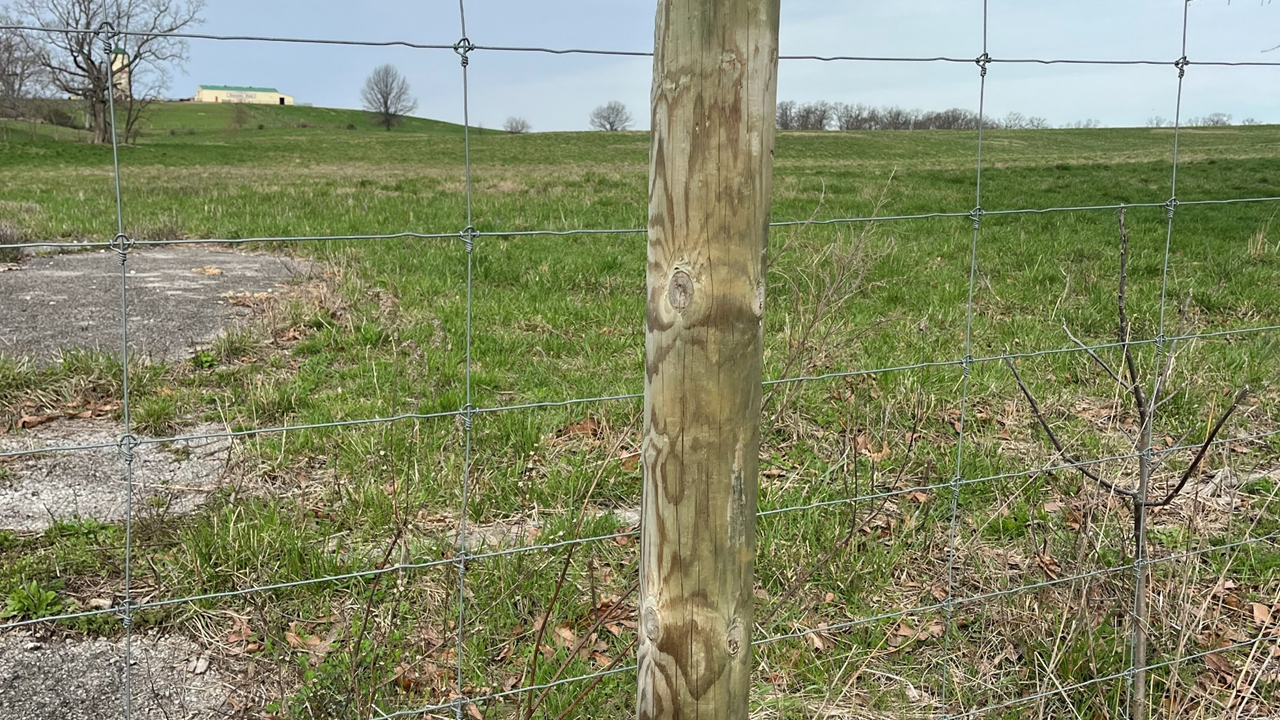
For high-traffic areas along roadways, woven wire or metal netting is his preference as a failsafe if power is ever lost. For a standard cattle perimeter fence, a well-built five- to seven-strand high tensile or barbed wire fence does the job. The key variable is bottom wire spacing — tighter at the base gives you more flexibility to graze small ruminants in the future without having to rebuild.
"If I had to do it all over again, I highly encourage people to consider putting that tight wire fence on their perimeter," Markway said. "Whether you're going to have sheep or not, it just opens up a lot of opportunities."
Why quality fencing materials matter more than you think
Both Markway and ILGLC Director of Producer Programs Logan Karcher made the same point when it comes to wire, posts, chargers, and polywire: don't start cheap. Low-quality materials fail faster, frustrate producers, and are one of the most common reasons people give up on managed grazing before the system has a chance to prove itself.
"That's why a lot of people get turned off to managed grazing," Markway said. "They start with the cheap stuff that doesn't work right and then say, 'this whole thing's a joke.' Buy the best you can."
Whether it's step-in posts, reels, insulators, or a charger, Jeremiah recommends you “buy once, cry once.” The upfront investment pays for itself in reliability, fewer failures, and a system that actually functions the way it's supposed to.
Watch the full interview with Jeremia Markway
For a complete walkthrough of fencing systems, configurations, and material recommendations including detailed sheep fencing strategies and paddock layout philosophy, watch the full Grow & Graze webinar. Adaptive grazing requires adaptive water and fencing systems to make it all work. Jeremia Markway of Markway Ranch discusses with Illinois Grazing Lands Coalition Director of Producer Programs Logan Karcher what options livestock producers have for their setting up temporary grazing pastures.
Watch these short how-to videos
Building H-braces for pasture fence rows
H-Braces are the foundation of your whole fencing system. Logan Karcher, director of producer programs for Illinois Grazing Lands Coalition, takes us through each step of construction with clear and simple demonstrations, from the tools you'll need to the finished product.
Using polywire to build temporary paddocks
Fencing is often an obstacle when producers transition to adaptive grazing for their livestock. With polywire fencing, you can easily create temporary paddocks that can be moved easily and frequently. Logan Karcher, director of producer programs with Illinois Grazing Lands Coalition, demonstrates how to easily run polywire and attach to your existing permanent fencing.