Establishing water systems for rotational grazing
HDPE Pipe, Portable Tanks, and How to Plan for Growth
HDPE pipe, Plasson couplers, portable tanks — learn how experienced graziers build flexible, affordable water systems that work for rotational grazing.
Water infrastructure is one of the most common limiting factors in a managed grazing system — and one of the most frequently underbuilt.
In a recent Grow & Graze webinar, Jeremia Markway of Markway Ranch in Missouri and ILGLC's Director of Producer Programs Logan Karcher walked through the water systems they've built, tested, and revised over years of rotational grazing.
Their core message: start flexible, plan for more than you need, and don't put anything in the ground until you've proven the system works above it.
Start above ground
The most common and costly water system mistake Markway sees is producers burying infrastructure before they've confirmed the grazing system actually functions the way they want it to. His advice: use above-ground HDPE poly pipe first to test your layout.
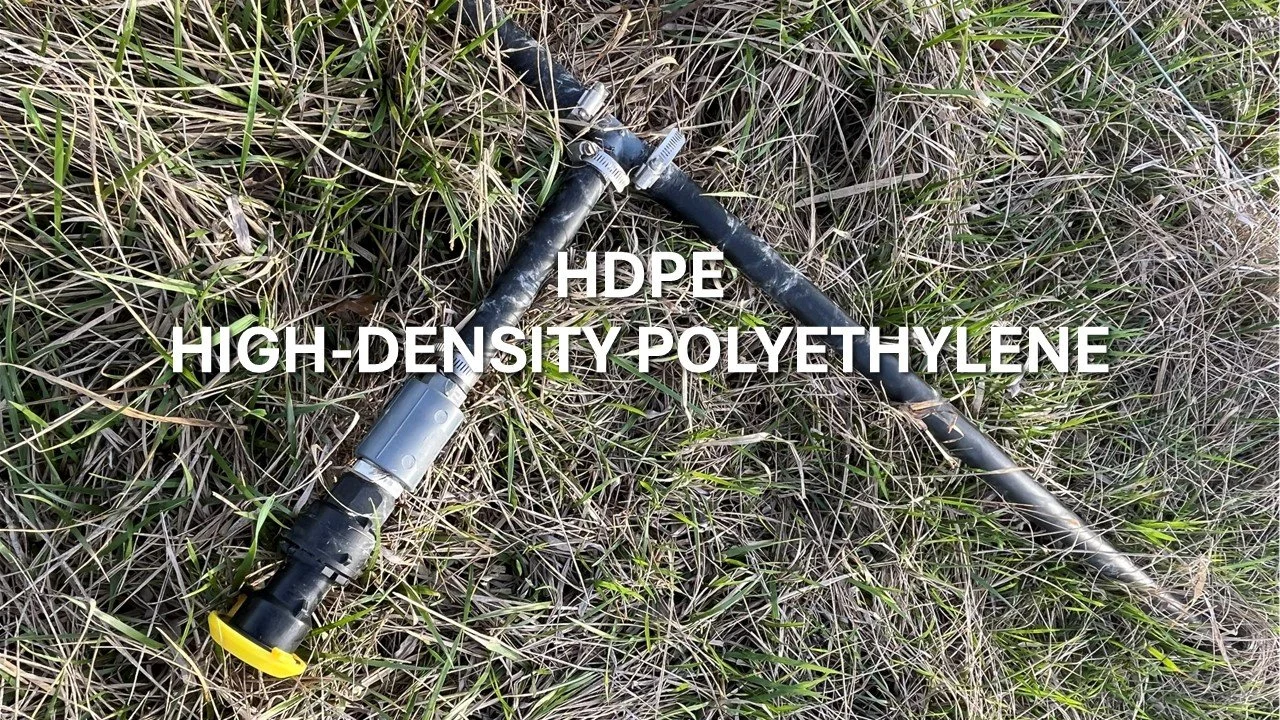
HDPE — high-density polyethylene pipe — is a durable black plastic pipe that lies flat on the ground, handles being driven over, rolls up for storage, and comes in 500-foot sections. It's available through suppliers like PowerFlex and most local hardware stores, making it an accessible starting point for producers at any scale.
"The worst thing I see is people invest in a water system and put it in the ground and then it doesn't work right — the animals don't graze the system properly," Markway said. "I would encourage that if somebody's thinking about adding water, even if you're going to bury it, use some over-the-ground pipe and see if it works the way you want it to."
Running HDPE along fence lines rather than across open pasture also helps protect the pipe from traffic damage and allows vegetation to grow over it — keeping water cooler in summer and providing some insulation buffer in shoulder seasons.
Plasson couplers: a cheaper alternative to hydrants
Once a water point location is proven, Markway and Karcher both rely on Plasson quick-coupler valves rather than traditional buried hydrants. A male and female Plasson coupler set runs roughly $25–$30, compared to $130 or more for a standard water hydrant. At one water point every 500 feet, that savings adds up quickly across a full operation.
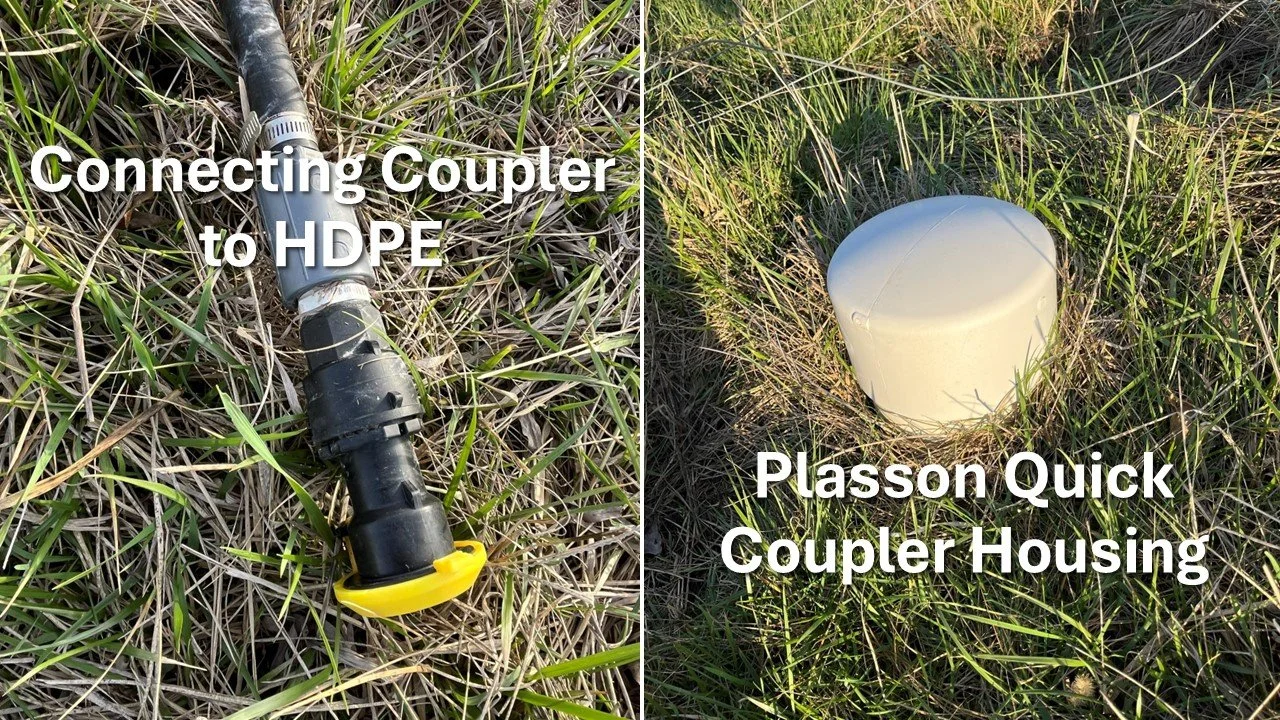
"We've had them forever and we've had very, very few of them fail," Markway said. "Whereas with a hydrant, you're always digging it up sooner or later."
The system works by running buried PVC mainline with risers and Plasson valve ends that snap together like an air hose connection, allowing portable HDPE runs to be connected and repositioned as paddocks rotate.
Plan bigger than you think you need
When it comes to tank size and overall water capacity, both Markway and Karcher landed on the same principle: bigger is almost always better. A larger tank volume compensates for slower well recharge rates, handles the reality that large groups of cattle tend to drink at the same time, and most importantly gives you room to grow your herd or flock without rebuilding infrastructure.
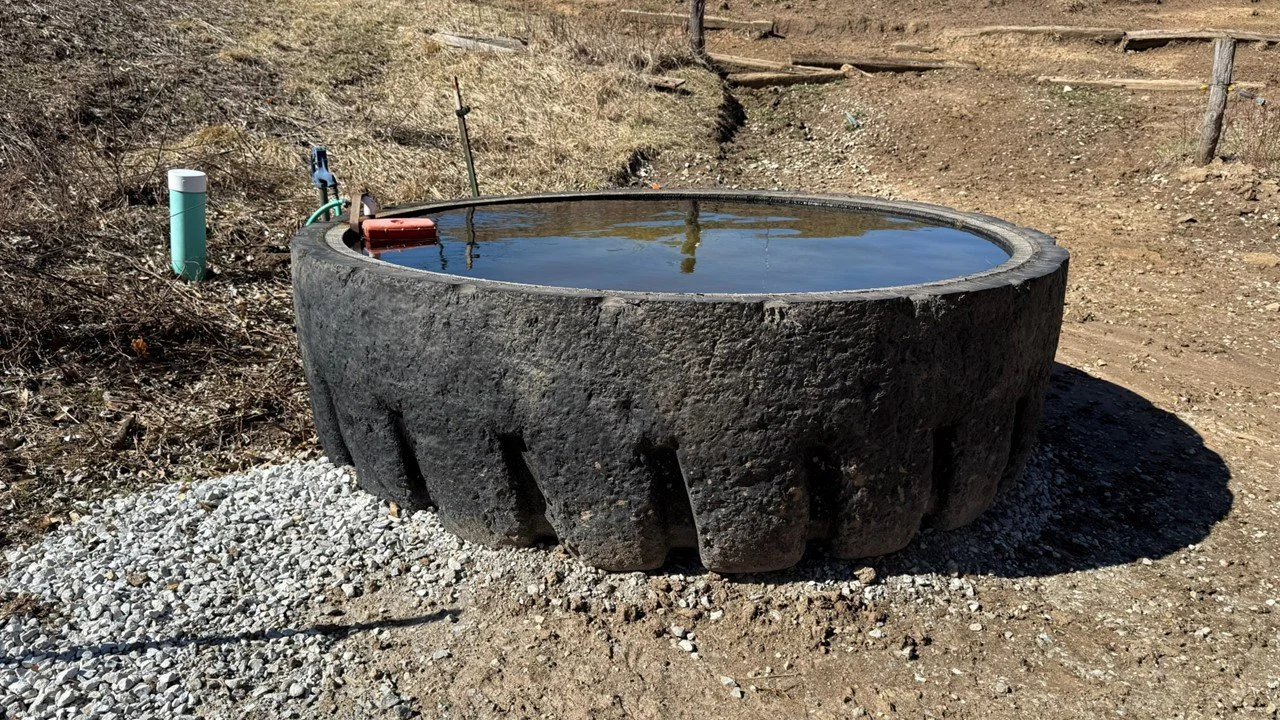
"It's kind of hard to really have too much water," Karcher said. "If you ever have the opportunity to size up your herd or flock, you don't want to be in a bind thinking I don't have enough water flow."
Watch the full interview with Jeremia Markway
For a complete walkthrough of water system design, HDPE pipe management through winter months, portable tank options, and more, watch the full Grow & Graze webinar.
Watch this short video on 3 types of water systems
One of the biggest challenges with adaptive grazing is establishing a reliable water system. There are three basic choices: pond, heated waterer, or water tank.
Dig Deeper
Illinois Extension blogs on water needs of cattle