Waste not, want not: Smart strategies for winter hay feeding
It’s cold. The wind is blowing. You just want to be done with chores. Don’t take shortcuts with your winter hay feeding strategies.
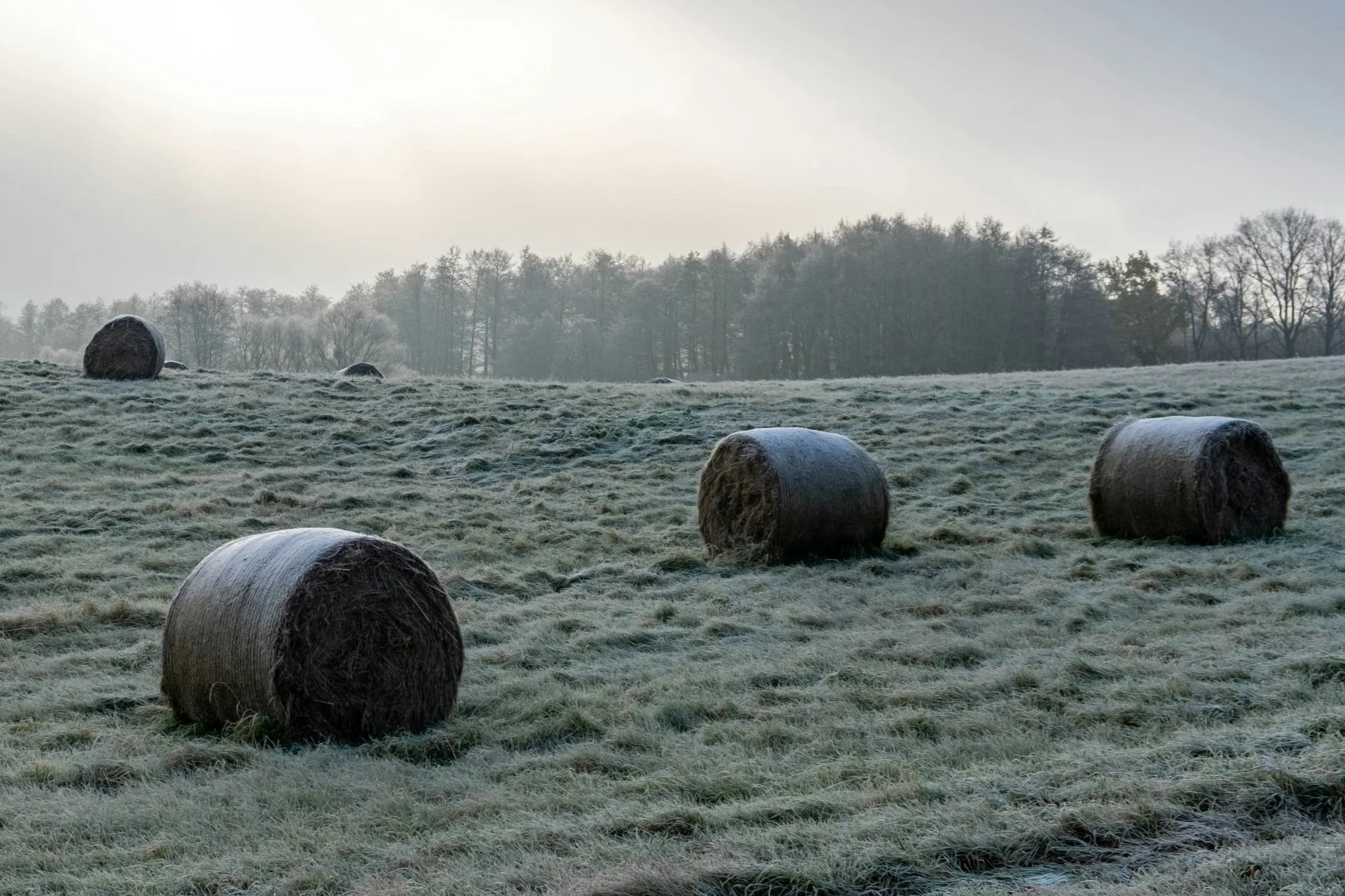
Effective winter hay strategies focus on minimizing waste while protecting hay quality and reducing soil disturbance.
Only feed what they’ll eat daily
“Livestock will waste less hay when the amount fed is limited to what is needed each day,” says Amanda Grev, Maryland Extension. “Daily feeding will force them to eat hay they might otherwise refuse, trample, or waste.”
A 1,300 lb. beef cow needs about 40 pounds of hay a day, eating 32 pounds and wasting about 8 pounds, notes Travis Meteer, University of Illinois Extension beef cattle specialist. A 25-head herd, thus, will go through 1,000 pounds of hay per day, approximately one large round bale a day, though weights do vary per bale.
Spread feeding locations across fields and pastures
To reduce the negative impact to soil of high hoof traffic and to increase the distribution of nutrients, rotate where you place or unroll bales, says Lauren Langley, North Carolina Extension. “Moving feeders around and using temporary fencing keeps livestock from over-compacting any single area.”
Match the bale feeding method to your unique operation
Bale Ring feeders help reduce waste, but may not provide enough space at the feeder for the number of cows and can result in “cows fighting for hay, dominance hierarchy, and more uneven cow performance with young, small cows getting less feed,” Meteer says. It also increases the risk of ground trampling and need for manure removal if rings are not moved frequently.
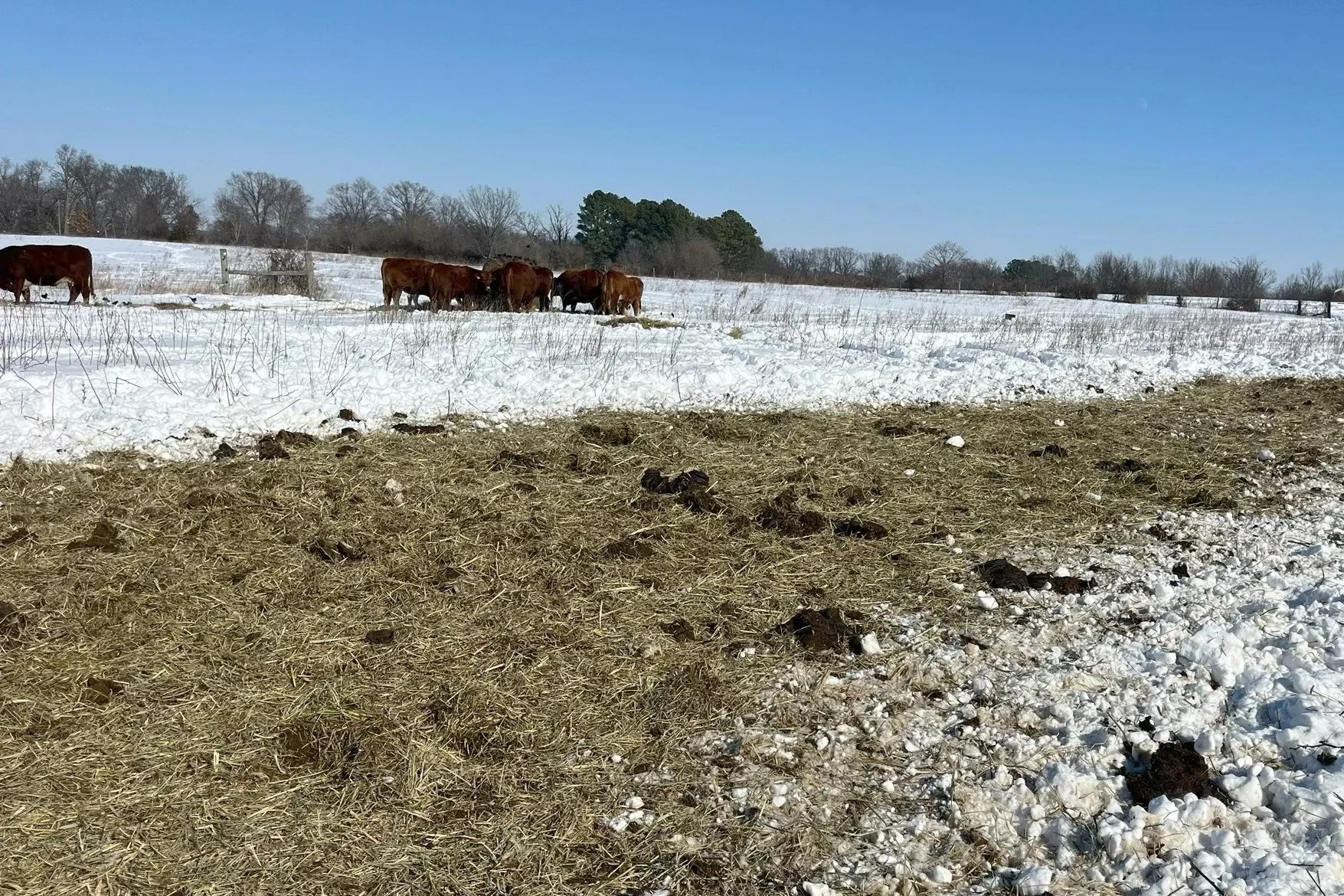
Unrolling hay bales across a pasture or field helps spread the feeding space, minimizing mud and trampling issues.
“Unrolling hay also allows valuable nutrients from hay waste and animal manure to be deposited back onto the soil and spread across a greater area of the field,” says Grev. “Decomposing hay residue, along with manure and urine, is distributed across the field and can help improve soil organic matter and increase forage growth in subsequent years.”
Illinois Grazing Lands Coalition Executive Director Christian Lovell prefers unrolling hay versus bale rings.
“I have a bunch of baby calves at this time of year,” Lovell says. “By unrolling, they don’t have to compete at the hay ring. Everybody can get a bite.”
Lovell also capitalizes on the soil health benefits gained from unrolling versus feeding in a lot or sacrifice area.
“Every time cattle defecate in the lot, that’s nutrients that are not getting on your pasture,” Lovell adds.
But unrolling is not without its disadvantages, including equipment and labor costs and higher hay waste than other methods. Unrolling only what livestock can eat in a day minimizes waste.
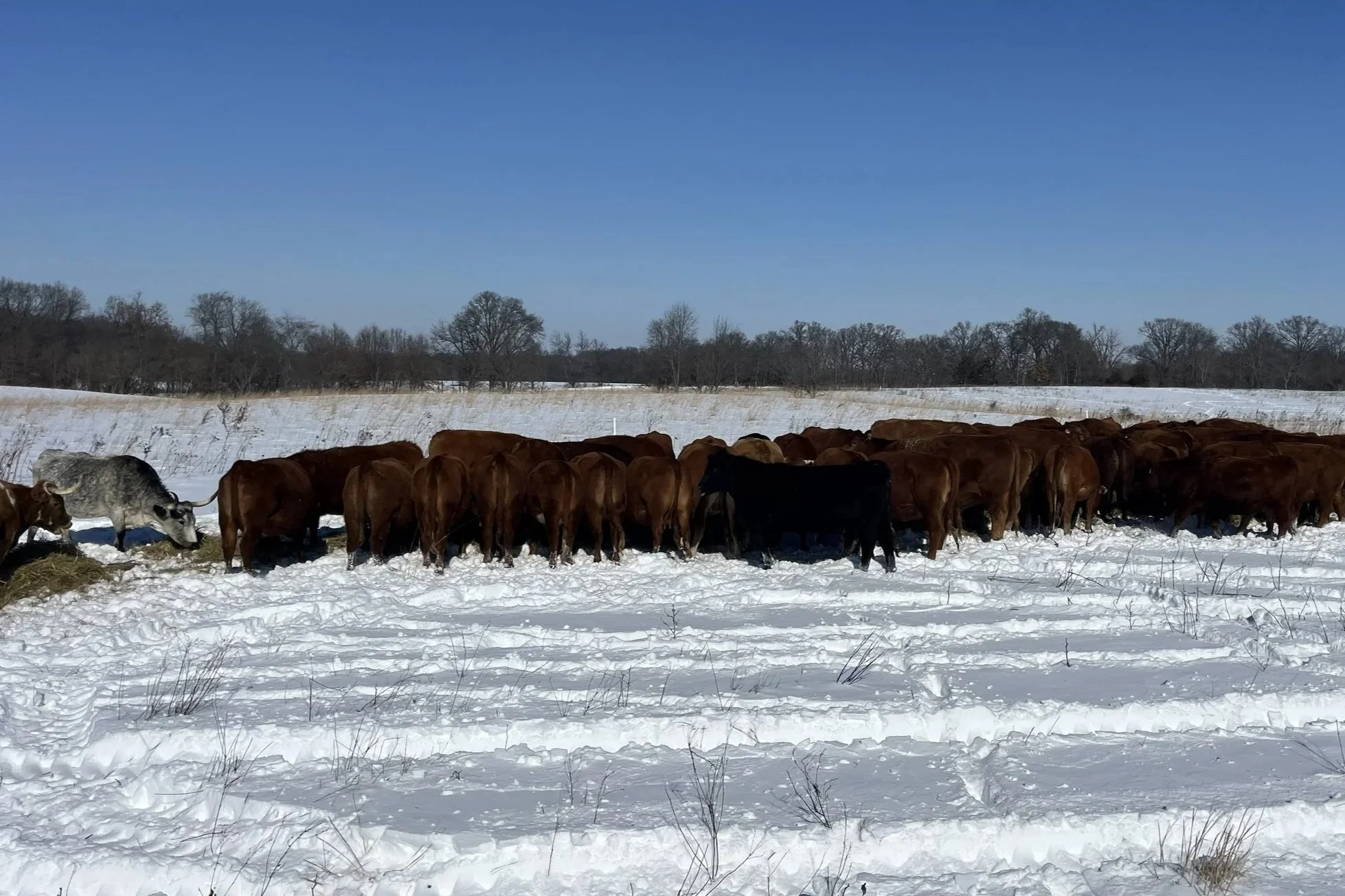
Bale grazing involves opening up access to sections of the field where the hay was baled, using virtual or polywire fencing to control which bales are accessible. Producers must balance how much hay and how often they move livestock with the labor cost of moving fencing.
“Similar to unrolling hay, bale grazing can also offer benefits in terms of added soil fertility, improved manure and nutrient distribution, and cleaner wintering conditions for livestock,” Grev says. “Bale grazing is a great way to spread manure and nutrients across a pasture, and bales can be strategically placed on poorer areas of the field, such as those with thinning forage, bare spots, less productive yields, or nutrient deficiencies.”
Frozen wrap on bales may create challenges in icy conditions, Meteer warns, and mud trampling may hurt forage stands and increase weed pressure.
During wet or drought conditions, you may need to feed livestock in a sacrifice area.
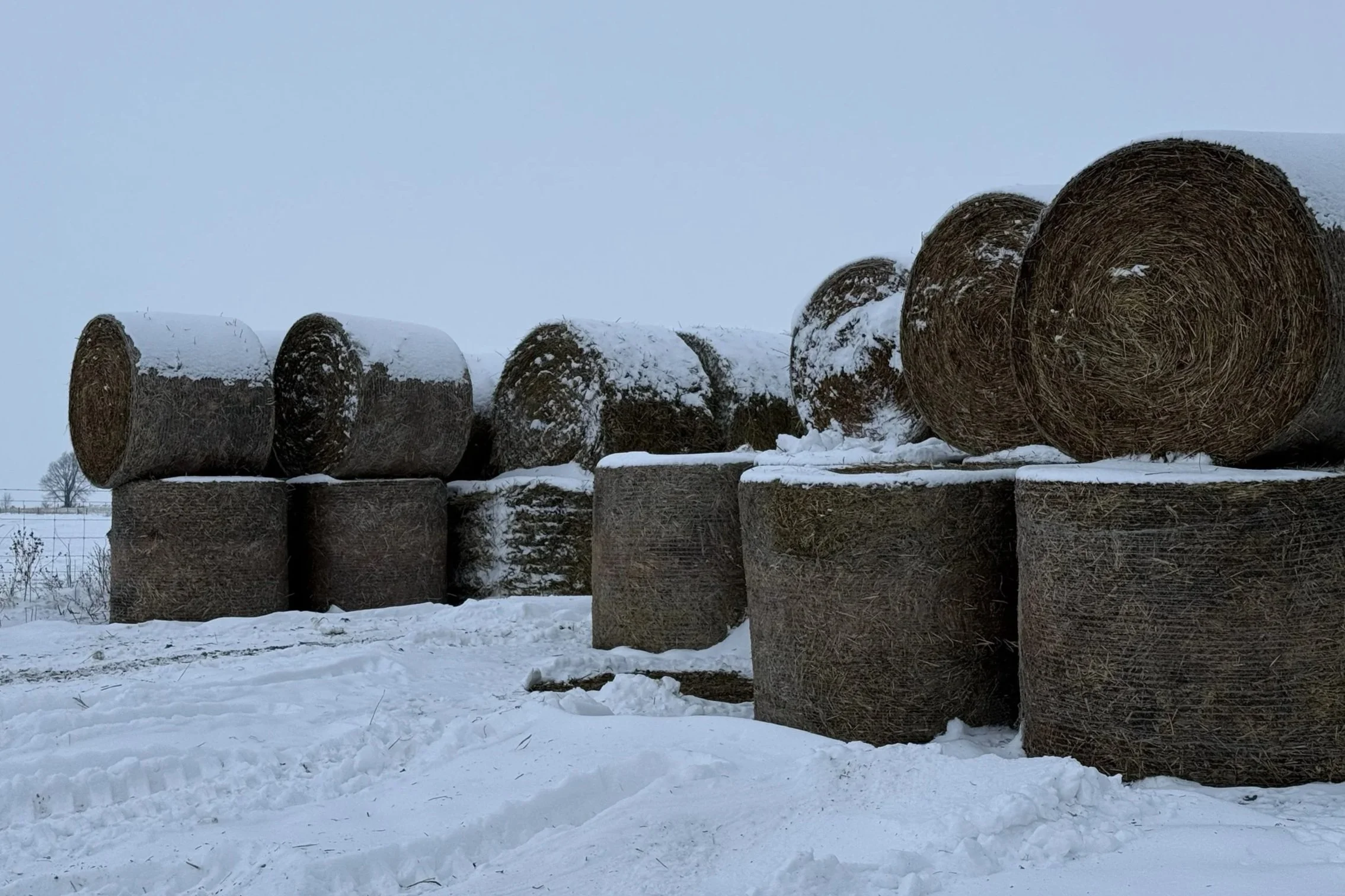
Protect your stored hay
Whatever method you use for feeding hay, ensure your hay retains its quality by properly storing hay after harvest. The Grazing and Forage Hub offers best practices for stored hay, or read Illinois Extension’s Guide for Hay Storage.
Check out what Illinois growers and graziers say about feeding hay and hay quality from the recent Winter Webinar.
Dig Deeper into Winter Hay Strategies
Protect the value of stored hay, Grazing and Forage Hub
Tackling Winter Challenges, Grazing and Forage Hub, beginning at 36:45
Is it time to bale graze? Travis Meteer, University of Illinois Extension
Hay Storage, University of Illinois Extension
Winter Hay Feeding Tips for Livestock, Lauren Langley, North Carolina Extension
Winter Hay Feeding Strategies, Amanda Grev, University of Maryland Extension
Proper Winter Hay Storage, Emily Meccage, Montana State University Extension
Winter Feeding Tips: Don’t Waste Your Hay, Dennis Cash, Montana State University Extension