When to act (or not act) on aphids
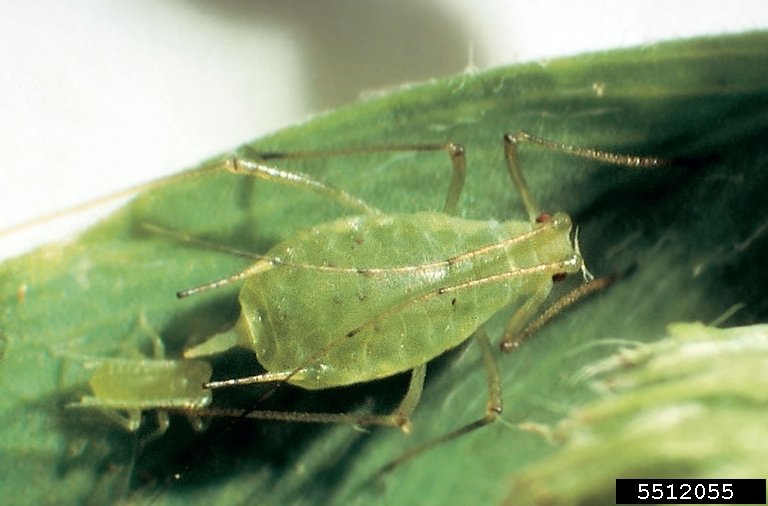
Pea Aphid. Image credit: Kansas Department of Agriculture, Bugwood.org.
The presence of aphids, small (1/16 to 3/16 inch) insects, in alfalfa fields is not necessarily justification to act. Aphids can often be kept in check by beneficial insects such as lady beetles.
Lifecycle of aphids
During an aphid’s one-month life, they can produce 40 to 85 offspring, according to the National Pesticide Information Center. In Illinois, the pea aphid is the most common, but you may also see spotted aphids, blue alfalfa aphids, and cowpea aphids.
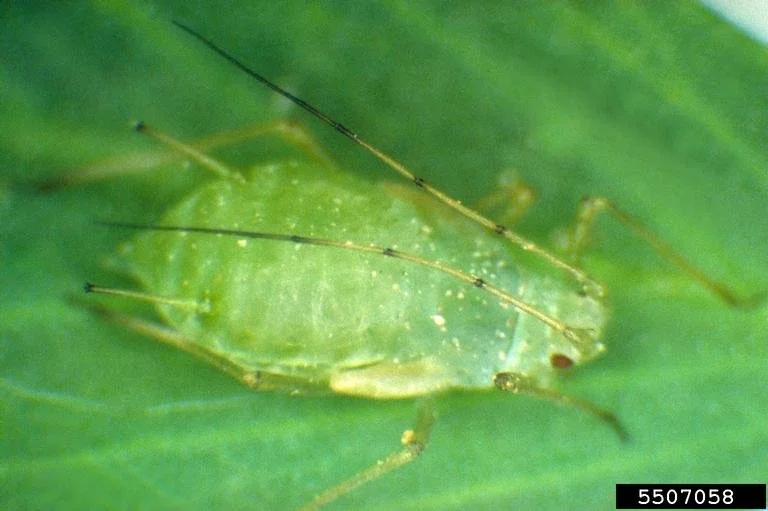
Pea Aphid
Pea aphids are pear shaped and range from light green or yellow to pinkish. They have long legs and long, dark-banded antennae. Crop Protection Network
Image credit: Phil Sloderbeck, Kansas State University, Bugwood.org
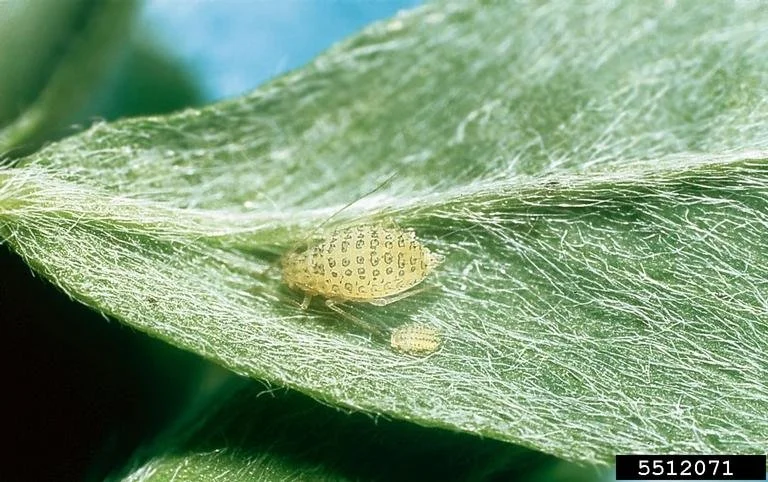
Spotted Alfalfa Aphid
“Spotted alfalfa aphids are relatively small with light green or yellow coloration. They have red eyes and six rows of dark spots on their backs.” Crop Protection Network
Image credit: Kansas Department of Agriculture , Bugwood.org
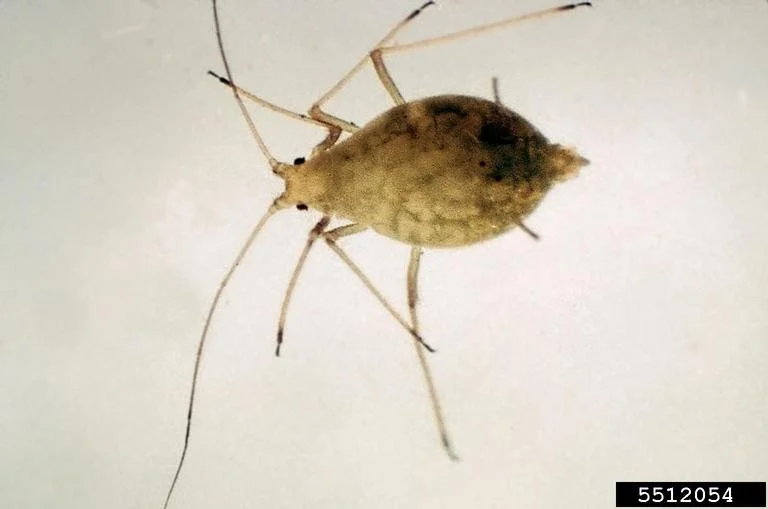
Blue Alfalfa Aphid
“Blue alfalfa aphids are bluish-green and appear dull or waxy with dark antennae.” Crop Protection Network
Image credit: Kansas Department of Agriculture , Bugwood.org

Cowpea Aphid
“Cowpea aphid nymphs are dull gray while adults are shiny black. They have white legs tipped with dark ‘feet’ and antennae that start white but darken towards the end.” Crop Protection Network
Image credit: David Riley, University of Georgia, Bugwood.org
Damage caused by aphids
Aphids feed on the alfalfa plant’s sap. As they feed, they inject toxins that may cause leaves to curl, twist, or yellow and may stunt plant growth. A sticky residue, honeydew, accumulates on the leaves and can lead to sooty mold, reducing the plant’s ability to process sunlight. When severe, plants wilt and die.
How to determine if you have an aphid problem
Aphids like to hang out on the tips of shoots, flower buds, and underside of leaves. It’s important to scout your field often for the presence of aphids. Rachel Long, University of California Cooperative Extension farm advisor, provides this 10-step approach to scouting and managing aphids.
Select four different areas of the alfalfa field.
Randomly select five stems from each of the four areas.
Measure the length of the stems. The threshold level will vary on the length of the stem.
Shake the stems onto a sweep net to dislodge the aphids from the plant.
Identify the aphid species you’re dealing with.
Count number of healthy aphid pests.
Note the presence of any natural enemies of the aphid.
Sample the four areas for the presence of lady beetles and other natural predators of aphids using a sweep net.
Calculate the aphid to lady beetle ratio. You can see the threshold ratio of aphid to natural predator in this University of California video.
Consider application of insecticide if the count of aphids exceeds the threshold and the plant is experiencing distress.
Spraying could make the situation work by killing the beneficial insects that help keep pests in check.
“Unnecessary pesticide applications are costly and may harm natural enemies of many pests.”
“Just because they’re high in number doesn’t mean they’re causing any economic loss,” says Bryan Jensen, University of Wisconsin-Madison. Management may be warranted if a net sweep yields 100 pea aphids or more per sweep.
“Manage aphids at an economic threshold,” Jensen says. “If the alfalfa is very green and lush and growing with no stresses on that field, I would bump that threshold up before acting.”
If you do need to apply pesticide, consider this guidance on insecticide use with respect to pollinators.
Do not apply insecticides unless aphids reach action thresholds.
If aphid numbers are high and the crop starts to bloom, harvest rather than spray.
If an insecticide treatment is warranted, make the application during the early morning or late evening hours when bees are least likely to forage in the field.
Avoid treating fields in bloom and fields with flowering weeds.
If alfalfa must be treated, notify local beekeepers so they can move or confine their bees during the application.
Follow all pesticide label precautions concerning bee safety.
Use insecticides that are as safe as possible for honey bees.
quoted from the University of Colorado
Alfalfa resistant varieties are available and may save you money as well as protect the environment from pesticides.
Editor: Judy Mae Bingman, Illinois Grazing and Forage Hub Coordinator
Source: National Pesticide Information Center
Source: Colorado State University
Source: Aphids in Alfalfa, Crop Protection Network