Indirect impact of cleaner air on soil

With the implementation of clean air regulations like the Acid Rain Program and the Clean Air Act, annual emissions of sulfur dioxide from power plants has fallen 96% since 1995. That’s a good thing.
“SO2 contributes to the formation of acid rain and fine particle pollution and are linked to a number of adverse effects to human health and ecosystems.” EPA.
“Acidic deposition resulting from sulfur dioxide (SO2) and nitrogen oxides (NOX) emissions is known to negatively affect the biological health of lakes, streams, forests, grasslands, and other ecosystems in the United States.” EPA
As acid rain decreases, soil loses a key free source of sulfur they need to grow forages.
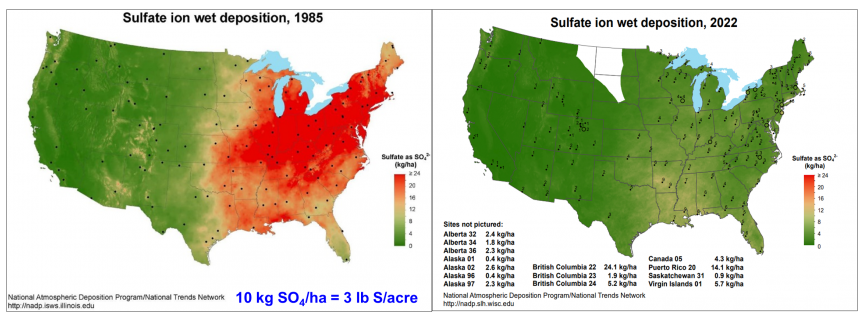
Sulfate ion deposition in the United States in 1985 (left) compared to 2022 (right). Source: National Atmospheric Deposition Program
“With the advent of cleaner fuel regulations over the last decades due to the Clean Air Act, the deposition of sulfur has significantly decreased causing crops to start lacking sulfur and showing deficiency symptoms, such as light-green and pale-green younger leaves,” says Paul Hollis, Auburn College of Agriculture. “Sulfur deposition accounted for about 10 to 15 pounds of total sulfur a year before the new regulations were introduced but now is less than 2 pounds per year.”
Signs of sulfur-deficiency may also include stunted or spindly plants and reduced overall dry matter.
Having a tissue sample completed by a forage analysis laboratory is considered the best way to test for deficiency, says Dan Lima, Ohio State University Extension education.
“Remember that all life requires sulfur, so if the dried grass is deficient, the animal could also be deficient,” Lima says. “This is just another tool we have available for pasture fertility.”
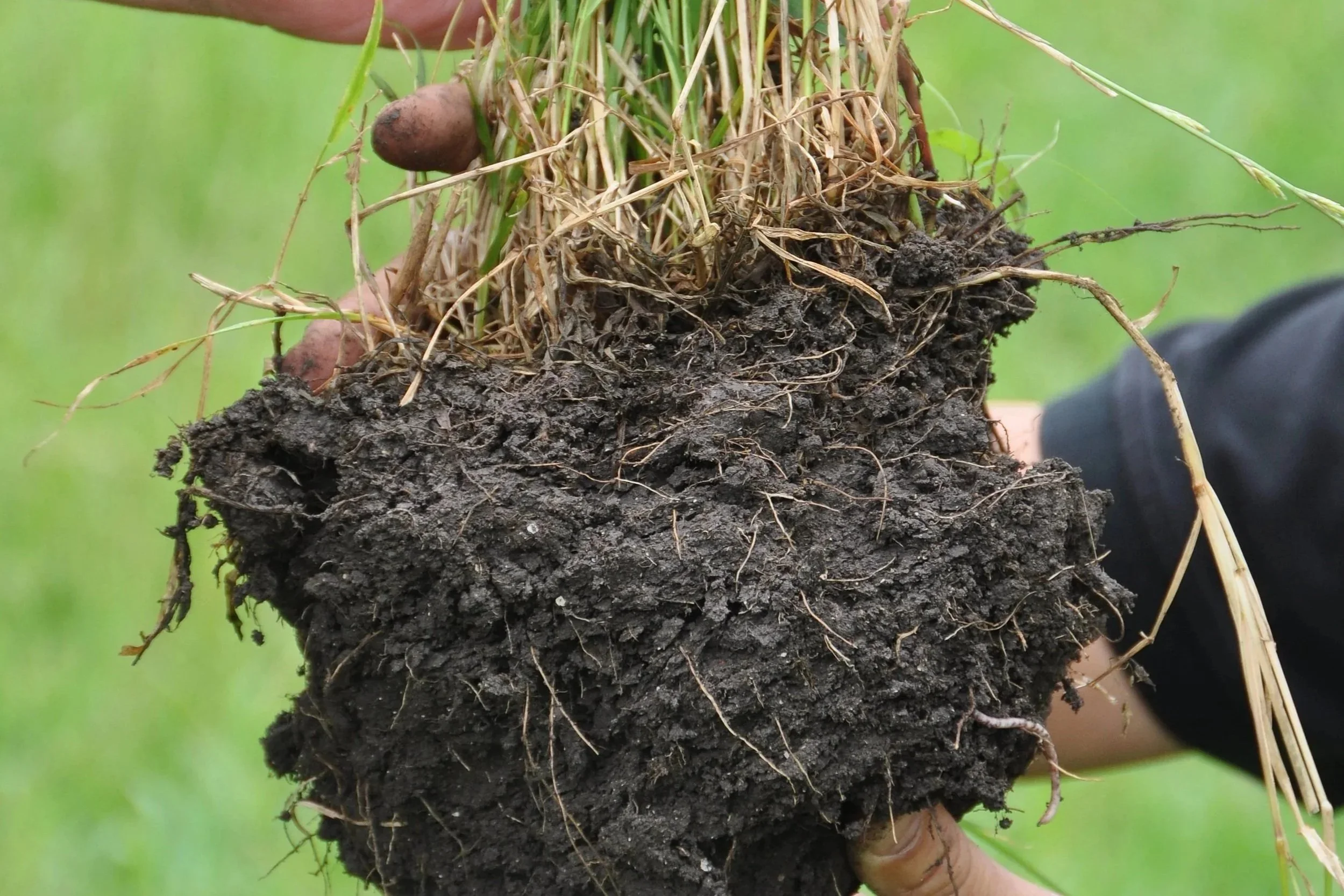
Why do forages need sulfur?
Sulfur helps build amino acids in plants, impacting the plant’s ability to form protein, and is also necessary to produce chlorophyll, says Lima. For legumes such as alfalfa, sulfur is essential for nitrogen fixation. Why is that important?
Without sulfur to assist with nitrogen fixation, protein content in the leaves and seeds drops and the plant’s forage yield and quality drops, according to Oklahoma State University Extension.
About 79% of air is nitrogen gas, says Gerald Wayne Evers, Texas A&M AgriLife Research and Extension, but plants can’t access it in that form.
“In reality it is not the plant that removes nitrogen from the air but Rhizobium bacteria which live in small tumor-like structures called nodules on the legume plant roots,” Evers says. “These bacteria can take nitrogen gas from the air in the soil and transform it into ammonia (NH3) that converts to ammonium (NH4) which can be used by the plant.”
This symbiotic relationship benefits both plant and bacteria.
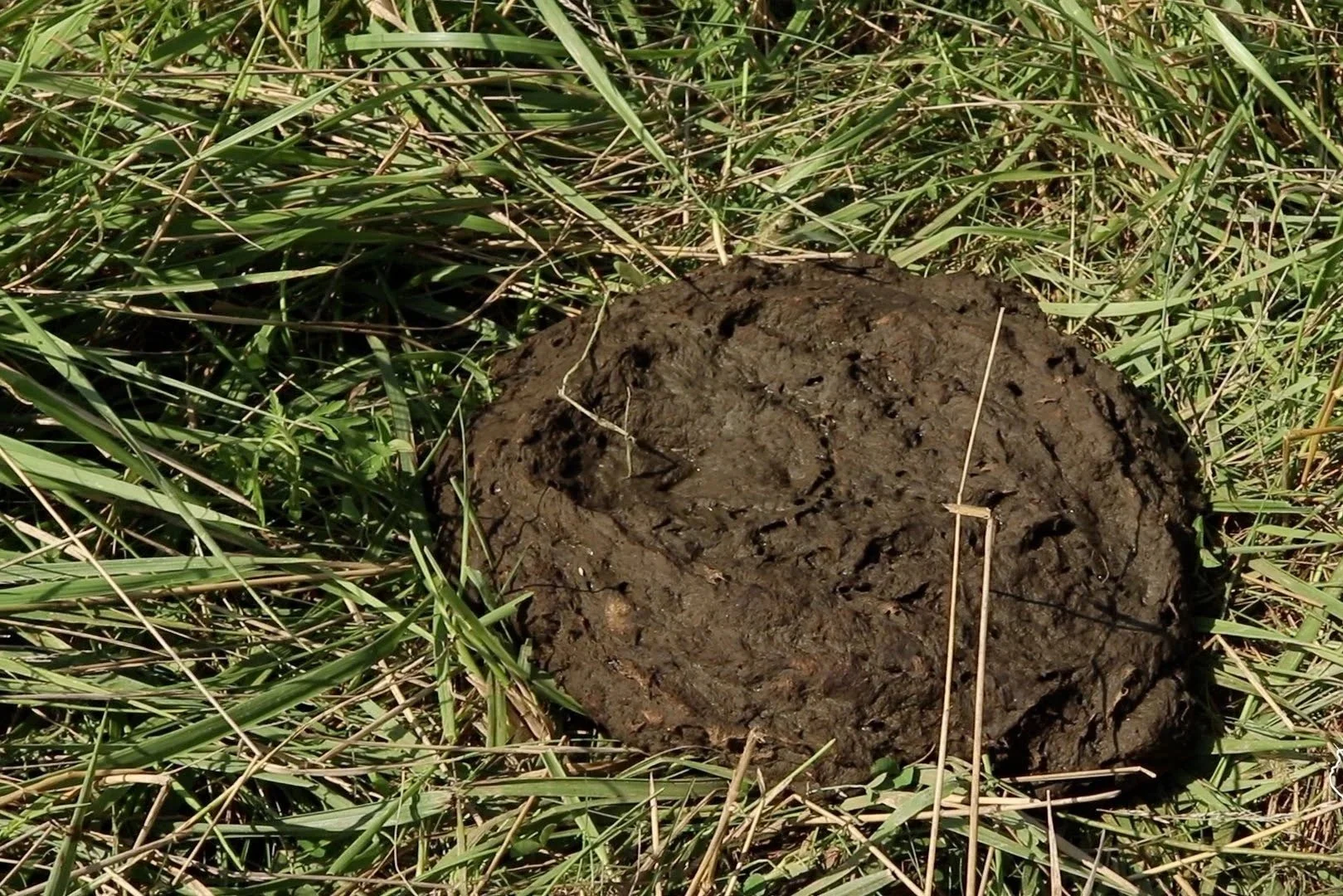
Livestock producers may have an advantage to boost sulfur levels.
Manure is a rich source of organic sulfur and converts to sulfate through microbial activity in the soil. If necessary, elemental sulfur or sulfate could be applied to the ground, Lima says.
“If the S levels are below 15 ppm in a soil test, a forage analysis would provide a definitive answer for sulfur needs,” he says. “A sulfur level of 0.2%-0.5% in a forage analysis should be adequate for plant needs.”
Dig Deeper
Acid Rain Program Results, US Environmental Protection Agency.
Summary of the Clean Air Act. US Environmental Protection Agency.
Progress Report: Emissions Reductions, US Environmental Protection Agency.
Progress Report: Ecosystem Response, US Environmental Protection Agency.
The Role of Sulfur in Pastures and Forages, Dan Lima, Ohio State University Extension.
Auburn research looks at sulfur deficiency’s impact on corn yields, Paul Hollis, Auburn University.
Nitrogen Fixation, Texas A&M AgriLife Research & Extension.
Forage Legumes and Nitrogen Production, John Caddel, Daren Redfearn, Hailin Zhang, Jeff Edwards, Shiping Deng, Oklahoma State University Extension.
Who needs sulfur? You might need sulfur, Iowa State University Extension and Outreach
You might also enjoy these videos
What's really going on underneath your pasture — and why does it matter for your operation's profitability and resilience? In this clip, Luke Jones of Understanding Ag breaks down soil biology in plain terms: what the soil food web is, how livestock actively improve it, and why understanding it changes how you think about every management decision you make.
After you move cattle to a new paddock, check the consistency of the manure and the plant residuals to determine if cattle are getting the proper nutrition while leaving adequate forage behind for regrowth.