Time to hold off those pastures
As children, we heard the story of the ant and grasshopper. The ant worked hard all summer to store food for winter while the grasshopper played. When winter came, the ant had plenty of food while the grasshopper had none.
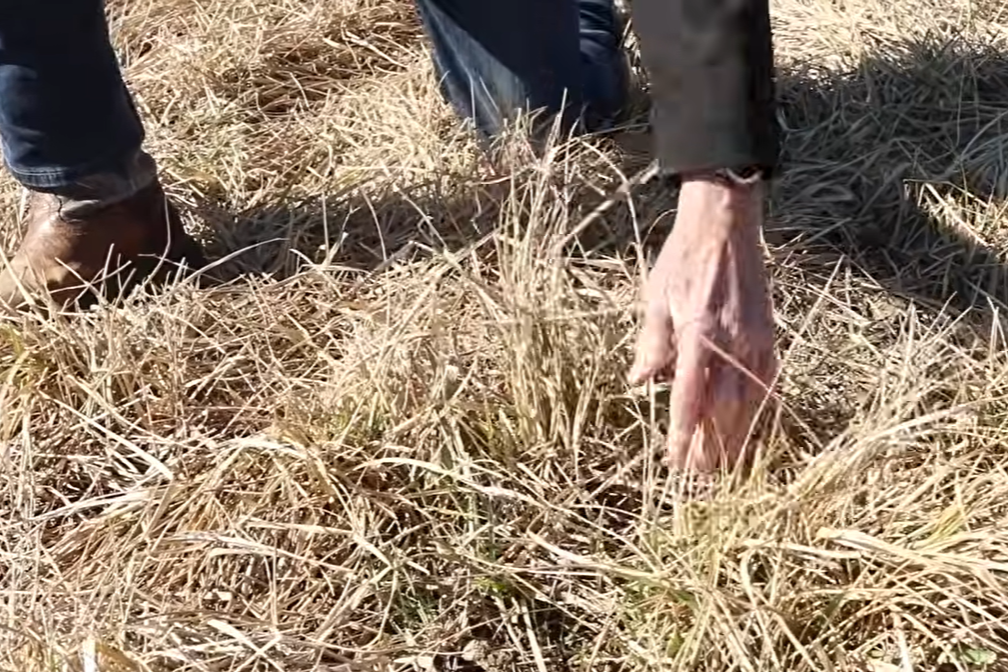
Stockpiled forage growth can reach 8 to 12 inches and provide quality forage for livestock in winter. Toland River Oak Ranch, Macomb, Illinois.
Stockpiling is the process of allowing forage in perennial pastures to grow in late summer and fall without being grazed or harvested as hay to save for use during winter.
Grazing livestock are removed from perennial pastures in late summer (NOW).
Forage grows (and grows) throughout the fall where cooler temperatures aid in the development of high-quality forage.
Livestock return to the pastures in late fall and winter, reducing the need for hay and stored feeds and reducing fuel, labor, and equipment costs for winter hay feeding.
“Stockpiling involves setting aside a portion of pasture and allowing forages to accumulate for a period of 60-80 days in late summer, then grazing the stockpiled forage during the non-growing season.”
Forage Selection
Macomb producer Trevor Toland begins stockpiling his Kentucky 31 fescue pastures no later than Sept. 1. Toland runs a 400-acre conservation-focused rotational cattle grazing operation.
“It’s a great feed,” Toland says. “You can’t beat it for its quality, and the cows love it after it frosts down hard in November.”
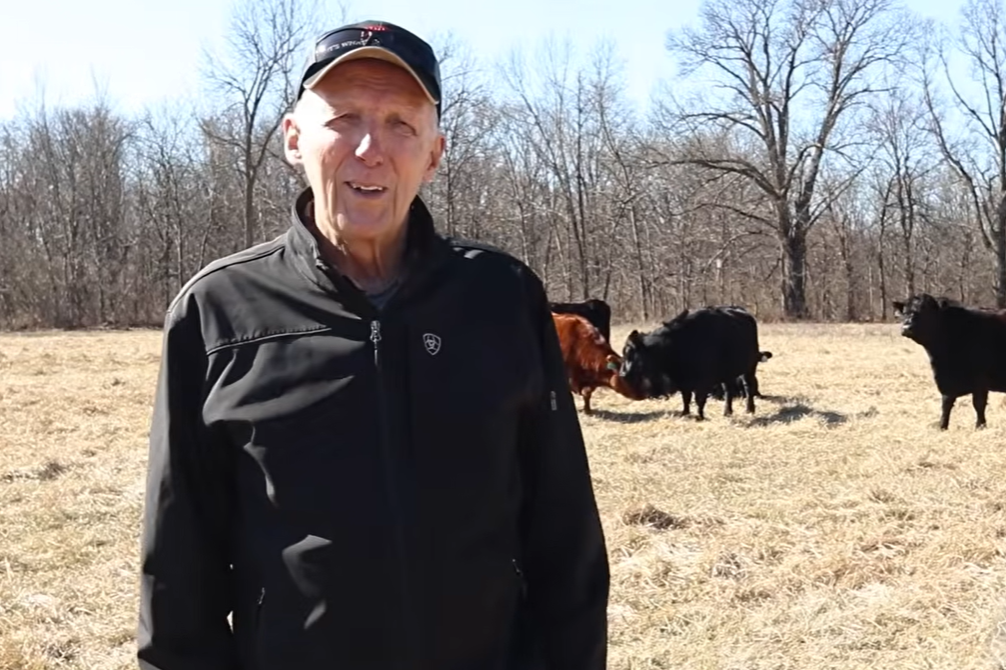
Trevor Toland stockpiled Kentucky 31 Fescue beginning in late August and rotationally grazed cattle through late March on his River Oak Ranch.
Some forage species, such as tall fescue, hold their nutritional value longer than others.
“The waxy layer or cuticle on the leaves of tall fescue make the plant more resistant to frost damage or deterioration,” says Amanda Grev, University of Maryland Extension.
“Cool season forages, especially fescue, are excellent candidates for stockpiling,” says Travis Meteer, University of Illinois Extension commercial ag educator. “While fescue may garner a bad reputation for endophyte issues and poor production in the summer months, fall is a time to shine for fescue. Re-growth in the fall is primarily green leaf tissue, and the plant is not putting on seed heads which are the feared concentrated source of the endophyte.”
By stockpiling pastures, Toland is able to achieve 10 to 12 inches of regrow that stays green in winter. “We will have some excellent grazing after freezing when that sugar comes up in the fescue plant and there’s no more photosynthesis going on.”
Process
In mid-August, graze or clip pastures to a 3- to 4-inch height to maximize new-growth forage.
Apply supplemental nitrogen to stimulate new growth and forage quality.
“When pastures were allowed to stockpile until Dec. 1, applying 50 pounds of actual N per acre in early to mid-August can add approximately 25 lbs. DM per lb. of N added or 1,250 lbs. of DM / acre,” Meteer says.
Urea-based fertilizers should be applied prior to a significant rain to minimize its release into the atmosphere on hot, humid summer days, Grev recommends.
Use rotational or strip grazing practices instead of allowing livestock unrestricted pasture access. This reduces damage from trampling and forage waste.
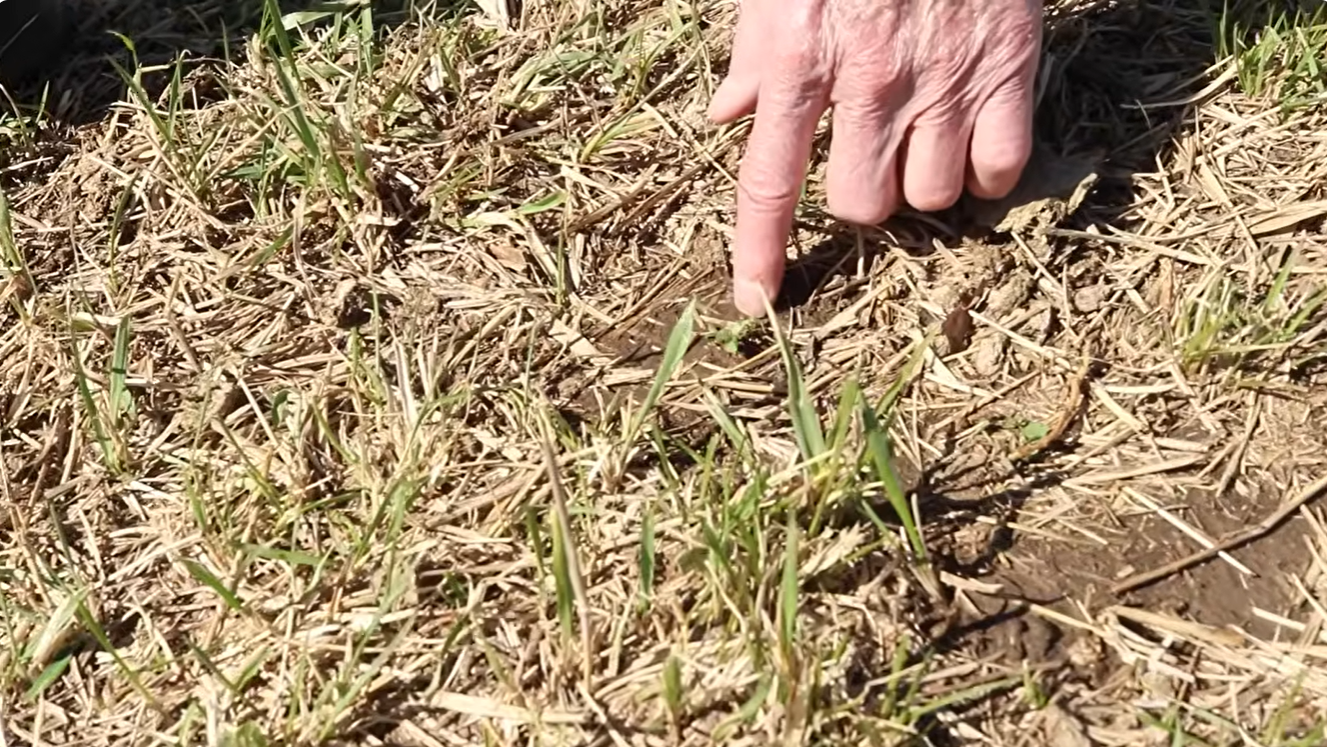
Post Graze Pasture: “What we see is a perfectly grazed paddock ready to frost seed red clover,” says Logan Karcher. “This little bit of bare ground will be where the good spots will be full of the clover in spring and summer.”
Benefits: Reduced Costs, Animal Health, Soil Fertility
By accessing stockpiled forage, producers reduce or eliminate the cost of winter stored feed, equipment, and labor.
“Allowing cattle to graze into late fall and early winter is crucial to reducing costs,” Meteer says. “Especially with moderately high commodity prices, grazing is the cheapest way to feed cows.”
Additionally, grazing cattle distribute manure, benefiting soil health by returning nutrients back to the field without the need of scraping and spreading manure from a lot, Toland says.
Keeping some of the stockpiled forage back for spring green up in March of April aids livestock digestion.
“Having the diverse forage between the spring, fresh grass and the dead dry matter really helps balance out the cow’s rumen,” says Logan Karcher, Illinois Grazing Lands Coalition director of producer programs. “It tightens up the cows’ stool so you're not seeing loose stools all over the pasture and sets cattle up for the rest of the grazing season on those green forages.”
“Using livestock to harvest forage is the most cost-effective method of feeding your animals, and every additional day of grazing has positive implications on farm finances.”
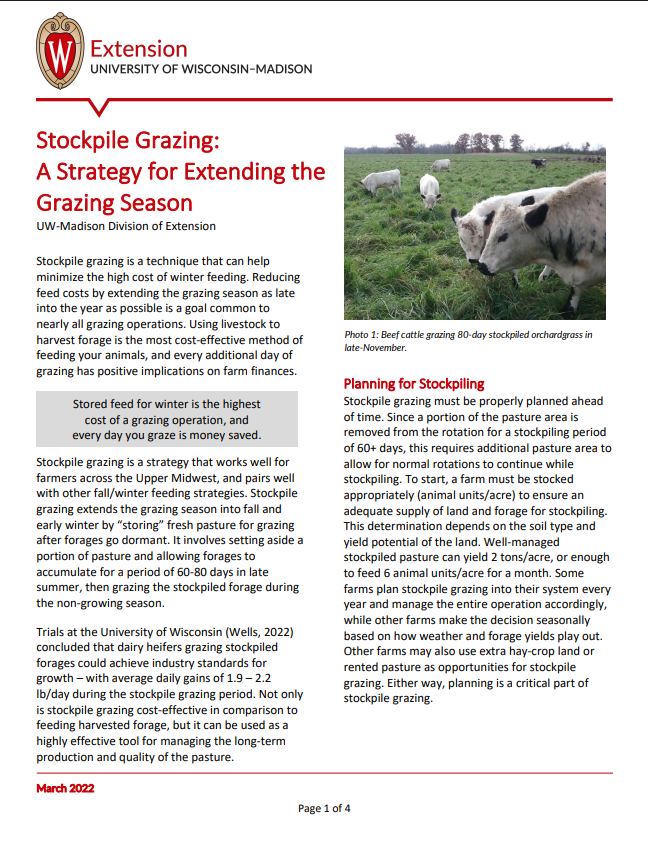
Stockpile Grazing Fact Sheet
Using livestock to harvest forage is the most cost-effective method of feeding your animals, and every additional day of grazing has positive implications on farm finances.
Dig Deeper
Extended Grazing, University of Illinois Extension
Stockpiling Pasture for Fall and Winter Grazing, University of Maryland Extension
Stockpile grazing: A strategy for extending the grazing season, University of Wisconsin-Madison Extension
Tips for Grazing Winter Stockpile, Illinois Grazing Lands Coalition