Follow these tips for transitioning row-crop ground to pasture
Converting cropland to pasture can be a challenge.
The soil biology is set up to work against you at first, the establishment is often slower than you'd like, and the temptation to cut corners on the front end is real. But get the sequence right, and you can build something that pays dividends for decades.
Luke Jones of Understanding Ag and ILGLC's Logan Karcher have both been through it firsthand. Their honest discussion on what worked, what didn't, and what they'd do differently offers a practical roadmap for any Illinois producer eyeing a cropland-to-pasture conversion.
Start With Annuals
The most common mistake Jones sees is producers going straight to a perennial mix on freshly converted ground. After all, if perennials are the goal, why not get there faster? But the biology in row-crop soil isn't ready for it yet.
Row-crop ground tends to be bacterially dominant (the result of years of tillage, chemical inputs, and bare soil between seasons). Warm-season native grasses, which are often the long-term goal for converted pastures, need a more fungal soil environment to establish well. Annuals give you something to graze while that fungal community begins to develop.
"It's been a slow process for me getting (annuals) to establish,” Jones says. “But what's coming in is starting to look pretty impressive."
Karcher learned this the hard way. His worst experience, he says, was taking conventionally farmed, washed-out hill ground straight out of crops and trying to establish native warm-season grasses. "That was a nightmare."
A fescue-based mix performed better as a transitional step, but what really turned things around was spending a full winter unrolling hay on the ground to build organic matter, feed soil biology, and lay the groundwork for the prairie grass establishment that followed.
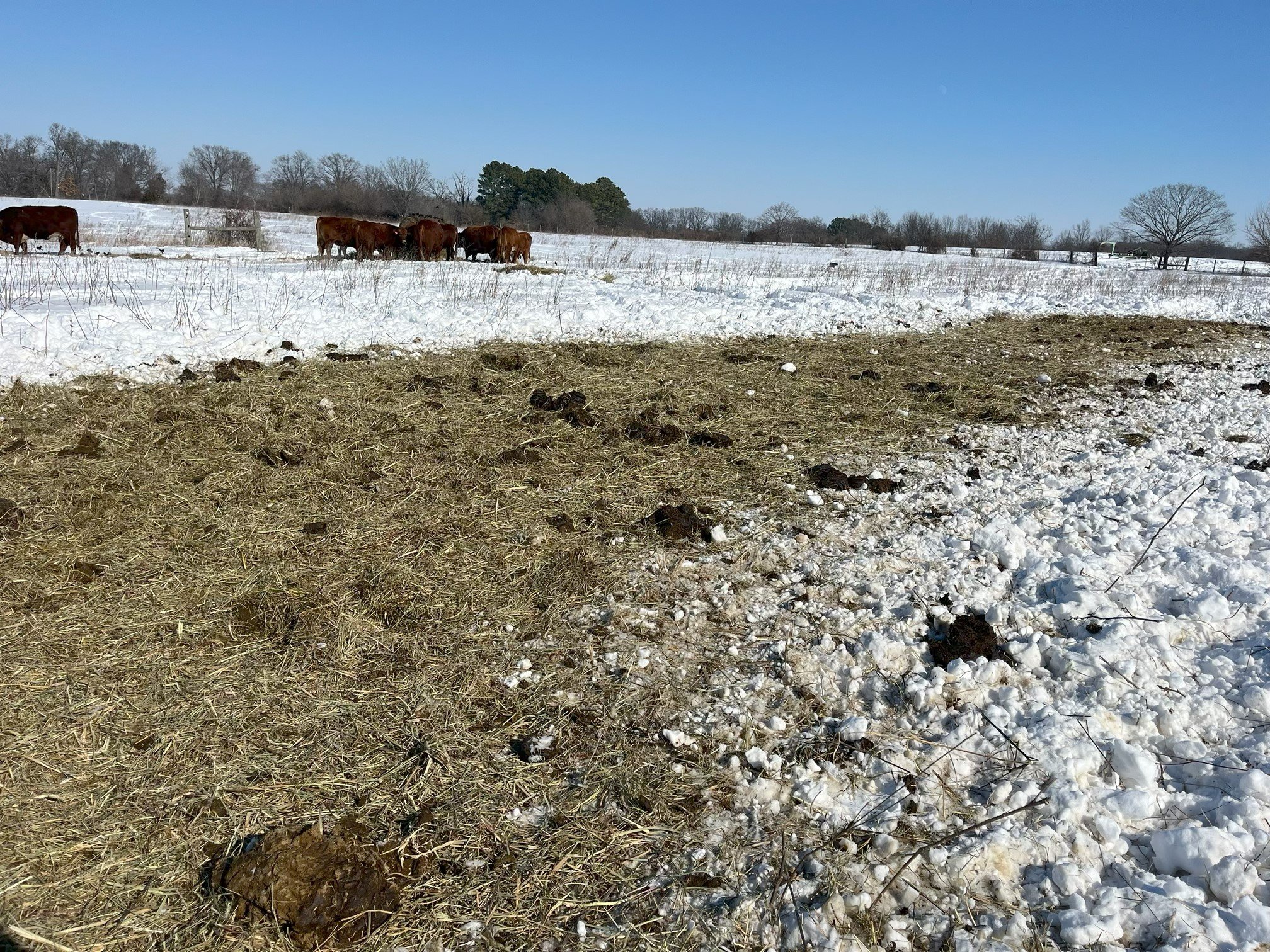
Unrolling hay builds organic matter, feeds soil biology, and lays the groundwork for the prairie grass establishment.
Expect Opportunistic Plants — and Don't Panic
When you're converting row-crop ground, you're going to see plants you didn't seed. Ragweed, lamb's quarters, water hemp, and mare's tail are all likely to show up before your annuals do.
Jones's advice: Don't overreact.
"Whether it's ragweed or lamb's quarters or whatever, it's all good forage. It'll convert. So don't get too worried about it."
Running tighter groups at higher stock density helps animals utilize those opportunistic species rather than selectively graze around them. The goal in the first season or two is to feed the soil biology and get something green and growing on that ground.
Does It Actually Pencil Out?
That's the question every producer asks before committing ground to a conversion. Macomb producer Trevor Toland decided to find out firsthand by converting 63 acres of former row-crop ground to custom grazing and tracking every dollar through a full season.
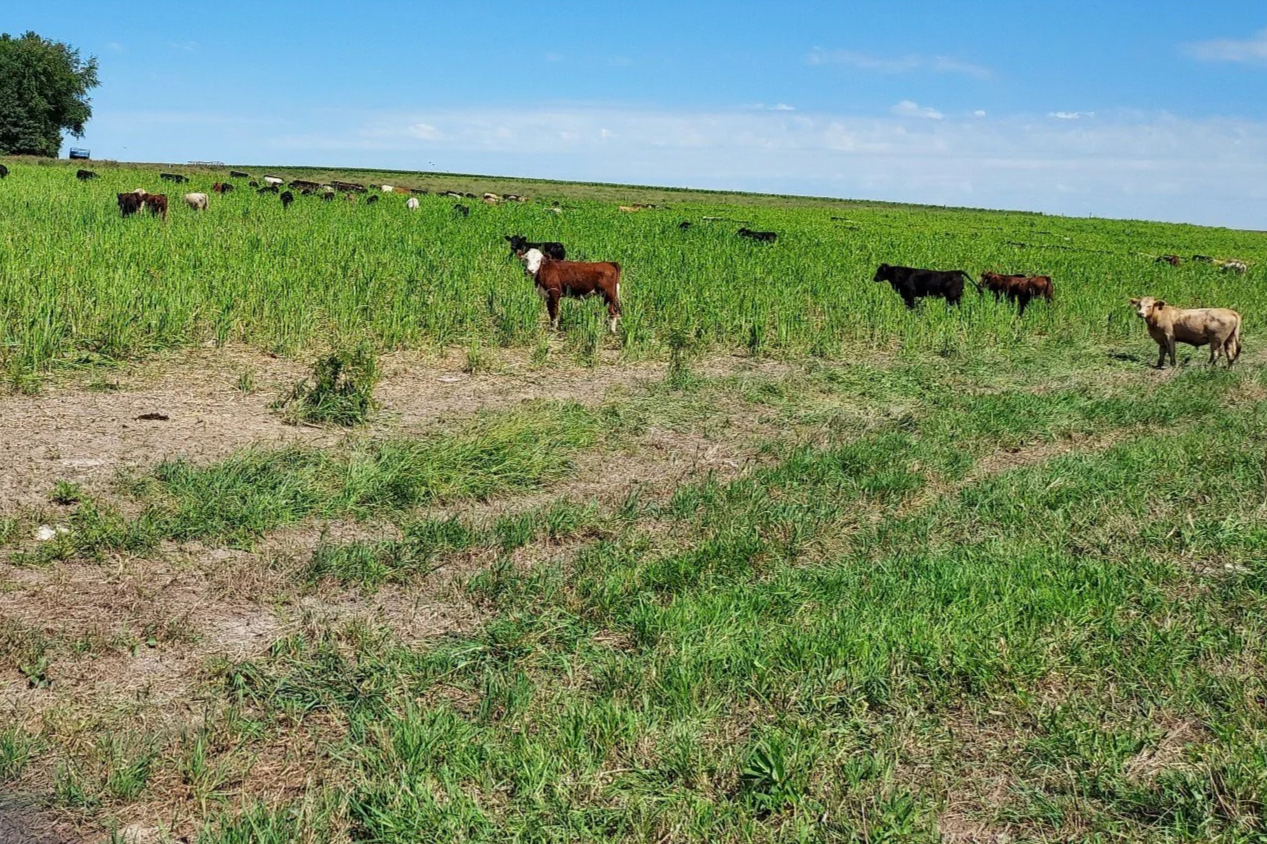
Trevor Toland calves on former cropland.
In a year when comparable soybean acres would have returned a loss, Toland's grazing project earned a profit and demonstrated the economic competitiveness of grazing stocker cattle on farmland. Read Trevor Toland's full story on the Hub →
What to Expect on the Timeline
Conversion isn't a one-season project. Jones recommends at least a season to a season and a half of annuals before putting in perennials, and he's candid that even with that approach, his own perennial stand was slower to establish than he'd hoped. Patience and a willingness to graze what comes up rather than waiting for a perfect stand is part of the process.
For livestock turnout timing, Jones recommends waiting for at least six inches of growth before introducing animals to annual plantings. For perennial seedings, give them considerably more time to well-rooted or you risk pulling plants out before they've had a chance to establish.
The Bigger Picture
Converting cropland to pasture is a long game, but the biology is on your side once you stop working against it. Annuals feed the soil food web, rest periods build aggregation, and livestock accelerate the whole process. The producers who find success will be the ones who practice patience and pay attention to what the soil is telling them.
Watch the full interview on soil health
The foundation of a profitable forage and livestock operation is healthy soil. Luke Jones of Understanding Ag joined Illinois Grazing Lands Coalition Director of Producer Programs Logan Karcher in February 2026 for a 35-minute discussion of building and maintaining healthy soil.
You may also enjoy this blog

One way to control pasture weeds is to ensure they never have the opportunity to grow.