As solar energy developments expand, researchers are asking important questions about soil health.
The biggest risk to soil health happens during site construction. Grading, topsoil removal, and heavy traffic cause compaction, runoff, and erosion. Once completed, topsoil is returned and seeded with perennial forages.
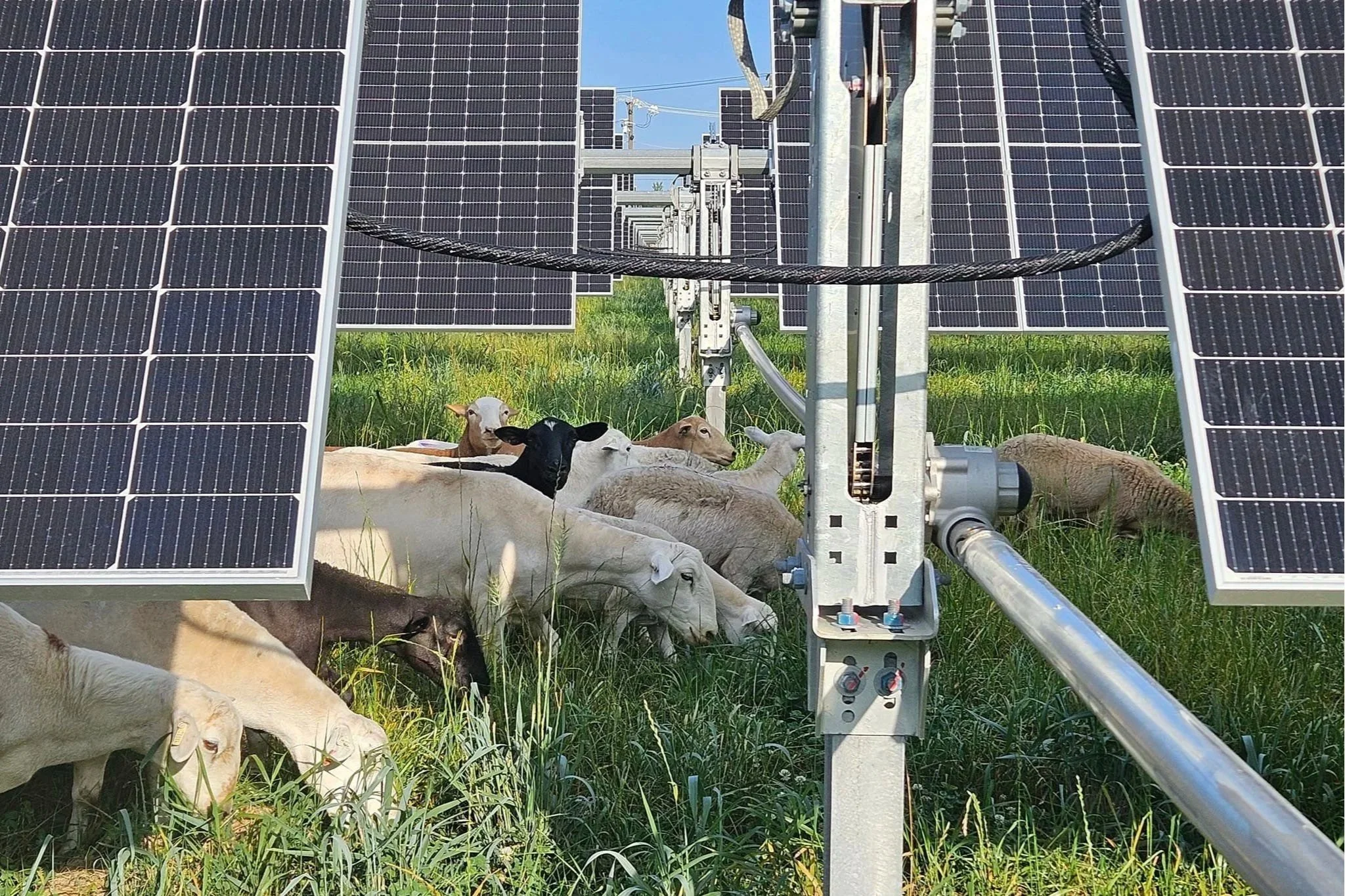
Sheep from Illinois Solar Grazing and Mowing at a solar site in Cook County, Illinois. Photo credit Brooke Watson.
Once in production, solar panels create microclimates which benefit the soil ecosystem, says Michael Ricketts, assistant terrestrial ecologist environmental science division with Argonne National Laboratory.
Shade from the panels lowers soil temperature by 10%
Soil moisture under panels increases 26%
Year-round plant cover reduces water and wind erosion and dust
The redistribution of rain and shading also increases the below-ground biological processes of bacteria and fungi needed to transform organic matter into nutrients for plant health, soil aggregation, and water infiltration, Ricketts says.
Grazing helps even more.
Grazing livestock is a sustainable way to build soil health and keep the solar fields in agricultural production.
Hooves combat compaction which improves water infiltration.
Urine and manure from the livestock return essential nutrients (80-90% of nitrogen, phosphorus, and potassium) back to the ground as a natural fertilizer, supporting plant growth and reducing runoff. It also provides organic matter to the soil and stimulates biological activity.
Using livestock instead of mechanical mowing eliminates compaction from heavy equipment and creates a lower carbon footprint, as well as reducing costs from labor, fuel, and repairs.
Perennial covers improve carbon storage, water filtering, and water infiltration and allow recovery for soil over time.
The vegetation is rarely what graziers would choose for their perfect pasture mixtures, says Chauncey Watson, who has grazed sheep on 600 acres of solar fields in Northern Illinois. Still, his ewes thrive with the shade and forage.
“They never come off the solar pastures thin.”
IDOA enforces compliance.
The Illinois Department of Agriculture enforces Agriculture Impact Mitigation Agreements to ensure that the land affected by those projects is restored to its pre-construction capabilities after construction and deconstruction. Grazing livestock is helping accelerate the recovery of these sites.
For more information
To help farmers understand the challenges and rewards of solar grazing, Brooke founded the Illinois Agrivoltaics Network to facilitate conversations about the benefits of agriculture and solar collaborations. Farmers can contact her through the farm’s website. The American Solar Grazing Association works directly with graziers interested in collaborating with solar energy companies.
You may also enjoy these blogs on solar grazing
Sheep: A sustainable answer to managing solar vegetation, The Brooke and Chauncey Watson story, The Grazing and Forage Hub
Harvesting the sun twice: Land sharing keeps ag on farmland, The Grazing and Forage Hub
Dig Deeper
Sheep: A sustainable answer to managing solar vegetation, The Grazing and Forage Hub
Exploring Solar Impacts on Soil Health, University of Illinois Extension
Navigating Local Land Use, Conservation, and Farm Economics, University of Illinois Extension
Grazing Between the Panels: How Sheep Are Expanding What’s Possible for Solar and Agriculture in Massachusetts, American Farmland Trust
Illinois Solar and Agriculture, Clean Grid Alliance
Shared space: $10 million grant examines how crops, solar can occupy same space, Illinois Extension
New U of I research explores how solar energy and production ag can cohabitate, thrive, FarmWeek Now
Illinois farmers find that sheep and solar arrays go well together, Canary Media
There's a solar boom in rural America. Can agriculture and renewable energy share the land?, NPR Illinois
Illinois Solar Grazing & Mowing, Brooke and Chauncey Watson